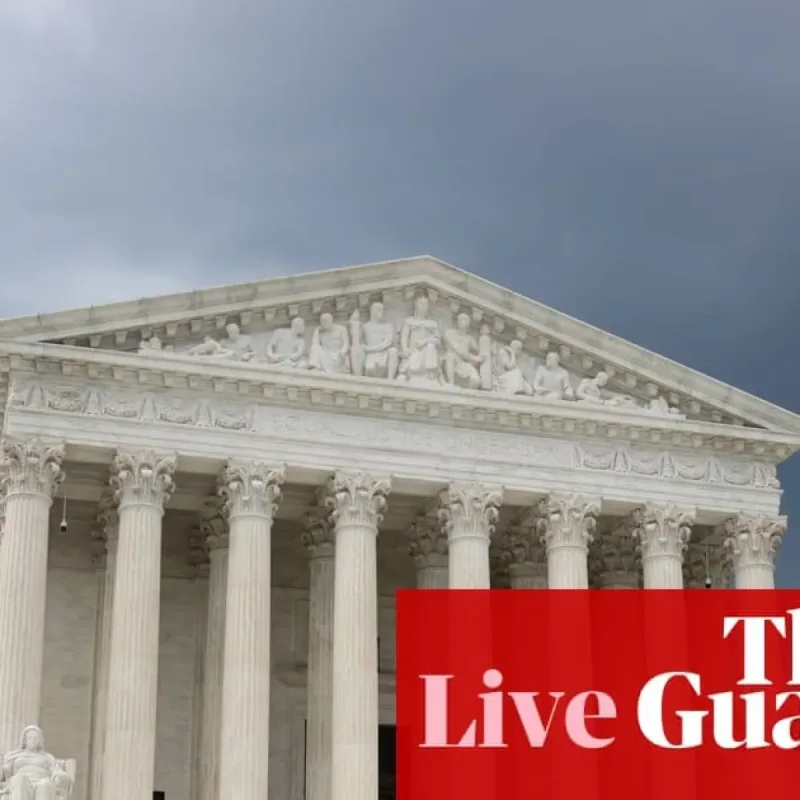
The US Supreme Court ruled 6-3 that Donald Trump possesses the authority to terminate leaders of independent agencies, reversing a 90-year-old legal precedent designed to restrict executive power over federal commissions.
The landmark decision in Trump v.
Slaughter drew sharp dissents from Justices Sonia Sotomayor, Ketanji Brown Jackson, and Elena Kagan following a legal battle over the removal of a Federal Trade Commission (FTC) member.
The executive action occurred in March 2025 when the White House dismissed FTC member Rebecca Slaughter via email.
Trump stated that her continued role would be "inconsistent with [the] administration’s priorities."
Slaughter subsequently filed a lawsuit alleging termination without cause, which prompted a lower court to rule in favor of her reinstatement.
In its challenge, the White House successfully argued for overturning Humphrey’s Executor v.
United States, a 1935 ruling that limited presidential power by declaring the firing of an FTC member unlawful.
The FTC operates with five bipartisan commissioners, with a maximum of three from the same party, under congressional restrictions intended to shield consumer protection and anti-trust enforcement from political interference.
A lower appeals court previously denied a White House request to freeze the reinstatement order during the appeal process.
"The government is not likely to succeed on appeal because any ruling in its favor from this court would have to defy binding, on-point, and repeatedly preserved supreme court precedent," two appeals judges wrote in the majority opinion.
The administration then sought a stay from the Supreme Court, which voted to grant the request in September 2025 amid three judicial dissents.
Justice Sonia Sotomayor issued the primary dissenting opinion on behalf of the minority judges.
"Today, this Court undoes centuries of political practice and concludes that all three branches of Government have been acting in open defiance of the Constitution all this time.
Its conclusion is wrong," wrote Sotomayor, joined by Kagan and Jackson.
The dissenting justices argued that historical practices and constitutional text grant Congress the authority to protect commission heads from arbitrary presidential removal.
"The text of the Constitution, along with its history, the longstanding practices of the political branches, and the precedents of this Court, make clear that Congress may limit the causes for which the heads of Commissions like the FTC can be removed by the President," they continued.
Sotomayor warned that the decision radically alters the constitutional balance of power between coequal branches of government.
"In holding otherwise, the Court gives the President a power unknown even to the English Crown against which the Founders revolted, elevating him above his once coequal branches by transforming a duty to take care that the laws be faithfully executed into a license to act in defiance of those very laws," they continued.
Broader Implications for Agency Independence
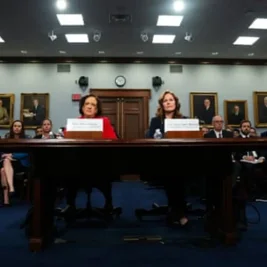
Former government officials previously issued warnings in an October 2025 Economic Policy Institute report regarding the broader consequences of dismantling these protections.
"Eliminating these removal protections would jeopardize all facets of agency independence, as agency leaders would be reluctant to engage in regulatory or enforcement actions – or even day-to-day agency decision-making – without coordinating with the White House for fear of termination," wrote Lauren McFerran, former National Labor Relations Board (NLRB) chair, and Celine McNicholas, a former official at the NLRB, in the report.