Members of the U. S.
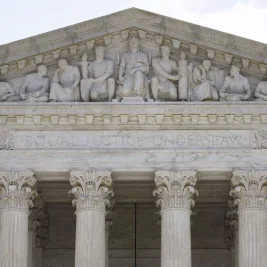
Supreme Court have publicly defended the institution's judicial autonomy, rejecting assertions that the conservative majority acts as a rubber stamp for executive policy decisions.
Chief Justice John Roberts addressed the annual Supreme Court Historical Society dinner in June 2026, using his traditional toast to emphasize the court's structural separation from executive authority.
He noted that the bench serves to empower the constitutional institution of the presidency rather than any individual officeholder.
Roberts highlighted that the sitting justices were appointed by five different presidents to uphold legal principles.
"The people who sit on the court were appointed by five different presidents," Roberts said.
The Chief Justice reiterated that cases must be decided in accordance with the law rather than political expectations.
Liberal Justice Elena Kagan also defended her colleagues' independence during an appearance in Washington state. She countered claims that the bench automatically aligns with the administration.
"I don't see this as a court that is just like, 'We're just going to rubber-stamp what the current administration does.'
You know, quite the opposite," Kagan said.
Kagan noted that while the executive branch has secured key legal rulings, those outcomes align with long-standing conservative legal philosophy rather than political allegiance.
"I think that that is a bad rap," she said, explaining that majorities often reflect broad conservative judicial principles held long before the current administration took office.
"You just have to deal with the fact that there's a conservative court doing things that conservative jurists have long thought it appropriate to do, and I can really dislike that," Kagan said.
She added that ideological rulings should not be confused with administrative control over the court.
"But it has nothing to do, I think, with becoming the arm of this current administration," she stated.
Academic observers noted shifts in how the current bench approaches established legal precedent.
Bryan Fitzpatrick, an academic, said, "The one thing, in my view, that stands out about the current court compared with past ones is that they do not adhere to the primacy of stare decisis to the same extent."
Disagreements regarding regulatory frameworks and emergency rulings have highlighted ideological debates among the justices.
Justice Sonia Sotomayor commented on a policy initially described as a Muslim ban, saying, "She noted that the policy, initially openly advertised as a complete and unconditional ban on Muslims, is now masked under the cover of national security."
Data shows the administration experienced defeats in lower federal district courts before selectively appealing specific constitutional matters to the high court.
However, the Supreme Court has also ruled against executive power, including striking down broad tariff programs and rejecting challenges to birthright citizenship.