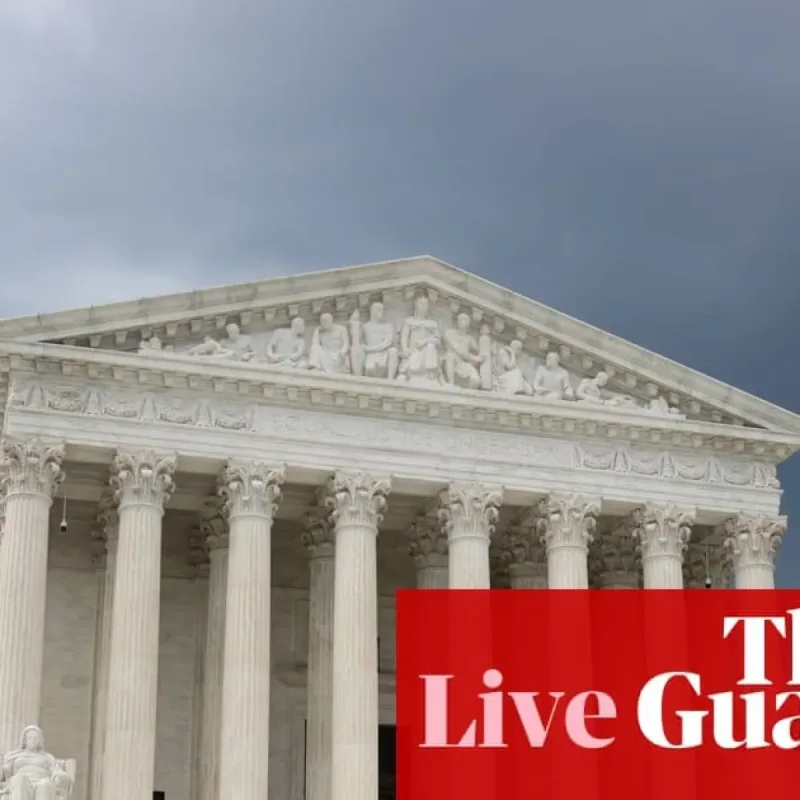
The US Supreme Court has ruled that law enforcement agencies must provide Fourth Amendment privacy protections when using expansive geofence warrants to gather smartphone location data.
Justice Elena Kagan authored the majority opinion in the landmark case, which addresses widespread concerns about constitutional rights and digital surveillance dragnets.
Case Background
The legal battle originated from the federal prosecution of Okello Chatrie, who was sentenced to 12 years in prison after pleading guilty to an armed bank robbery in Richmond, Virginia, where $195,000 was stolen.
Law enforcement officials tracked Chatrie through a geofence warrant after he opted into a Google location history feature that recorded his movements every few minutes.
Privacy advocates argue that these digital dragnets lack specificity and threaten constitutional boundaries by monitoring expansive areas over prolonged durations.
"If the government doesn't need to … link something to a crime, it could monitor a protest or an abortion clinic or a gun range or a church or an AA meeting or a doctor's office," said Matthew Tokson, a law professor at the University of Utah.
Defense attorneys asserted that the utilization of geofence data constitutes an official search under the Fourth Amendment and failed to satisfy necessary constitutional benchmarks.
Conversely, the US government maintained that citizens forfeit a reasonable expectation of privacy in public spaces when allowing third-party entities like Google to manage their location metrics.
Government filings noted that roughly one-third of active Google account holders utilize the location history service, which Chatrie's legal team stated represents more than 500 million individuals.
Google acknowledged in court documents that these warrants "often run a high risk of sweeping in innocent users–sometimes thousands of them."
The technology company added that these automated law enforcement queries frequently encompass residential apartments, hotels, medical facilities, houses of worship, and crowded roadways without established probable cause.
This decision represents the first major evaluation of Fourth Amendment limits on digital tracking since a landmark 2018 privacy ruling, where justices decided in a 5-4 vote that authorities generally require a warrant to track historical cellphone location data.