FOX Sports announced its Round of 32 commentator assignments on Sunday, June 28, 2026, as the network manages massive logistical and technical infrastructure to broadcast all 104 matches of the expanded FIFA World Cup 2026 across North America.
The network coordinates coverage from the International Broadcast Center at the Kay Bailey Hutchison Convention Center in Dallas, linking traveling studio teams with its permanent production facilities in Los Angeles.
To maintain seamless operations across multiple time zones and stadiums, FOX Sports relies on advanced IP-based workflows and extensive equipment redundancy to protect against summer weather disruptions and fiber cuts.
Weather and Travel Challenges
Kevin Callahan, senior vice president of field operations and engineering for FOX Sports, said the biggest challenge is the weather and travel across North America due to the size and enormity of the coverage.
The network aims to capture the stadium atmosphere directly for viewers at home, delivering an immersive broadcast experience.
"We want to be where the fans are, we want to create that sense of FOMO for fans—if you're not out at the matches, you're missing the big party of this tournament," Callahan said.
To prevent broadcast outages from unforeseen events, Callahan emphasized having multiple contingency protocols in place for every scenario.
"I have a firm belief, if you have one, you have none; if you have two, you have one.
So, when it comes to equipment redundancy, we have that in place.
We have some personnel redundancy, but we also have backup plans when it comes to travel," he said.
Infrastructure issues like summer construction have also required careful management by the engineering teams.
"It's construction season in the summer in the U. S.
, particularly in northern routes, and we've certainly dealt with our fair share of fiber cuts," Callahan said.
Callahan praised the host broadcasting services for maintaining high production values and pristine signals throughout the tournament.
"They truly are masters of resiliency and redundancy as well—they have a plan for everything," he said.
Enhanced visual elements have improved the storytelling capacity of the broadcast.
The super slow-motion replays added this year have been fantastic and help share the emotion of the tournament.
FOX Sports also pushed for better audio capture from the sidelines to bring fans closer to the action.
"Over the years, we've been commenting to HBS that we want more field effects—we want to hear more of what's actually going on on the pitch," Callahan said.
Capturing audio on a massive soccer field presents unique engineering difficulties that the host broadcaster successfully resolved.
"HBS has done a fantastic job at being able to capture those close ball effects a lot better, and what's going on on the pitch a lot better, and I think this tournament they've nailed it more than anything," Callahan said.
The network upgraded its central workflows to native High Dynamic Range for the current tournament.
"Fox switched our entire facility to HDR for the first time, so everything that we're doing in the building is coming natively as HDR," Callahan said.
This transition guarantees visual consistency across all match broadcasts regardless of location.
"You'll be hard pressed to be able to tell the difference between one vs. the other when it comes to the quality of replays, the quality of coverage, they're all consistent, which is really what you want," he said.
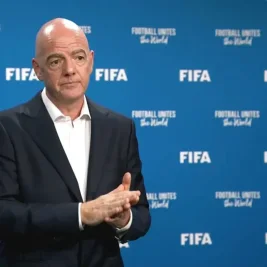
FIFA President Gianni Infantino hailed the facility as "the most technologically advanced and top of the art international broadcast center that the world has ever seen."
Complex Communications Workflows
Jeff Barwise, communications engineering manager for the World Cup at FOX Sports, oversees the intricate intercom matrix connecting the Los Angeles broadcast hub, the Dallas center, and multiple venues.
"There's a lot of moving parts on any particular day," Barwise said.
The team handles multiple simultaneous match feeds while planning ahead for subsequent broadcasts.
"We've got multiple matches — A, B, C, and D — and we're trying to make sure everything is [ready to go for the next match] while making sure everything else is working perfectly at the current match," he said.
Reallocating engineering resources requires precise timing to avoid disrupting ongoing live programs.
"It's a delicate and intentional reallocation of communications resources, ensuring that there's zero impact to the match-day production," Barwise said.
Managing the various commentator audio feeds across venues requires dynamic technical switching, which Barwise described as "a game of commentary hopscotch."
The workflow relies on strict validation timelines that occur simultaneously with live match day transmissions.
The integration utilizes specialized audio streams provided by Host Broadcast Services.
"The MADI stream is our connection to host-commentary units at four venues, at once providing microphone isos and talkback/IFB program circuits, as well as a mixed program return," Barwise said.
This framework creates a direct link between announce teams at the stadiums and control rooms in California.
The communications team must run detailed checks with local site technicians before routing the final feeds, all while current matches are on-air.
Barwise emphasized that the operational success stems directly from close collaboration across multiple engineering teams.
"It is a well-orchestrated hopscotch every day: everybody is involved, everybody knows the schedule, and everybody is focused on what needs to be focused on," he said.