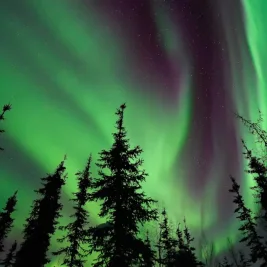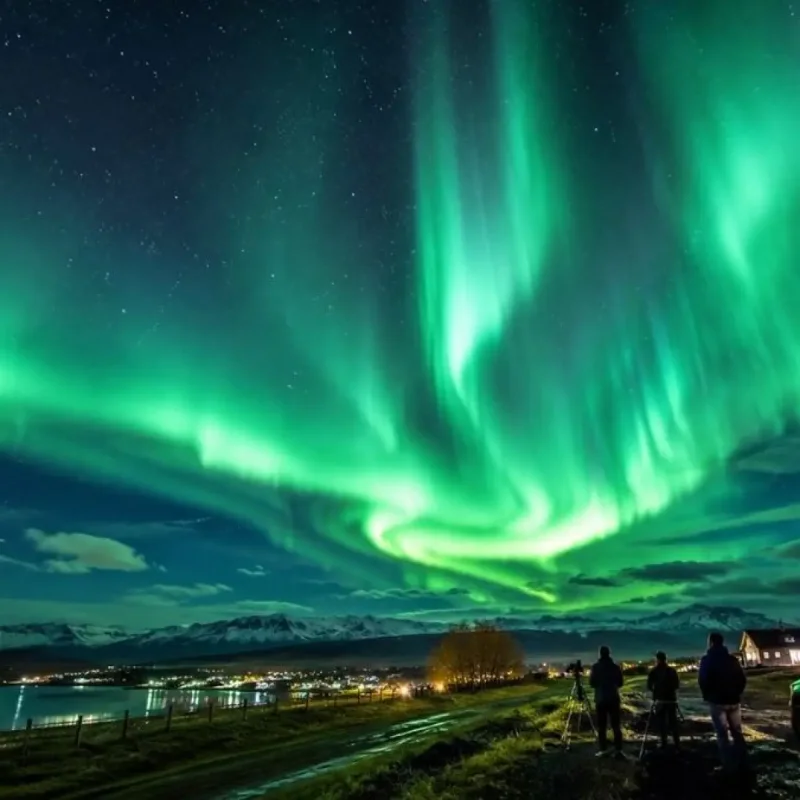
A geomagnetic storm is expected to bring the northern lights to 19 northern U. S.
states overnight from Monday, June 29, into Tuesday, June 30, 2026.
The aurora borealis will be triggered by a coronal mass ejection released by the sun on June 26, which is forecast to cause G1 to G2 storm conditions.
Where to See the Aurora
The best viewing opportunities are predicted in Washington, Idaho, Montana, North Dakota, South Dakota, Minnesota, Wisconsin, Michigan, and Maine.
Fainter displays might also reach Oregon, Wyoming, Nebraska, Iowa, Illinois, Indiana, Ohio, New York, Vermont, and New Hampshire.
Space weather experts noted that visibility could be hindered by long daylight hours following the summer solstice and the bright full Strawberry Moon.
The Space Weather Prediction Center issued an alert stating that a minor G1 storm could allow observations in northern U.
S. regions.
"Aurora may be visible at high latitudes, i.e., northern tier of the U. S.
such as northern Michigan and Maine," the alert said.
NOAA space weather experts forecast the precise timing of the solar particle arrival.
"Enhanced conditions are expected to return early to mid on 30 Jun due to the CME that left the Sun late on 26 Jun," they said.
The UK Met Office provided a slightly higher estimate for geomagnetic activity levels.
"CME arrival on day 3 is expected to increase activity to Active to G1 Minor Storms with a chance of G2 Moderate Storms," the UK Met Office’s Space Weather forecast stated.
The agency noted that the potential for auroral displays would persist past the initial impact.
"These most likely with any following magnetic cloud, with the risk continuing into day 4 (01 Jul)," the forecast added.
Viewing Tips
To get the best view of the lights, which are typically most visible between 10 p. m.
and 2 a. m.
, observers are advised to move away from urban light pollution.
"We typically suggest getting away from cities and find an open field or hilltop to lay out under the stars and wait for the show to really peak at the late evening or early morning hours," said Tim Brothers, MIT Technical Instructor and Observatory Manager.
He suggested utilizing dark public parks to maximize visibility.
"In New England, heading for a local conservation area or park that keeps lighting off at night is ideal," Brothers said.
Amateur astronomers can use mobile phone cameras with long-exposure settings to capture the green glow, as sensors often detect faint aurora before the human eye.
Space weather remains dynamic, and real-time updates are available via NOAA tracking tools and dedicated mobile apps.