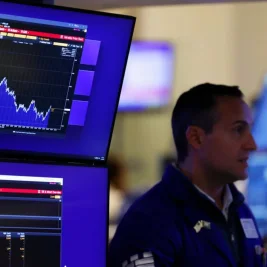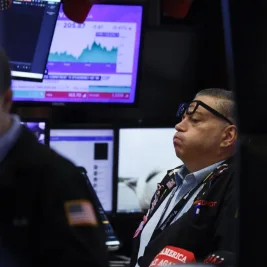
Global markets experienced a downturn last week as shares of major AI-related companies fell, raising questions about the sustainability of the AI boom.
However, analysts suggest the selloff does not signal an imminent crash.
The slump began on June 22 when Alphabet shares dropped sharply after several high-profile leaders left DeepMind, Google's AI research unit.
The decline quickly spread to South Korea, where chipmakers Samsung and SK Hynix saw double-digit losses, triggering a trading halt.
Investors are concerned about the companies' $500 billion spending plans and signs of weakening demand for high-bandwidth memory products from other AI players.
Samsung and SK Hynix together account for half of South Korea's Kospi index, giving them outsized influence on the country's economy.
Market Context and Recovery Signs
Despite the recent dip, the chip sector has seen massive gains this year.
The Kospi index is up 125% in 2024, its strongest first half since 1990, driven largely by Samsung and SK Hynix.
Samsung's shares have jumped 183% year-to-date, while SK Hynix's have surged 310%.
Google's stock is also up 20% this year. The recent selloff has dented but not erased these gains.
A more severe panic would be needed to pop the ballooning global investment in AI, experts say.
SpaceX, which owns Elon Musk's xAI, suffered a double-digit drop despite not being a chipmaker, puncturing hype around its recent stock market debut.
Musk lost his status as the world's first trillionaire, and OpenAI may delay its stock market debut until next year, according to the New York Times.
Market movements have fundamental consequences: US retirement accounts tied to SpaceX or the tech-heavy Nasdaq exchange are affected, and chipmaker pricing impacts everyday electronics.
Apple blamed recent price hikes on rising memory costs, as Samsung and SK Hynix prioritize AI industry buyers.
Guardian economics writer Philip Inman noted that investors periodically question how long markets can climb, but professional investors remain committed to pumping cash into stocks.
A recovery may be near: US chipmaker Micron reported stellar quarterly earnings, with year-over-year revenue quadrupling.
California's Billionaire Tax Proposal
Meanwhile, California Governor Gavin Newsom has called for a national minimum tax on individuals with net worth above $100 million, countering a state ballot initiative that would impose a one-time 5% tax on billionaires.
The California Billionaire Tax Act has gained attention amid voter concerns about wealth inequality.
Newsom, a likely presidential candidate, has long been friendly with the tech industry.
The ballot proposal has drawn opposition from Silicon Valley, with some billionaires threatening to leave the state.
Newsom's counterproposal may be seen as a strategic move to seize the narrative while avoiding direct taxation of California's wealthiest residents.