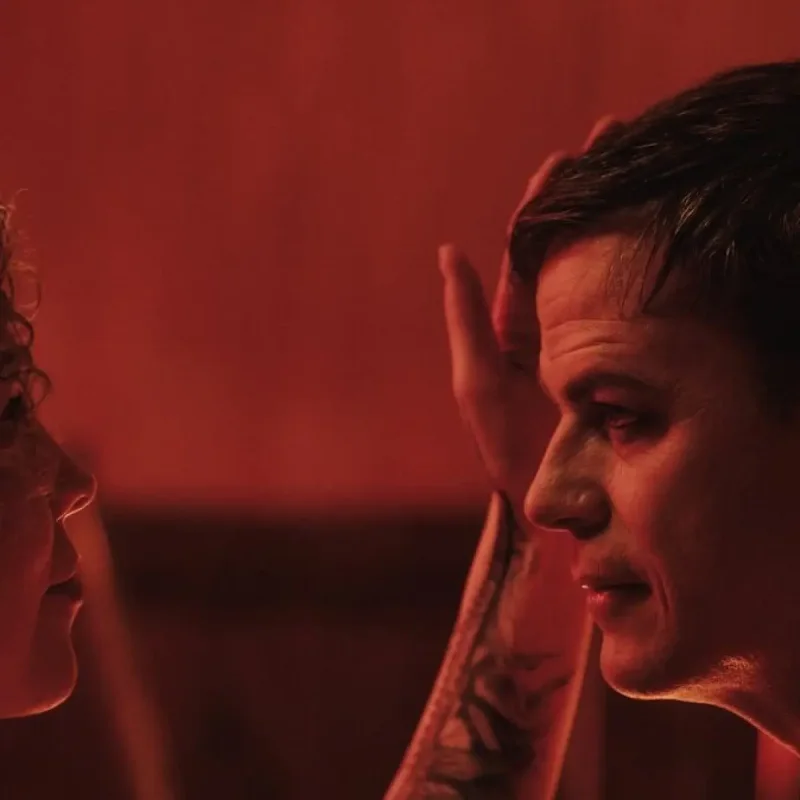
Quebec cinemas released the highly anticipated comedy-drama film "Francois. e" on Wednesday, July 1, 2026.
The film charts a controversial premise where a declining 50-year-old scriptwriter fakes a gender transition to secure government production funding.
Directed by Jean-Francois Asselin and produced by KO24, the project features Louis Morissette as the protagonist Francois, who morphs into Françoise after cynically checking a funding application box.
The production deliberately collaborated with 11 transgender individuals before and behind the camera to navigate potential stereotypes.
This followed intense social media backlash after the trailer debuted in April.
The film balances absurd comedic elements with deep dramatic shifts as the main character faces systemic realities, family tensions, and physical vulnerabilities experienced by the trans community.
Transgender author Gabrielle Boulianne-Tremblay co-wrote the script alongside Jean-Francois Leger.
Actress Pascale Drevillon stars as Sarah, an authentic trans writer who guides the protagonist.
Addressing Initial Backlash
Lead actor Louis Morissette addressed the initial negative public reactions, stating, "The truth is, it's understandable, because it's a community that has been violated in different ways throughout the years.
And there, you see Louis Morissette with a wig, wearing makeup, who is going to play a trans person..."
He explained that the production team sought guidance from the community to establish the correct approach rather than moving forward entirely isolated.
"But we come in peace, come see the film and we will discuss it after," added Morissette.
The film opens with a high-testosterone scene inside an arena locker room shower before transitioning into the main plot where financial desperation drives the central deception.
"Obviously, it's a minefield, but that's also all the beauty of creation: are we going to be able to navigate through all of that?
Since we were inhabited by the right values and the objective was noble, I told myself: 'We will get there', to the extent that we surround ourselves with the right people, that we listen to people and that we don't try to go it alone," said Morissette.
The scriptwriter's plot unravels when a potential broadcaster rejects his initial draft for being too full of cisgender clichés, forcing the character to deeply understand trans experiences.
"The wager we took is in the way of telling the story.
In the first act, we play a lot on archetypes and certain clichés to bring people along with us," explained Morissette.
The narrative tone shifts dramatically during the second act upon the introduction of Sarah's character, changing the protagonist's outlook entirely.
"The idea was to say somewhat terrible things at the beginning, but the situation changes in the second act, there is a resolution, a reflection," continued Morissette.
The creative team explicitly intended for the cinematic piece to spark wide-ranging social debates regarding societal perceptions of identity.
"There will surely be some form of polemic and at the limit, I wish for it, because the polemic will spark conversation and debate.
The worst of scenarios is not polemic, it's indifference, and I don't think the film will leave people indifferent," affirmed Morissette.
Director Jean-Francois Asselin admitted he was drawn to the film because of the delicate narrative balance required to maintain character credibility without turning the premise into a mere farce.
"The line was fine to find. There were many ways to crash, so it attracted me," summarized Asselin.
The director mandated that the comedic elements must never override the structural integrity of the individual roles.
"The first thing I told Louis is: 'You're a comedian we're going to disguise, it must not look like a joke.'
We are making a comedy, but the credibility of the characters must always come before the comedy," explained Asselin.
Co-writer Jean-Francois Leger noted that initial anxieties regarding correct terminology prompted deep consultations with transgender consultants during early production stages.
"My fear was not saying the right words and making a mistake.
That's why at the beginning, we held meetings with Pascale and Gabrielle to establish the appropriate lexicon, to see what could hurt people in the community," explained Leger.
The broadcaster's executive explicitly highlights the narrative failures of the protagonist's early script drafts during a confrontation with the producer.
"They hated it: too big, cliché, old-school," explained the boss of the broadcaster to the producer working with Francois.
The executive notes that the text lacked genuine insight, exposing the demographic background of its true creator.
"In fact, it gives the impression that it was written by a cis man, not by a trans person.
Between you and me, it's Françoise that I hired, not François," asserted the executive.
Actress Pascale Drevillon highlighted how her character fundamentally alters the trajectory of the film's plot and the perspective of the main character.
"There is a moment where there is a switch, and it's connected to my character.
Sarah pulls the blanket to her side and it's for the better," summarized Drevillon.
Co-writer Gabrielle Boulianne-Tremblay expressed hope that the feature film would properly humanize transgender individuals for mainstream audiences.
"At the base, trans people are human beings with emotions, feelings, dreams," stated Boulianne-Tremblay.
Distributed by Entract Films, the 91-minute Quebecois comedy-drama also stars Robin Aubert, Geneviève Schmidt, and Rachel Graton.