U. S.
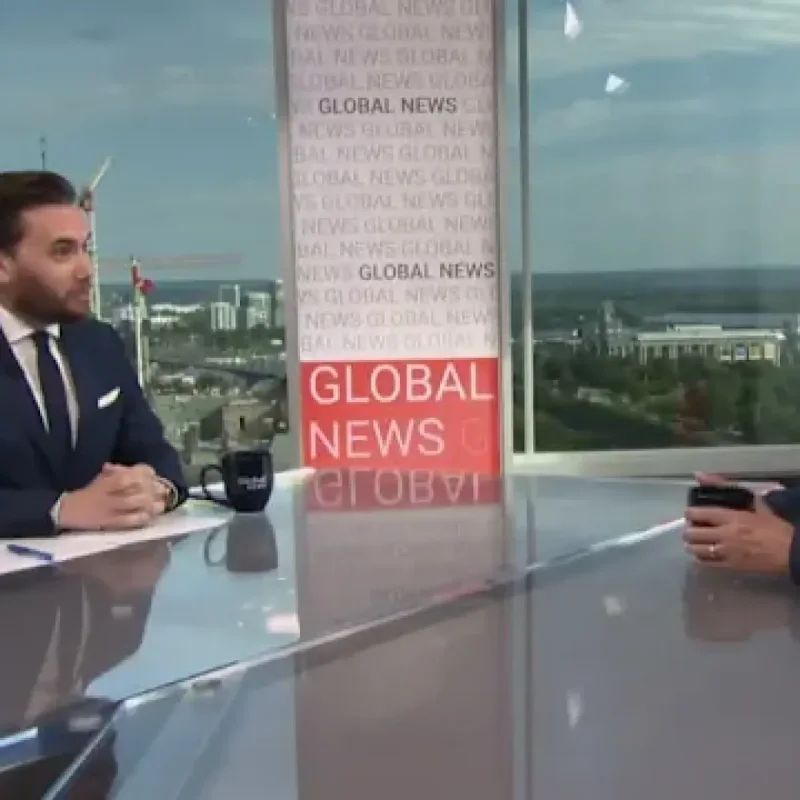
Ambassador to Canada Pete Hoekstra has denied that the Trump administration held strategic meetings with Alberta separatists or discussed financial backing for an independent province.
The statement directly refutes assertions made by movement leaders ahead of a scheduled fall referendum.
Alberta Prosperity Project leader Jeffery Rath had claimed his organization held discussions with American officials, including U. S.
Treasury representatives, regarding a potential $500-billion line of credit for a sovereign Alberta.
A Financial Times report also indicated that group leaders met three times with U. S.
State Department officials in Washington since April.
Hoekstra rejected the narrative put forward by the secessionist leadership regarding Washington's involvement.
"No, we're not meeting with the separatists and strategizing this at all," said Hoekstra.
The ambassador further indicated he lacked knowledge of any discussions concerning a multi-billion dollar credit facility.
"No, not that I know of," said Hoekstra.
When questioned about whether the current United States administration prefers that Alberta remain within the Canadian Confederation, the ambassador declined to provide a definitive stance.
"That's the president's call," said Hoekstra.
Hoekstra noted that the administration intends to maintain neutrality throughout the upcoming provincial vote.
"I think at this point in time, we've made it very clear we are not going to take a position on that.
That's a decision that has to be made by the people of Alberta, the province of Alberta, and the federal government," said Hoekstra.
The neutral stance contrasts with historic American policy, such as when former President Bill Clinton advocated for a unified Canada during the 1895 Quebec referendum campaign.
"Canada has stood for all of us as a model of how people of different cultures can live and work together in peace, prosperity and respect," said Bill Clinton.
Hoekstra maintained that he does not anticipate receiving any official directives to intervene in the domestic democratic process.
"I'm not going to get a directive, I don't believe, from the President of the United States, from our Secretary of State, Marco Rubio, that says, 'Pete, go out there and do what you can to advocate for, secession or for the people of Alberta to vote to stay as part of the Confederation,'" said Hoekstra.
The ambassador also brushed off domestic pushback that followed remarks from U. S.
Treasury Secretary Scott Bessent, who had characterized Albertans as independent people desiring what the United States possesses.
"Canadians get upset about a number of things," said Hoekstra.
Hoekstra added that he chooses not to dwell on statements made by Canadian politicians regarding American political matters.
"There are lots of instances of Canadian politicians saying things about American politics or American policies and those types of things that I'm not happy about," said Hoekstra.
The ambassador concluded by emphasizing his approach to these cross-border rhetorical exchanges.
"I don't focus on them," said Hoekstra.
Former Canadian Ambassador Weighs In
Former Canadian Ambassador to the U. S.
Kirsten Hillman stated in a separate interview that prominent American officials are unlikely to engage with the secessionist movement.
"My understanding of this, when I left, was that there really wasn't a serious interest in interfering in this very important domestic discussion happening in Canada," said Hillman.
Hillman downplayed the significance of the movement within Washington policy circles.
"I don't think this is something that rises to the level of people of influence in the White House," said Hillman.
The former envoy, who concluded her diplomatic term in February, noted that foreign interference regarding the autumn vote did not represent a major anxiety.
"Not something that is a big concern for me. I think it's a fair way to put it," said Hillman.
A report supported by five think-tanks had previously raised alarms by suggesting that Russian and pro-Trump U. S.
actors were actively amplifying misinformation regarding the independence movement to destabilize Canadian institutions.
Prior to these diplomatic clarifications, Treasury Secretary Bessent had openly discussed the ongoing sovereignty discourse on an American conservative media network.
"They have great resources. Albertans are a very independent people," said Bessent.
Bessent had highlighted that discussions about a potential provincial referendum were gaining traction.
"Rumour [is] that they may have a referendum on whether they want to stay in Canada or not.
… People are talking. People want sovereignty.
They want what the U. S.
has got," said Bessent.
Following those comments, Prime Minister Mark Carney and Alberta Premier Danielle Smith both publicly demanded that Washington respect Canadian sovereignty, with Smith later securing top-secret security clearance to monitor potential foreign interference threats.
Hillman expressed strong support for the province's place within the national framework.
"No question that Canada is stronger with Alberta and Alberta is stronger with Canada," said Hillman.
She suggested that the nation could improve how it articulates its collective internal advantages.
"One of the things that comes with diversity is the responsibility to have extensive, sincere conversations where you try hard to understand people within your community, this community being Canada," said Hillman.
Hillman clarified that the responsibility for fostering national unity rests on all regions collectively.
"I am definitely not putting this on any one region, any one leader provincially or federally — maybe we as a country need to just make sure we're doing a better job of that," said Hillman.
Prime Minister Carney counter-argued against the separation movement during a press briefing, where he also highlighted a new energy infrastructure memorandum signed with Premier Smith as evidence of a functional cooperative federalism.
"A dangerous bluff," said Carney.
Carney concluded by warning against taking actions that could jeopardize Canada's global economic standing.
"We're seen as one of the most trustworthy, reliable, desirable countries to do business with and we shouldn't mess that up," said Carney.
Separately, former Alberta Premier Jason Kenney, alongside former political staffers Howard Anglin and Jamie Huckabay, launched a new Calgary-based advisory corporate group on July 1.