The Department of Homeland Security is forcing states to alter their election procedures or risk losing vital federal terrorism-prevention funds as part of a sweeping initiative announced ahead of the 2026 midterm elections.
According to Federal Emergency Management Agency documents, the federal government will withhold 20 percent of its $1.064 billion Homeland Security Grant Program until states provide verified proof of compliance with new election security mandates.
New Requirements for States
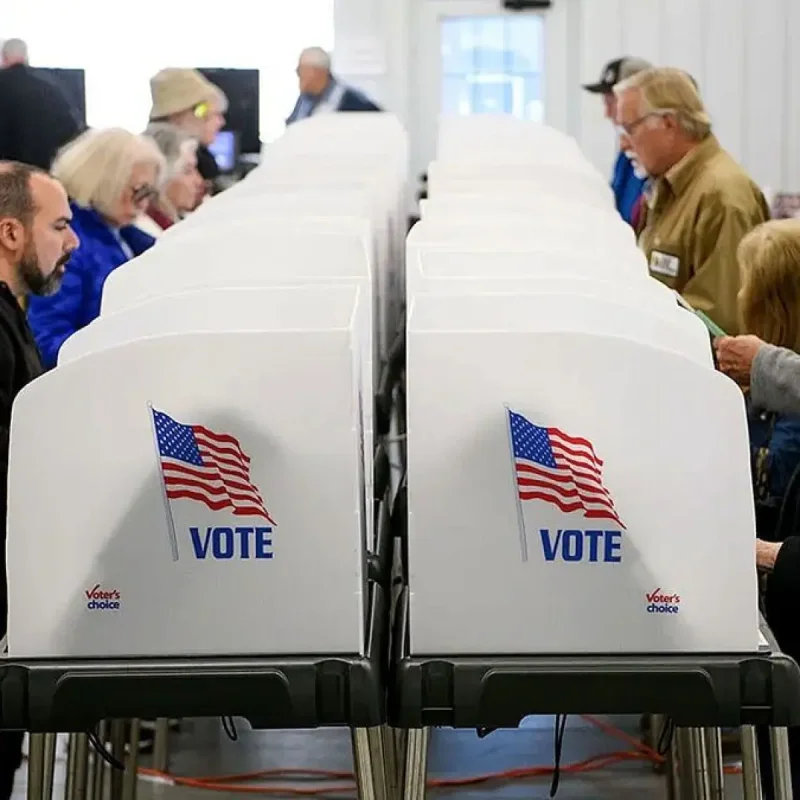
The newly introduced requirements order states to transition away from electronic voting systems using QR codes or barcodes toward equipment utilizing hand-marked paper ballots.
States must also implement a 5 percent manual post-election audit and reconcile total ballots cast with voter participation numbers.
Furthermore, states must utilize the Systematic Alien Verification for Entitlements database within 120 days of a grant award to verify the citizenship of all registered voters, alongside conducting citizenship checks for polling station workers and system vendors.
The policy has sparked immediate pushback from critics who argue the executive branch is unconstitutionally infringing upon state control over elections, following recent federal court rulings that blocked similar voter roll purges and data collection efforts in Pennsylvania.
Homeland Security officials defended the policy by emphasizing that safeguarding critical infrastructure against foreign interference and cyberattacks remains a top administrative priority.
"Under President Trump's leadership, we are taking decisive action to protect election systems from threats like foreign interference, insider threats and cyberattacks," a Homeland Security spokesperson said in a statement to Fox News Digital.
"These new requirements for homeland security grant recipients will preserve election integrity and ensure that Americans can trust the results," the spokesperson added.
FEMA documents clarified that the 20 percent funding holdback operates independently from a separate mandate requiring states to allocate at least 3 percent of their specific grant funds toward election security.
"The 3% minimum allocation and the 20% holdback are separate requirements and do not offset one another," FEMA wrote in the grant notice.
"Meeting the 3% allocation does not, by itself, release the 20% holdback, and the holdback applies to funds beyond the 3% set-aside," FEMA added.
To regain access to the withheld funds, jurisdictions must officially submit comprehensive transition plans that outline timelines and necessary funding requests to eliminate electronic ballot-marking devices.
"Submit a plan for transitioning from electronic voting systems that utilize bar codes or QR codes to count votes to equipment that accepts hand-marked paper ballots," FEMA wrote.
The agency specified that this transition plan must comprehensively cover all local jurisdictions that are currently utilizing the restricted electronic systems.
"The plan, for all jurisdictions currently using such systems, must include a timeline and, if necessary, a funding request to eliminate ballot marking devices and utilize hand-marked paper ballots," FEMA wrote.
States currently rely on the over $1 billion annual federal fund to pay for cybersecurity protections, emergency planning, physical barriers, and training exercises designed to counter domestic and foreign public safety threats.