A new Swedish driver-distraction test reveals that completing common infotainment tasks behind the wheel now takes longer than it did four years ago.
The study, conducted by Vi Bilägare, measured how far drivers traveled while performing a set of routine actions at a steady 68 mph (110 km/h) on a closed airfield.
On average, drivers covered 813 meters (2,667 feet) before finishing the tasks, up from 756 meters (2,480 feet) in 2022.
That translates to roughly two extra seconds with reduced focus on the road.
Touchscreens Not the Main Problem
Perhaps the most surprising finding is that touchscreens themselves are not the primary issue.
The Volvo XC60, equipped with a touchscreen, completed the test in just 485 meters (1,591 feet), suggesting its interface is intuitive and fast.
In contrast, a 2016 Volvo V60, which relies solely on physical buttons, needed 863 meters (2,831 feet) to finish the same tasks.
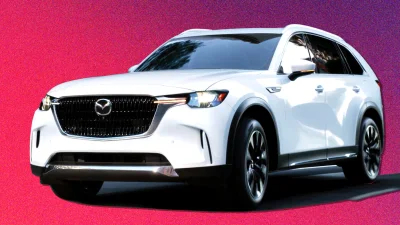
The Mazda CX-60 fared even worse, taking 37 seconds and covering 1,137 meters (3,730 feet).
Its touchscreen locks out while driving, forcing the driver to use physical controls, and the cabin contains 50 buttons—the highest count in the 2026 test.
The Tesla Model Y, which has only four buttons and relies almost entirely on its screen, performed better than many vehicles with more physical controls.
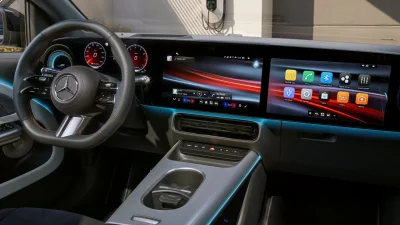
The screen-focused Mercedes CLA took 35 seconds overall, partly due to a 19-second startup lag from unlocking to display response.
Design Matters More Than Control Type
The study included four routine tasks: turning on the seat heater while increasing cabin temperature and activating the defroster, switching radio stations, resetting the trip computer, and dimming the instrument lighting while turning off the center display.
Voice control was excluded because its functionality varies too much between models.
Skoda’s combination of knobs and touchscreen posted the second-shortest distance at 542 meters (1,778 feet), with drivers completing the tasks in 18 seconds.
In the Toyota Corolla Cross, a well-placed screen was let down by an instrument-lighting adjustment buried deep in the trip computer, causing the car to roll 580 meters (1,903 feet) before the change was made.
Screen placement has improved overall, with the Volvo XC60 requiring a gaze drop of 35 degrees, compared to 56 degrees for 2022’s worst offender, the MG Marvel R.
However, the study’s sample size of ten vehicles is limited, and factors like vehicle familiarity, cabin layout, and steering wheel controls can influence results.