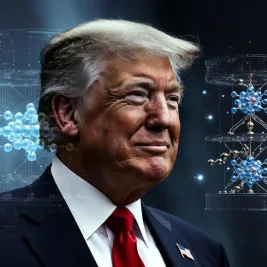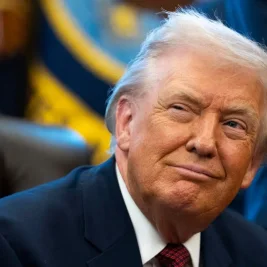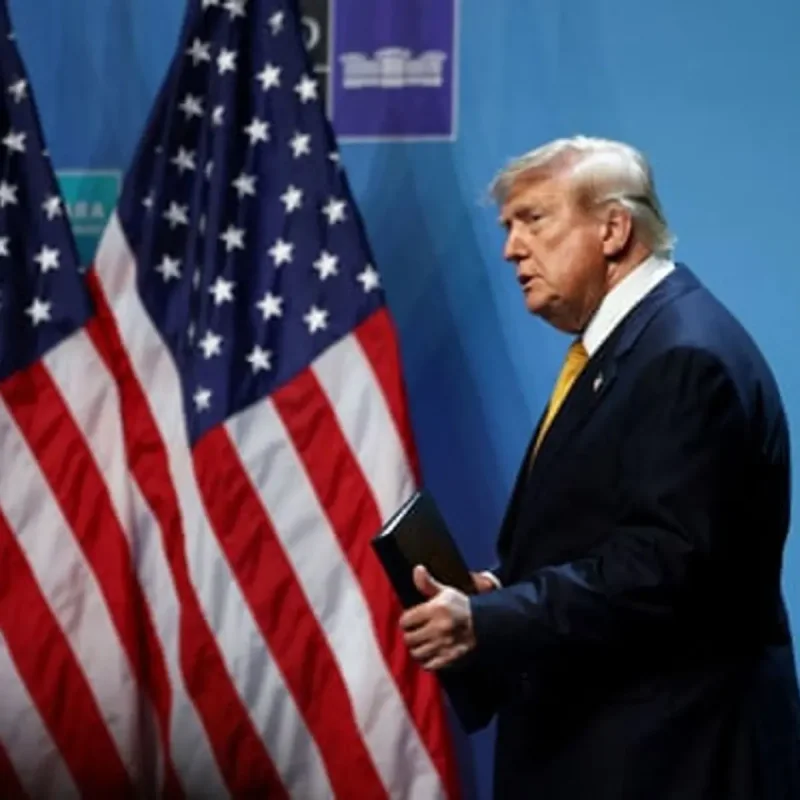
Donald Trump delivered a volatile performance at the NATO summit in Ankara, alternating between harsh criticism and effusive praise, according to reports.
The US president arrived visibly angry after a temporary ceasefire with Iran failed, calling Iran's leaders "scum" and "sick people" during a press briefing with NATO Secretary General Mark Rutte.
He expressed severe dissatisfaction with the alliance, stating he was "not happy with Nato" and criticizing member nations, including Britain, for not aiding the US in the Iran war.
Trump also revived claims about Greenland's territory and demanded the US sever trade ties with Spain over defense spending targets.
Shift in Tone After Private Meeting
Hours later, Trump's tone shifted dramatically after a private meeting, describing the gathering as highly positive and unified.
"There was a lot of love in that room," he said.
He praised Ukrainian President Volodymyr Zelenskyy, calling him "ingenious" for holding his country together during the war against Russia.
Analysts attributed the sudden change partly to his strong relationship with Turkish President Recep Tayyip Erdoğan.
Trump noted he might have skipped the summit if hosted elsewhere, highlighting his close bond with the Turkish leader.
"Turkey has been, in many ways, much more loyal than other countries that we thought would be loyal," Trump said.
Ian Lesser from the German Marshall Fund observed that Trump's relationship with Erdoğan helped stabilize the summit's atmosphere.
"The fact that President Trump has this apparently very close relationship with President Erdoğan probably played a role in stabilizing things," Lesser said.
Flattery from Mark Rutte also played a role, as the NATO head frequently praised Trump for encouraging European nations to raise defense spending.
Georgetown University professor Charles Kupchan noted that Rutte successfully demonstrated to Trump that his pressure on European allies was working.
"Rutte is really doing a good job of trying to say to Trump, ‘Hey, it’s working. We’re becoming more capable allies.
We hear you,’" Kupchan said.
Trump's altered stance on Zelenskyy, whom he previously told "You don't hold the cards," may stem from disappointment with Vladimir Putin.
Lesser noted that pressure from the US Congress ahead of the midterm elections also likely influenced the president's shifting strategy.
Despite the lighter finale, experts believe Trump's rhetoric will leave a lasting impact on how European allies view US reliability.
Kupchan argued that NATO remains functionally intact, with 80,000 US troops stationed across Europe.
Future projections suggest NATO will become increasingly Europe-led as partners work toward spending 5% of their GDP on defense.
Kupchan concluded that Trump is a symptom of a broader collapse in the American political center and foreign policy continuity.
International leaders from countries like Germany and Japan must now plan for potential long-term political dysfunction within the United States.