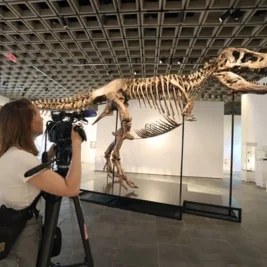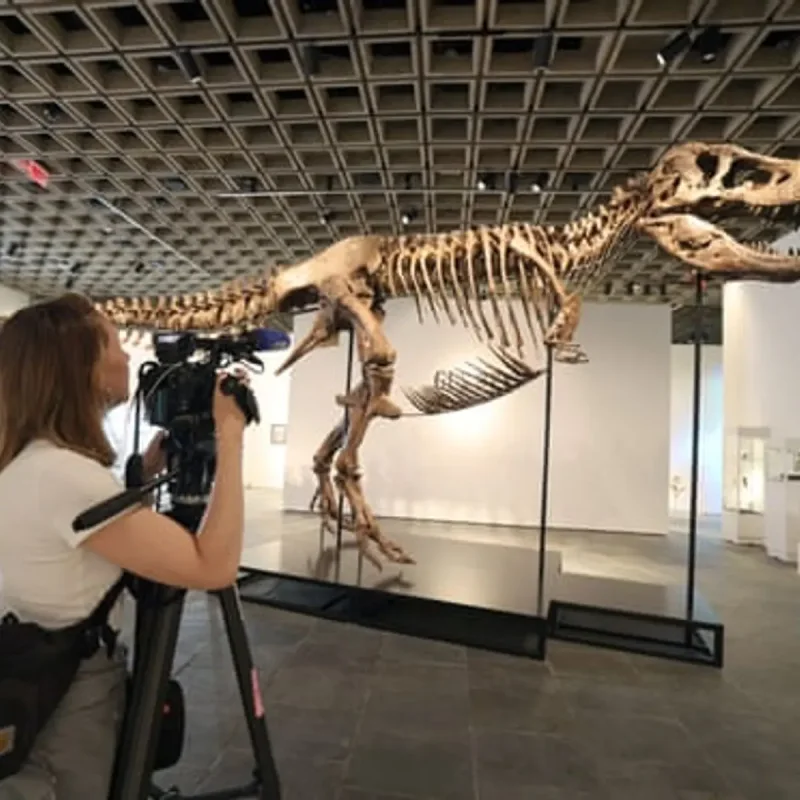
A massive fossilized Tyrannosaurus rex skeleton nicknamed Gus sold for a record-breaking $50.1 million with fees to a telephone bidder at a Sotheby's auction in New York on Tuesday.
The sale price for the 67-million-year-old specimen significantly exceeded the initial pre-sale estimate of $20 million to $30 million.
The transaction surpassed the previous auction record for a dinosaur fossil, which was established in 2024 when a stegosaurus named Apex sold for $44.6 million.
Discovery and Description
Commercial fossil outfit Theropoda Expeditions excavated the skeleton between 2021 and 2023 on a ranch in Harding County, South Dakota.
The dinosaur was named after Gary "Gus" Licking, the owner of the land where the specimen was discovered.
The mounted skeleton measures 12.5 feet tall and approximately 38 feet long, featuring a 54-inch skull and a 50.39-inch femur.
Due to its immense weight, the actual skull sits in the lobby of Sotheby's Breuer building while a reproduction head is fitted onto the main display.
According to Sotheby's, the specimen contains 183 fossil bone elements, including 30 rare gastralia, making it roughly 61 percent complete by bone count and 75 to 80 percent complete by bone mass.
Pathologies on the bones reveal fractured and healed ribs alongside bite marks from combat or scavenging.
Scientific Concerns
The auction sparked significant scientific debate regarding the private sale of historically important fossils.
Paleontologists expressed concern that wealthy private buyers could lock academic institutions out of critical research opportunities.
"The current trend towards dinosaur fossils being marketed and sold like rare artworks at vast prices by auction houses is very concerning, as is the idea of buying dinosaur fossils as a status symbol or a commodity," said professor Richard Butler, a vertebrate paleontologist at England's University of Birmingham.
Butler noted that expensive commercial sales prevent public institutions from acquiring these specimens for study.
"A fossil not in a recognised museum collection cannot be studied and is therefore lost to research.
Fossils have been bought and sold for hundreds of years, but prices are increasingly out of the reach of museums, much to the detriment of science," said Butler.
Other experts noted that while the transaction complies with United States property laws, the ethical implications for the scientific community remain troubling.
"As this dinosaur was found in the USA, and in America you can do what you want with what you find on your land, the auction looks to be legal," said professor Stephen Brusatte, of the University of Edinburgh in Scotland.
Brusatte emphasized that the sale still raises valid academic apprehensions.
"But as a scientist, it still concerns me," said Brusatte.