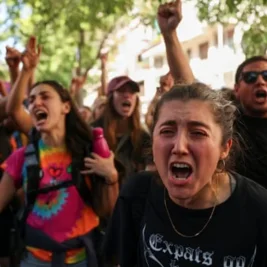
Spanish authorities detained wealthy American political donor James "Fergie" Chambers in Ibiza on Friday following an extradition request from the United States government over alleged material support for Hamas, as reported by The Guardian.
The Spanish high court is holding Chambers without bail in Madrid and has 40 days to decide whether to grant the extradition request.
If the court approves, the Spanish Council of Ministers will make the final decision.
Legal and Political Reactions
Attorney Stanley Cohen, with four decades of experience in terrorism cases, stated this is the first known instance of the US seeking extradition of a citizen charged with supporting Hamas.
"I don't doubt the decision was made because it looks good for Trump, for AIPAC and for Zionist supporters," Cohen said.
Cohen noted the legal move appears to be a deliberate effort to target progressive donors. "It's a conscious decision to target for political purposes," he added.
Chambers, an heir to Cox Communications who sold his stock back to his family for approximately $250 million in 2023, has used his fortune to fund progressive and humanitarian projects.
His partner, Stella Schnabel, defended his advocacy work in a public statement.
"Fergie is being jailed because he uses his wealth to support Palestine and those suffering genocide in Gaza.
In short, he is facing political persecution for having dedicated his life to building a better society, rather than exploiting people and profiting from war," Schnabel said.
His defense attorney, Llorenç Salvà, confirmed that Chambers has donated over $1 million to humanitarian efforts in Gaza.
The legal action has drawn strong opposition from Spanish leftist politicians, including European Parliament representative Irene Montero, who urged Spain to reject the extradition.
"Spain can't collaborate with Trump in the persecution of solidarity with Palestine: the government should protect him and not surrender him to Netanyahu's friends," Montero said.
In Spain's Congress, six members of the leftist Sumar party wrote a letter expressing concern that the extradition would set a dangerous precedent for political participation.
Trevor Aaronson, an author specializing in FBI and terrorism investigations, warned that the case reflects broader counter-terrorism policies being applied to domestic donors.
"All leftist groups are part of some huge network and are active participants in terrorism," Aaronson said, quoting the perspective of top counter-terrorism official Sebastian Gorka.
Aaronson compared the situation to the Holy Land Foundation case of the mid-2000s, where US prosecutors argued that humanitarian funds are fungible assets that indirectly benefit governing entities.
"School books in Gaza – that's more money that Hamas could then use for terrorism," he said.
This legal interpretation has historically discouraged charitable contributions to Palestinian causes due to fears of legal reprisal.
"A chilling effect, where no one wants to give money to Palestinian groups or to other left groups, because it could be used against them," Aaronson said.
Aaronson questioned the timing of the legal proceedings, noting that the humanitarian crisis in Gaza is currently at an unprecedented level.
"Arguably, the need for humanitarian aid in Gaza is greater than ever. Conflating that with terrorism is remarkable," he said.
A Spanish court hearing to determine whether Chambers can be released on bail is scheduled for Thursday.