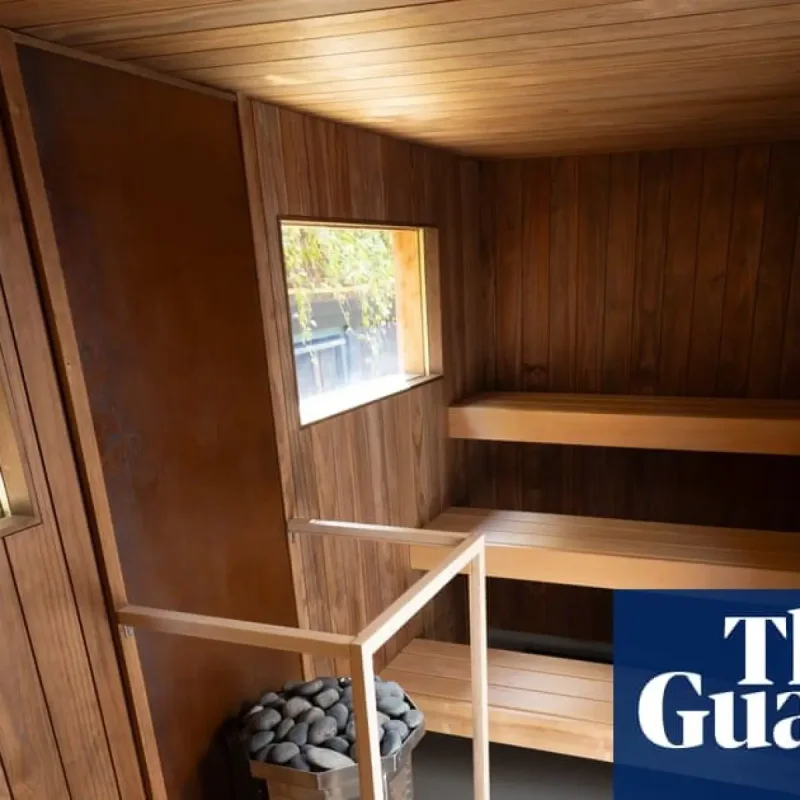
A pioneering sustainable project in East London is preparing to launch a unique community initiative: the world's first "community powered" sauna, heated using methane gas generated from local kitchen scraps.
The sauna will open at the R-Urban Poplar civic space, which functions as an environmental "living lab" where residents experiment with urban food production and climate adaptation strategies.
An anaerobic digester on site will process food waste collected from residents of the neighboring Teviot estate, producing biogas to heat the sauna.
"As far as we are aware this is the UK's – and the world's – first community powered sauna," says Andy Belfield, an architect from the R-Urban Poplar team.
Nine years ago, the location was merely an unused car park filled with empty garages.
Today, it features thriving no-dig allotment beds, community growing spaces, and a dedicated mushroom farm.
Organizers view the project as an ecology hub, integrating circular urban farming, educational workshops, a tool library, and a community kitchen to foster collective resilience against climate breakdown.
"That's why this site is particularly interesting," says Elle McAll from the Women's Environmental Network (Wen), which has co-funded and coordinated the initiative over the past five years.
"It's combining the technology and the technical side with the community building, the community side. Addressing the climate crisis isn't about just those technical solutions in isolation.
Sites like this really show the possibility of bringing those things together."
R-Urban Poplar is one of 26 green spaces managed under a wider initiative led by Wen, aiming to establish an environmentally sustainable, community-led food network across Tower Hamlets.
Tower Hamlets remains one of the most densely populated and deprived boroughs in London, where private outdoor spaces are rare.
Approximately 80% of households live in flats, and many experience high levels of air pollution.
"The whole thing really has been about how can we reimagine our local food system so it really does genuinely benefit local communities," says McAll.
A short distance away at the Limborough estate, another Wen-supported site allows local residents like Toyoba Chowdhuri to cultivate produce on micro-allotments.
Chowdhuri grows unique vegetables including snake gourds and malabar spinach on her plot.
"I'm living in Commercial Road. I haven't got any [outside space] there," says Chowdhuri.
The Limborough hub also operates a weekly food market that provides discounted organic produce, serving as an essential gathering space centered around food security and community engagement.
"Food is something that everybody needs but also has deep emotional connection to memories," says McAll. "It represents so much.
It's such a simple, unifying thing that can be a starting point for a lot of conversations."
Financial sustainability remains key to maintaining these community labs.
Designers hope that ticket sales from the new sauna will generate stable revenue to help fund the broader agricultural projects on site.
"What we can see from the modelling is that for food growing you have to do it at a certain scale to make it really economical," says Rokiah Yaman of Mad Leap, who is masterminding the site's anaerobic digester.
"But actually something like the community sauna is a brilliant way of really making the most value out of what we're doing.
If you heat a sauna and then you charge for those sauna spaces and you have multiple sessions a day with 10 people in the session, that makes a big difference."