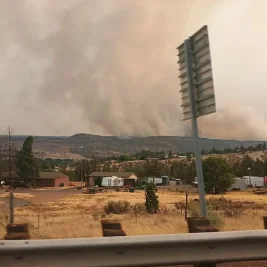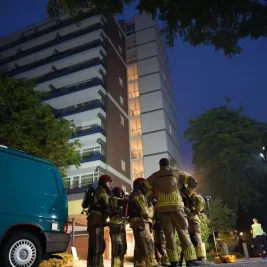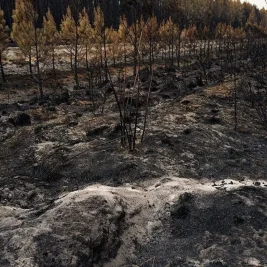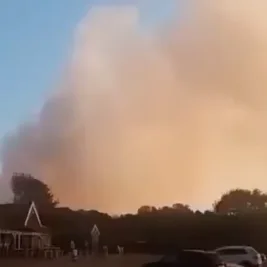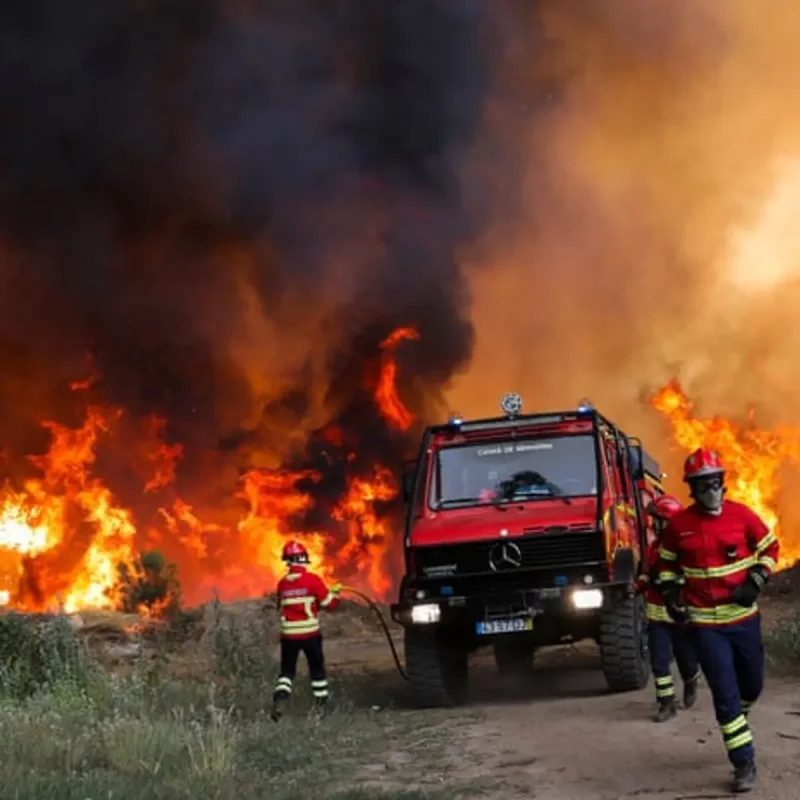
When wildfires overwhelm an area, fire commanders face a dilemma akin to a doctor in an emergency room with too few ventilators.
This triage is becoming more onerous as blazes intensify across the Mediterranean and even in cooler countries like the UK.
“It’s not just about having more fires to fight, it’s the risk of operational collapse,” said César Alcaraz, an officer with Alicante’s provincial firefighters in Spain.
Alcaraz, who became a firefighter in the late 1990s, was once ambushed by a fast-moving blaze on Spain’s Montgó mountain.
Barely able to breathe and with no water left, he and his colleagues fled, wishing for more support.
Now he understands the agonizing choices commanders must make.
Simultaneous Blazes Overwhelm Resources
When two or three fires break out simultaneously, commanders are forced to make immediate triage decisions. This scenario is increasingly common as heatwaves turn vegetation into tinder.
France, Portugal, and Spain have each faced record-breaking wildfires for this time of year, leaving unprecedented areas in flames and 13 people dead in Spain.
The UK began a week with 19 separate wildfires, prompting experts to warn of a “firewave”.
In France, firefighters tackled 250-300 fires simultaneously over a recent three-week period, noted Julien Marion, head of the civil protection agency.
In Spain, firefighters used to dealing with a couple of blazes at a time now struggle with an increase in number and strength.
Wet winters and springs allow vegetation to flourish, leaving more fuel when it dries in summer.
“In the end, the response capacity is limited,” said Juan Caamaño, head of training at the Pau Costa Foundation.
UK Faces New Fire Reality
In the UK, wildfires have broken out from cities to national parks after a scorchingly hot start to summer.
A blaze in east London drew about 125 firefighters after a falling tree hit power cables.
“One of the alarming things I was seeing over the weekend was large parts of the country where the probability of sustained ignition was 100%,” said Dr. Thomas Smith, a wildfire scientist at the London School of Economics.
For grass fuels, which dry out quickly, only 2-3 weeks of dry weather can reach critical thresholds.
The climate of the 20th century is now gone, UK scientists said, as fire services fought blazes from Durham to Devon.
“Simultaneous wildfires place enormous pressure on emergency services,” said Dr. Maria Barbosa, a wildfire scientist at the UK Centre for Ecology and Hydrology.
Fire agencies depend on moving personnel and equipment between regions.
The shift from fighting all fires to picking battles is new for northern European countries, though not for the Mediterranean.
“They’re having to change tactics when they fight fires, while we’re really struggling with strategic decisions,” Smith said.
Fresh in London firefighters’ memories is the 2022 wildfire that destroyed 18 houses in Wennington village during a heatwave.
The London fire brigade has since bought all-terrain support vehicles to reach places fire engines cannot.
The brigade also encourages natural fire breaks by cutting grass near homes, ploughing land, and clearing dead leaves.
Such advice is more pertinent as firefighter numbers have fallen.
“This is only going to get worse, and the government has to get a handle on it,” said Steve Wright, general secretary of the Fire Brigades Union.
Staffing cuts have left 12,000 fewer firefighters in the UK than in 2010, delaying response and allowing more fires to grow out of control.
Global fire seasons in North America and Australia are getting longer and increasingly coincide, hampering arrangements to share aircraft and firefighters.
The overlap is expected to increase significantly by 2050.
Climate breakdown is the main driver, but natural variation like El Niño makes it worse.
Australia’s Bureau of Meteorology noted the emerging El Niño could be the strongest on record, potentially leading to some of Australia’s hottest and driest years.
Are governments taking the threat seriously?
“The climate emergency kills,” said Spanish Prime Minister Pedro Sánchez, emphasizing that all levels of government must rise to the challenge.
Yet policies to cut carbon pollution fall far short of what is needed to stop the planet from heating 1.5°C above pre-industrial levels.
Efforts to use controlled burns to prevent mega-fires are still considered novel in many countries, except Canada and Australia, which have incorporated Indigenous fire strategies.
In Europe, the cultural shift among firefighters has begun to trickle into policy.
EU member states approved a non-binding strategy to manage wildfire risk that encourages prescribed burning and manual brush clearing.
Its civil protection mechanism, allowing member states to request firefighting support from neighbours, was increased by pre-emptive deployments.
But in 2025, record-breaking wildfires that charred 1 million hectares led to more requests for help than ever before.
While the mechanism worked, teams were deployed in extreme situations they had never seen.
“I have the feeling that we’re always behind the emergency,” Caamaño said. “And it is the emergency that governs us, rather than us governing the emergency.”