In Teshie near Accra, artist Heavy J dipped a brush into red oil paint and carefully applied it to a flour sack canvas, adding blood to a knife held by a man.
Above, he had begun sketching a skull. The poster was for the animated fairytale The Little Mermaid.
The man was Prince Eric, not a killer, and the skull had no connection to the story.
"We add more to make people interested," Heavy J said.
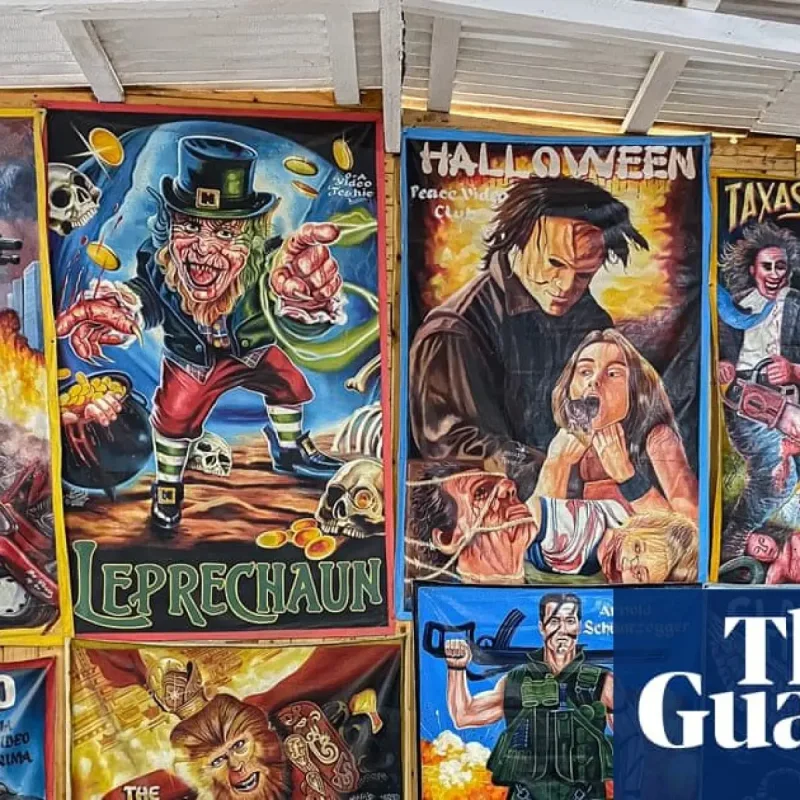
From the late 1970s to early 2000s, hand-painted film posters by local artists were a hallmark of Ghanaian film culture.
They advertised screenings at neighborhood video clubs after organizers found original posters failed to attract audiences.
Plot lines were mere starting points for humorous and surreal interpretations. Artists from different video clubs competed to create the best "forgery," as they called their work.
The practice declined around 2000 as more Ghanaians got electricity and their own TVs and video players. Many video clubs closed, and painters shifted to other work.
But the posters had gained global interest through books and exhibitions, turning old and rare pieces into prized collectibles.
The Global Resurgence of Deadly Prey
Interest in newly painted posters waned in the early 2000s but has since risen, driven by online marketing and a receptive Western audience of film lovers.
Deadly Prey Gallery, named after an action film, was co-founded in 2012 by Robert Kofi and Brian Chankin.
Kofi, a Ghanaian who worked as a "hype man" for video centers as a child, started collecting and selling posters.
Chankin, then a video rental store owner in Chicago, became a customer and later a business partner.
The gallery works with 15 artists, including Heavy J, who has painted posters for four decades. They connect artists to online customers and ship completed artwork.
Most orders come from the US, Kofi said.
Old action, science fiction, and horror films are in highest demand, with popular titles like The Exorcist, Star Wars, and Terminator.
Commissioned pieces start at $600.
Kofi, based in Accra, acts as manager and editor. He selects artists for each job, shares his vision, and visits their workspaces to review progress.
The Art of Visualizing the Invisible
In a studio in Ashaiman, artist Stoger worked on two commissions: one for the horror film Poltergeist, and another for the 1997 experimental drama Gummo, which features violence against cats and a character eating spaghetti in a bathtub.
His poster showed three cats and a man in a bath with a plate of spaghetti.
During a review, Kofi told Stoger that two cats were not aggressive enough and the food looked too clean.
"I want uglier cat scenes," Kofi said. "The spaghetti has to be dirtier."
Stoger, born Benjamin Amartey, was a sculptor before becoming a poster painter in 1992.
"I use my imagination to make scenes that will attract people so that they'll love the poster," he said.
The emphasis on exaggeration stems from an African tradition of "visualizing the invisible," said Joseph Oduro-Frimpong, director of the Centre of African Popular Culture at Ashesi University and a poster collector.
"The posters' audiences have not seen the film, so it's impossible for them to know [whether they are accurate]," Oduro-Frimpong said.
"Therefore, the artists tap into what they call imaginative painting. They will highlight these things and in doing so incorporate things that are not in there.
There is a kind of sensationalism to it."
When the Audience Fights Back
The reinterpretations sometimes led to threats, insults, or physical attacks from viewers who felt deceived.
Kofi recalled an incident in the 1990s when people beat him up after watching the action film Double Impact and realizing it lacked a beheading scene depicted on the poster.
At the Centre for National Culture in Accra, dozens of colorful posters from Deadly Prey Gallery are displayed.
They include Jennifer Lopez launching an arrow at a snake in Anaconda, and a mouse emerging from Jamie Lee Curtis' mouth in Halloween.
"We are preserving a tradition," Kofi said. "We are preserving a history."