Almost all of Italy's 8,000km of sandy coastline is run for profit, with private lidos dominating the shores.
Now, 'free beach' campaigners are pushing back against the mafia, the military, and those profiting from sun loungers and cocktails.
Walking along Italian beaches reveals a rainbow of colors: perfectly spaced parasols and deck chairs in red, orange, yellow, green, and more.
These are the country's famous bagni (lidos), formally known as concessioni balneari (bathing concessions). They offer orderly amenities like raked sand, ambient music, negronis, and even swimming pools.
Deck chairs are priced like theater tickets, with spaces by the water costing double those by the bar.
In Milano Marittima this summer, a parasol and two deck chairs cost €30 by the bar but up to €60 by the water.
Many families rent the same spot year after year.
Free beaches, or spiagge libere, are often remote and less attractive, near estuaries or eyesores, with litter and no lifeguards or toilets.
One Dutch holidaymaker near Naples complained of being shooed away from private beaches and finding no facilities on the free one.
The fight between privatized and free beaches has become controversial.
Italy has about 30,000 lidos, and a 2022 Legambiente report calculated that about 43% of sandy coasts are occupied by private businesses.
Campaigners and Local Battles
Danilo Ruggiero, director of the Mare Libero (Free Sea) campaign, says beaches have been transformed into little resorts with swimming pools, car parks, gyms, restaurants, and shops.
In Ostia, west of Rome, 80% of the beach is what he calls “the united states of lidos,” with walls, gates, and fences blocking access and views.
Tuscany and Romagna have the most densely privatized beaches. In Forte dei Marmi, 94% of the town beachfront is rented to resorts.
In nearby Pietrasanta and Camaiore, it's 98.8% and 98.4%, respectively.
Gatteo a Mare on the Adriatic coast had no free beach until public outrage forced 1.4% free access—just 10 meters out of 700.
Running a lido is profitable and often cash-in-hand, attracting organized crime. The campaign for free beaches overlaps with anti-mafia efforts.
The issue also feeds into overtourism concerns: how to enjoy the seaside if there's not enough space?
In Bacoli, a town on the Gulf of Naples, Mayor Josi Della Ragione has become nationally famous for liberating beaches from private profiteers.
He says beaches were cluttered with illegal sheds, barbed wire, gates, and intercoms. Access required ringing an intercom and being known.
Della Ragione says many lidos gained licenses through paying fines for unauthorized occupation, a practice he calls “legalized squatting.”
He deployed bulldozers to demolish illegal buildings on public land, facing a man with a chainsaw at one site.
Seventeen years ago, he co-created the social media campaign FreeBacoli.
After an arson attack on his family's delicatessen, he was elected mayor in 2015 at age 28 with nearly 65% of the vote.
His administration fell after a year, but he returned in 2019 and has been mayor for seven years.
Bacoli's town council owns over a quarter of the 13 sq km land, 60% of which is coastal.
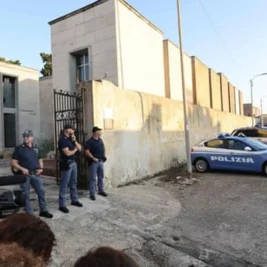
Villa Ferretti, a 19th-century villa with Roman ruins, fell into the hands of the Camorra clan Pariante, who closed public beach access.
Seized by the Anti-Mafia Investigation Division in 1995, it was transferred to the municipality in 2003.
In 2016, the council turned the beach and garden into a public park with an outdoor theater, leasing the villa to the University of Naples Federico II.
Della Ragione's vision is to give the city back to its citizens, rejecting patronage.
He says the “public good” in southern Italy is often seen as a cake to be divided among friends, voters, and relatives.
Miseno beach in Bacoli is another flashpoint.
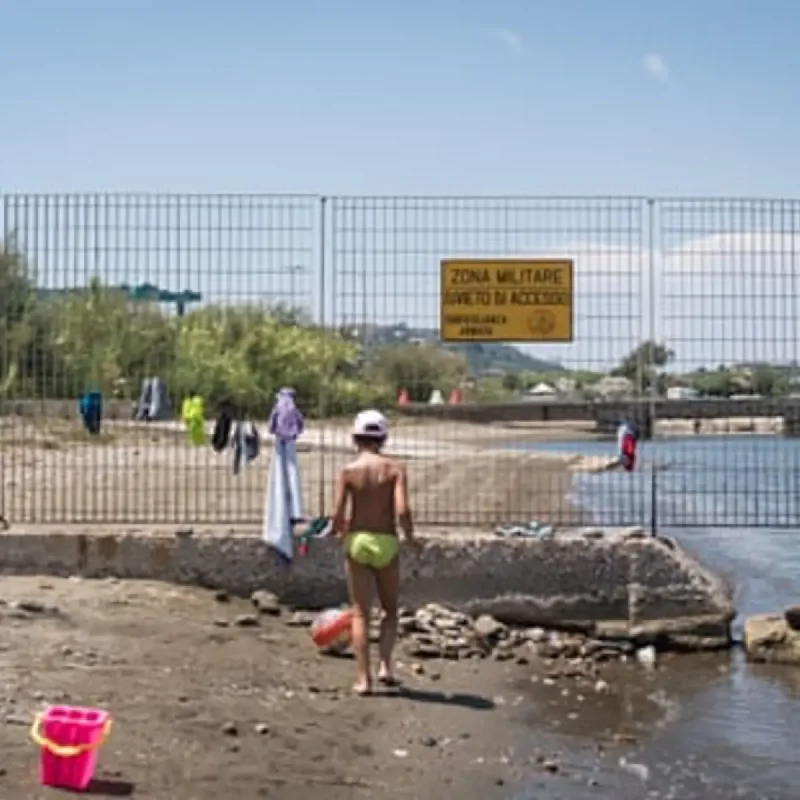
It's a half-mile curving finger of sand, but access is blocked by military resorts: navy, air force, army, coastguard, and Guardia di Finanza.
Together, they occupy about 100,000 sq meters of sand for exclusive use.
Finding an alleyway between installations leads to clear water and views of Procida, Ischia, and Capri.
The military presence is purely commercial: deck chairs and economics.
In military lidos, a piece (deck chair or parasol) costs only €3 with free parking, undercutting non-military lidos that charge €7 to €10.
Managers are local lads, not uniformed personnel, offering subsidized coffee and meals.
The free beach at Miseno is deliberately grotty, with wet wipes and straws in the sand. Private operators argue that public beaches are inevitably dirty.
Della Ragione acknowledges a cultural battle: people need education about littering.
For years, Mare Libero activists have held flashmobs and beach occupations.
Donn'Anna beach near Naples had been gated since 1999, accessible only at the discretion of a lido manager.
Of its 4,490 sq meters, only 290 were free. Mare Libero waged a campaign, organizing sit-ins and winning a court case.
In February 2026, the Campania regional administrative court upheld their cause, making Donn'Anna freely accessible. The group hopes to replicate this victory along the peninsula.
Della Ragione offers a socialist optimism: his battle for beach access is part of re-commoning all town council land.
“The sum of every small victory,” he says, “is a more just society.”