China's economic growth slowed sharply in the second quarter of 2026, with gross domestic product expanding by 4.3 percent year-on-year, according to data released Tuesday by the National Bureau of Statistics.
The sluggish performance, driven by cautious spending from consumers and businesses, threatens Beijing's official annual growth target of 4.5 percent to 5 percent.
That target is already the lowest set by the government in 35 years.
Chinese Premier Li Qiang flagged potential government intervention to counteract the slowdown and bolster demand during an official address this week, stating that authorities are “preparing and studying additional policies.”
The policy announcement comes as Beijing faces intense pressure to revive household confidence while relying heavily on booming industrial exports to sustain overall economic momentum.
“The authorities appear willing to curb over-reporting and allow published growth to come in near the bottom of their target range.
As a result, we are lowering our forecast for official GDP growth to 4.6pc,” said Julian Evans-Pritchard of Capital Economics.
The analytical firm maintains that its independent gauge, which uses unofficial data, places China's actual economic growth rate closer to 3 percent.
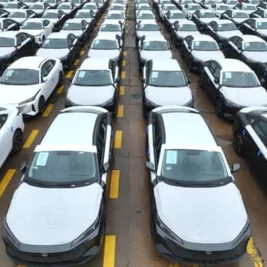
Meanwhile, the domestic demand deficit has caused a surge in cheap exports to international markets, with outbound shipments jumping 27 percent in June alone.
Subsidized manufacturing sectors like electric vehicles, semiconductors, and green technology are offloading excess supply abroad, drawing criticism from the United States and the European Union over trade imbalances.
Domestic consumers remain impacted by the 2021 property market crash, keeping the consumer confidence index below 90 points while youth unemployment remains above 15 percent.
The State Council pledged strategic interventions this week to counteract these persistent domestic market vulnerabilities, vowing to “expand domestic demand as the strategic bedrock ...
and better leverage consumption's foundational role in economic development.”
Analysts state that current official methods fail to address the core financial anxieties of local households, limiting the effectiveness of spending subsidies.
“Beijing is doubling down on its failed approach to consumption.
Until the material well-being of Chinese households improves, no amount of product innovation will loosen their wallets,” the firm Trivium China said.
Data showed a stark divergence between sectors, with industrial production rising 5.3 percent in the year to June while corporate capital investment dived 5.7 percent in the first half of the year.
“Continued to paint a picture of a K-shaped recovery,” said Jian Chang, an analyst at Barclays.
Traditional sectors like construction and low-tech manufacturing continue to lag far behind advanced industries such as renewable energy, artificial intelligence, and robotics.