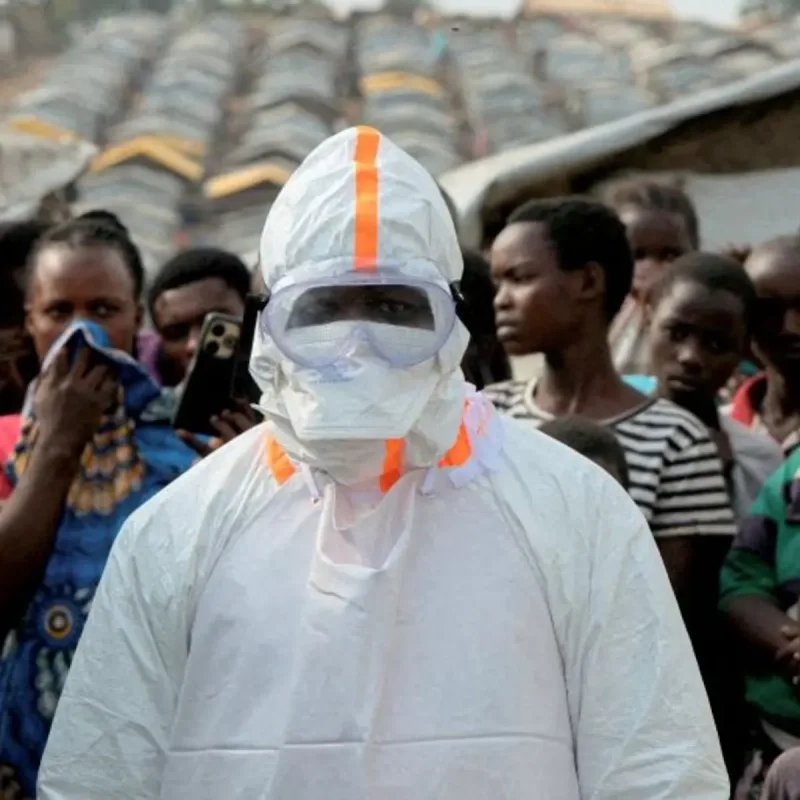
A rapidly expanding Ebola outbreak in the Democratic Republic of the Congo has infected 3,200 people and killed at least 1,405 as of July 26, 2026.
Government data released Sunday indicates that infections surged by nearly 1,000 cases in just 10 days.
The epidemic, declared on May 15, is caused by the Bundibugyo strain of the virus. Health officials have no licensed treatments or preventive shots for this strain.
Spread and Challenges
The World Health Organization reported that nearly 90 percent of all cases are concentrated in the northeastern province of Ituri.
However, the virus has spread to five provinces, including the major city of Kisangani, as well as neighboring Uganda.
Operational logjams continue to hamper containment efforts in remote regions across eastern Congo.
"In many cases the humanitarian community wants to help, but the real challenge is getting there," said Hedley Tah of the UN Humanitarian Air Service (UNHAS).
To assist ground operations, UNHAS flights have been mobilized to deploy medical personnel and diagnostic supplies.
"Moving samples for lab testing to ensure traceability can continue," Tah added.
Despite the rapid increase in recorded cases, public health officials noted that expanded testing and improved detection capabilities have helped identify previously unrecorded transmission chains.
International health authorities view the global threat from the outbreak as low. Ebola spreads only through direct contact with infected bodily fluids, not airborne transmission.
The U. S.
Centers for Disease Control and Prevention confirmed that patients are not contagious until symptoms appear, simplifying contact monitoring compared to respiratory pathogens.
"You cannot get Ebola from being near someone," the CDC said.
Response efforts in Congo remain severely complicated by local mistrust, worker strikes over unpaid wages, and ongoing violence involving rebel groups such as the M23 and the Allied Democratic Forces.
Medical workers report that delayed identification severely hindered early containment strategies.
"There's never been an Ebola outbreak that started with so many cases because it was so late to be identified," said Trish Newport, emergency program manager for Médecins Sans Frontières.
Human trials for potential vaccines and treatments targeting the Bundibugyo strain are currently underway, including clinical trials conducted by Oxford University and researchers in Ituri province.