The U. S.
military has paused its airstrikes on Iran following nearly two weeks of intensified bombing, as diplomatic efforts advance to prevent a full-scale war.
President Donald Trump has alternated between threatening more strikes and emphasizing ongoing negotiations. He dismissed concerns that rising gas prices could harm Republican chances in the midterm elections.
Israeli Prime Minister Benjamin Netanyahu's planned visit to Washington next week adds uncertainty. Israel joined the war in February but has remained absent from the latest American actions.
Iran's closure of the Strait of Hormuz, a route for 20% of the world's oil, has disrupted global shipping.
Diplomatic Signals and Mediation
Michael Singh, managing director at the Washington Institute for Near East Policy, said, "The Iranians understand that perhaps it could get worse because Israel could come into the conflict."
He noted that Israel's lack of involvement may signal a desire to limit the conflict.
Singh cautioned that the pause could be operational or diplomatic, saying, "If it turns into a multiday pause, that'll be something significant."
A regional official involved in mediation described the pause as a "positive signal" that helps de-escalation efforts.
Both countries seek to return to the interim ceasefire deal, with talks focusing on Iran managing vessel transit through the Strait of Hormuz with fewer restrictions.
Iran's Foreign Ministry spokesperson Esmail Baghaei confirmed that Iran and Oman held several rounds of technical talks about the strait over the weekend.
Progress was made, and discussions continued after the Omani delegation departed Tehran.
Economic and Political Pressures
The conflict has raised oil prices significantly, causing unpopularity among Americans and potentially putting Republican lawmakers at risk in November.
After the June interim ceasefire, control over the strait became contested. Iran demanded ships use a route near its coast and suggested charging fees.
Ship navigation shifted to a southern route along Oman's coast under U. S.
oversight, which Iran attacked.
The U. S.
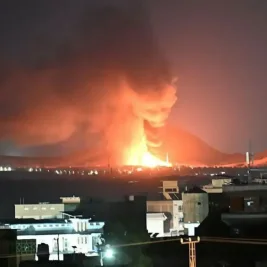
intensified strikes on Iran's coastal defenses to reduce Tehran's ability to target ships. The Trump administration expanded targets to include infrastructure deeper in Iran.
Singh believes these strikes aim to push Iran back to negotiations. He questioned whether Iranian diplomatic messages have become more conciliatory.
Iran's fractured leadership poses challenges, with internal factions wary that negotiating could be perceived as weakness.
Nonetheless, both nations need the strait reopened for economic reasons but differ on conditions and control.
Regional Tensions Remain High
Despite the pause, regional tensions persist.
Yemen's Houthi rebels claimed missile and drone attacks on Saudi Arabia in response to Saudi airstrikes on Hodeida.
They announced the closure of the Bab el-Mandeb Strait, increasing its importance for Saudi oil exports amid the Strait of Hormuz disruption.
The U. S.
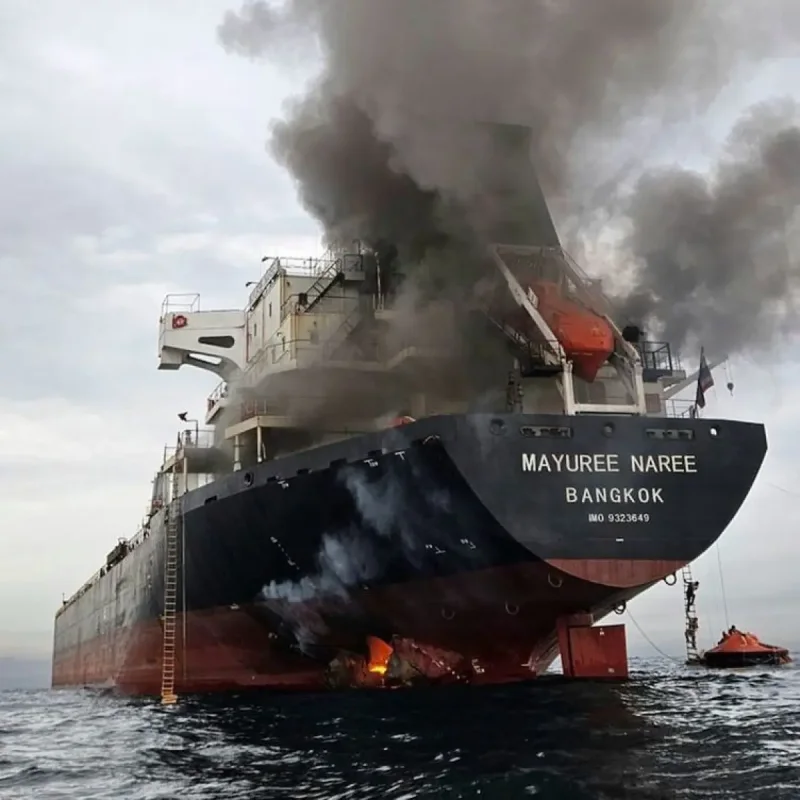
military continues enforcing a naval blockade on Iranian ports, recently disabling a Mozambique-flagged ship for violating the blockade in the Gulf of Oman.
President Trump reiterated his dual approach: "You can just keep doing exactly what we're doing and take them apart piece by piece.
We could do it in a more rapid fashion, which we might do. Or we can negotiate with them, which we're also doing right now."
He expressed doubt that Iran is "ready yet" to make a deal but believes they are becoming "more and more serious as the days go by."
Trump met with top national security aides to discuss the situation and potential strategies.