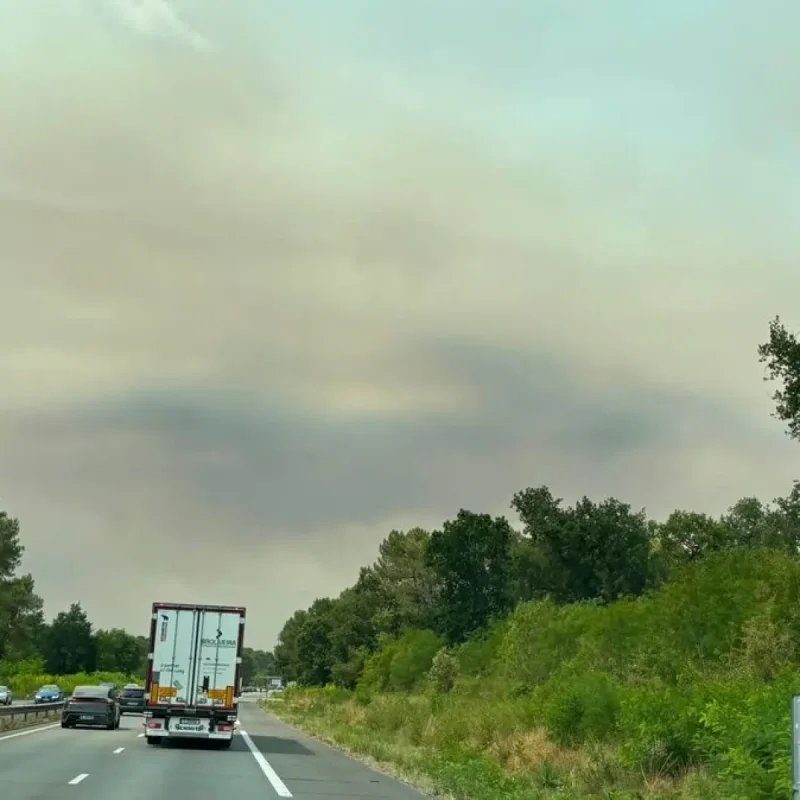
Wildfires in Madrid and Ávila continue to burn with slight improvement, forcing more than 90,000 people to evacuate, Spanish emergency services reported.
In Ávila, the fire near Burgohondo has scorched over 50,000 hectares, making it the most destructive wildfire recorded in Spain.
The blaze spans a perimeter of approximately 160 kilometers, leading to the evacuation of over 40,000 residents from sixteen municipalities, many displaced for up to five days.
The wildfire in Madrid's Sierra Oeste, formed by the merging fires of Villa del Prado and San Martín de Valdeiglesias, has slowed its progression.
Firefighting units have intensified suppression efforts, but the fire remains active with three fronts.
The most intense front is located north of the San Juan Reservoir, having consumed more than 27,000 hectares.
Jorge Llorente, Vice Minister of Environment for Castilla y León, described the Ávila fire as "complicated, with varied unknowns."
He emphasized the need for caution and collective effort.
Authorities have detained one individual and are investigating another for alleged involvement in the Burgohondo fire.
The fire is linked to the use of heavy machinery despite restrictions due to fire risk.
The San Martín de Valdeiglesias fire reportedly began from a roadside blaze caused by a burning vehicle.
The Villa del Prado fire ignited shortly after a nearby fire in Almoróx, Toledo.
The national emergency continues in Ávila, Madrid, and Toledo. The government plans to officially declare the affected areas "severely impacted" by Tuesday.
In addition to local and regional resources, the Military Emergency Unit and international teams from Portugal, Greece, and Turkey are assisting in firefighting efforts.
Other concerning wildfires persist in the Iberian Peninsula, including one in Vall de Uixó, Castellón, which has destroyed more than 7,000 hectares and caused 64,000 evacuations.
Sara Aagesen, Third Vice President and Minister for Ecological Transition, urged caution ahead of an anticipated fourth heatwave starting Tuesday.
"The risk of fires starting tomorrow is very high throughout the territory. Therefore, I ask for caution in this context," Aagesen stated.
She reported that at least 153,000 hectares have burned this summer, six times more than the same period last year.