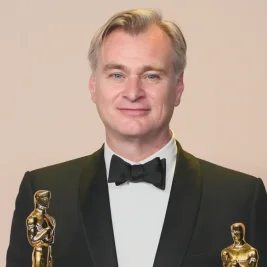
Classical scholar Emily Wilson, known for her acclaimed 2017 translation of Homer's Odyssey, has publicly criticized Christopher Nolan's latest film adaptation of the epic.
She described the movie as grandiose but superficial, lacking convincing themes and character development.
Wilson, chair of classical studies at the University of Pennsylvania, stated that the film "has nothing convincing to say" about central themes such as time, memory, history, and war.
She also noted that characters lack believable motivation and complexity, according to reports from the London Review of Books and The Guardian.
"Nolan's Odyssey lacks many of the elements that make the poem great," Wilson remarked. She criticized the narrative structure as gimmicky and the writing as abysmal.
Wilson highlighted that Nolan admired the opening line of her translation, "Tell me about a complicated man."
However, she added, "I would be ashamed to have written any part of this script." She told the Sunday Times, "It didn't land emotionally for me at all."
Despite her harsh critique, Wilson acknowledged the film's positive impact on public interest in ancient Greek literature.
She noted that the movie has drawn audiences back to theaters and increased sales of Odyssey translations, including her own.
"Nolan is doing his best to get the general public reading again, and I am grateful," she said.
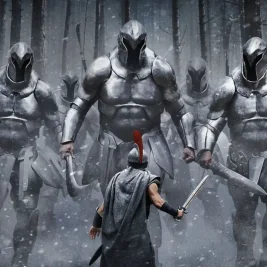
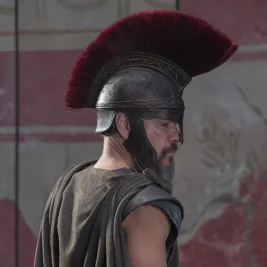
Wilson described Nolan's style in The Odyssey as combining trademark narrative jumps and visual spectacle but lacking emotional resonance.
She compared the film's effects to a Fourth of July fireworks display—visually impressive but shallow in narrative and emotional depth.
She noted the film's depiction of survival as a triumph, recurring scenes of drowning and destruction, and the male protagonist's quest to reclaim a female love interest.
These themes, she said, are consistent with Nolan's prior works.
Wilson pointed out that while adaptations can reinterpret source material creatively, Nolan's version fails to deliver on the original's complex themes and character development.
She contrasted it with other artistic responses to the Odyssey that rethink its structure and values, such as works by Euripides, Virgil, and contemporary authors.
Wilson remarked on the film's overwhelming spectacle, which often threatens to overshadow the story itself.
She noted similarities to other 21st-century epic films in style and scale but lacking the nuanced human scale of other recent adaptations like Uberto Pasolini's The Return (2024).