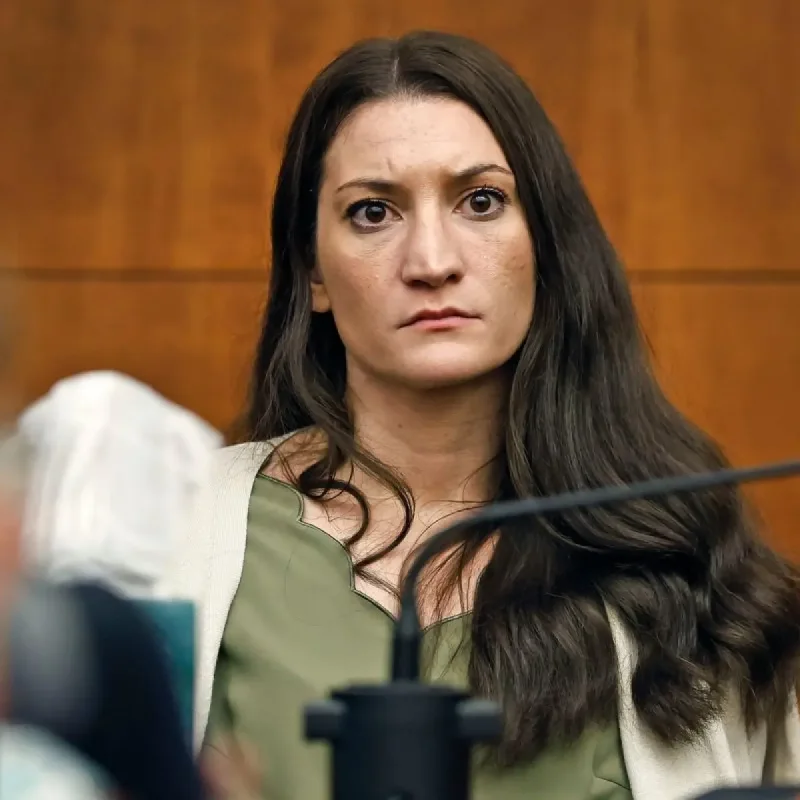
Opening statements began on July 27, 2026, in the murder trial of Lindsay Clancy at Plymouth Superior Court in Massachusetts.
Prosecutors and defense attorneys presented competing arguments regarding her mental state during the 2023 strangulation deaths of her three children.
Clancy, a former labor and delivery nurse at Massachusetts General Hospital, pleaded not guilty to three counts of first-degree murder.
The victims were her children: 5-year-old Cora, 3-year-old Dawson, and 8-month-old Callan.
Authorities allege she choked them with exercise bands at their home on Jan.
24, 2023, before jumping from a second-story window in an attempt to take her own life. The fall left her paralyzed from the waist down.
Her husband, Patrick Clancy, testified about her mental health struggles following the births of their children. He noted she experienced severe anxiety about returning to work.
"She just had a really hard time being separated from them," he said.
Insanity Defense vs. Prosecution's Case
Defense attorney Kevin J. Reddington presented an insanity defense, arguing Clancy suffered from postpartum psychosis.
He cited severe sleep deprivation, stress, and adverse reactions to psychiatric medications prescribed before the incident.
According to Reddington, Clancy reported hearing voices on the day of the killings instructing her to harm the children and herself.
"These children were loved, nurtured and cared for," he told jurors. Reddington emphasized that her severe mental illness directly compromised her actions.
"She loved those children right up to the time of their death," he said.
Prosecutor Shanan Buckingham rejected the mental illness defense, arguing Clancy acted deliberately and remains fully criminally responsible.
"This was not a woman in the throes of psychosis," Buckingham said.
He urged the jury to focus strictly on Clancy's individual actions, not broader maternal health care debates.
"This is not a public debate about women's mental health and how the medical system treats women. This case is about this defendant, Lindsay Clancy," Buckingham said.
Legal analyst Elyse Hershon noted the jury's verdict will hinge on their assessment of Clancy's intent and legal capacity.
"Whenever there are deaths of children, it rattles emotions.
Because these actions are incomprehensible and the outcome so horrific, people tend to want to hold someone responsible," Hershon said.
She explained that reactions often split between sympathy for mental health struggles and demand for accountability.
Expert witness Dr. Nicole Cirino, director of reproductive psychiatry at Baylor College of Medicine, explained that mothers committing infanticide while suffering from postpartum psychosis often act under severe delusions.
In their own minds, "they may be saving their children from damnation," Cirino said.
Dr. Catherine Birndorf, CEO of The Motherhood Center in New York City, highlighted legal challenges for mothers with perinatal psychiatric crises.
"Women who kill their children in the throes of this medical illness, postpartum psychosis, are seriously and profoundly mentally ill.
They are not evil," Birndorf said. She expressed concern about how the criminal justice system handles such cases.
"To me it's illness until proven otherwise," she continued. "The fact that we consider it criminal until proven otherwise is problematic."
Clancy faces a mandatory sentence of life in prison without parole if convicted of first-degree murder, or commitment to a state mental facility if found not guilty by reason of insanity.
The trial is scheduled to continue over several weeks.