Semiconductor giant Nvidia is negotiating a $250 billion deal to provide funding guarantees for a planned 10-gigawatt OpenAI data center campus in Piketon, Ohio, according to reports published July 27, 2026.
The financial backing would support a lease for the facility being constructed by SB Energy, a subsidiary of SoftBank, located 68 miles south of Columbus.
The overall project cost could surpass $500 billion when factoring in hardware, with initial operations expected to deliver 800 megawatts of power by 2028.
While the proposed $250 billion guarantee covers the physical lease, it excludes the $350 billion worth of chips required inside, though Nvidia chief executive Jensen Huang indicated the company is also discussing chip supply arrangements.
The deal aims to expand OpenAI's dedicated infrastructure, moving away from its reliance on leased capacity from cloud providers like Amazon, Oracle, and Microsoft.
Market Concerns Over Circular Financing
However, the potential arrangement has triggered significant concern among financial experts, who warn that supplier-backed customer expansion mirrors dangerous market patterns from the past.
"What is happening right now with OpenAI and others is that they have the need for computing, but apparently they don’t really have the revenue or the financial capability to engage in the capital expenditures necessary to support their activities," said Aleksandar Tomic, associate dean at Boston College.
Tomic highlighted that this interlinked spending creates artificial demand across the technology sector.
"Nvidia steps in and provides some funding so they can continue buying Nvidia chips.
Where the demand for the whole chain is coming from or where the money is coming from becomes a really big issue," Tomic said.
The academic compared the situation to the inflated revenues seen prior to the 2000 technology crash.
"Companies would engage in circular financing deals where they would essentially buy from each other and make it look like there was greater demand for their services than there really was.
At some point, the money runs out," Tomic said.
He noted that true demand must come from end users rather than interconnected corporate balance sheets.
"In other words, the demand is not as big as it appears to be because the companies are buying from each other, using their own money to some degree, as opposed to OpenAI having tremendous customer demand, monetising it properly and then using customers’ money to buy Nvidia chips.
They’re essentially using Nvidia’s money to buy Nvidia chips," Tomic said.
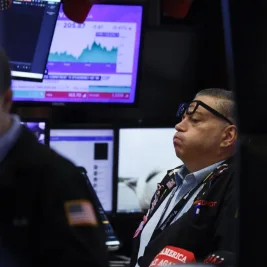
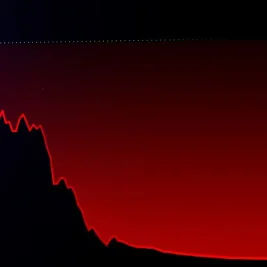
Following the report, Nvidia shares fell more than 4 percent in Monday trading, reflecting broader investor anxiety regarding chipmaker exposure.
"If everything is so hunky-dory and everything is full steam ahead in the entire AI ecosystem, why is this kind of deal even needed?
I think that’s what’s giving the market jitters because the question is: Why is this necessary?
Why is Nvidia trying to juice up demand for its chips in this particular way?" Tomic said.
Market commentator Jim Cramer also cautioned investors on Monday, comparing the trend to the vendor financing that preceded the dot-com crash.
"I lived through 2000," said Jim Cramer, host of Mad Money on CNBC.
Cramer pointed out the inherent danger when hardware vendors bankroll their own buyer base.
"I don't want the sequel," Cramer said.
He warned against recurring historical mistakes in corporate lending.
"What we learned in 2000 is that you don't lend to companies who buy your goods," Cramer said.
Cramer noted that OpenAI's ultimate ability to settle its obligations remains the critical factor for investors.
"If the buyer, in this case, OpenAI, can actually afford to pay for these chips, perhaps because it comes public ...
then Nvidia's in terrific shape," Cramer said.
He added that a revenue shortfall from the buyer would create serious widespread fallout.
"If the buyer can't pay, well, that's a different story," Cramer said.
Cramer emphasized that the entire tech ecosystem is heavily exposed to continued infrastructure buildouts.
"There are so many companies counting on the data center for their earnings," Cramer said.
He expressed concern over what might happen if market funding suddenly dries up.
"If the market decides it doesn't want to fund any more data centers, and the companies themselves don't have the money, or they don't get paid, then we're back in 2000," Cramer said.
Even with substantial cash reserves, Cramer maintained that vendors should avoid taking on customer debt obligations.
"Nvidia shouldn't make these guarantees even if it has all the money in the world. Just history, that's all, just history," Cramer said.
Offering a contrasting viewpoint, some industry investors argue that vendor-financed ecosystems represent standard economic activity rather than artificial inflation.
"Like a lot of things in life, there is a downside or upside spin, and that’s kind of the downside spin.
The upside spin is that this is an economy.
You caught me having just grabbed a coffee at my coffee shop, so that’s me buying something from him.
He could then take that money and invest it in my fund," said Michael Monaghan, founder of Founder’s ETF.
Monaghan maintained that intercompany investments drive legitimate growth across the sector.
"That’s not necessarily circular financing. That’s just an economy.
I understand the pushback, but I think there is less substance there," Monaghan said.