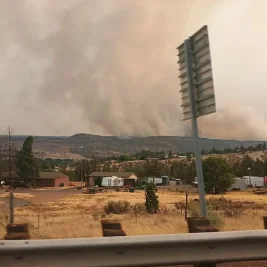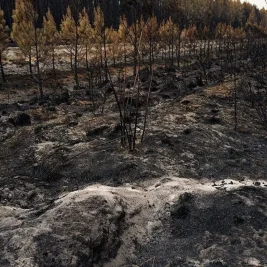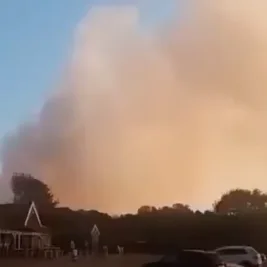
Wildfires sweeping across southwestern France and central Spain have forced the evacuation of nearly 380,000 people, severely disrupting local economies and prompting emergency responses amid record-breaking heatwaves.
In France's Gironde region near Bordeaux, more than 220,000 residents were evacuated as a wildfire burned an area four times the size of Paris.
In Spain, approximately 116,000 people have been displaced, with major fires affecting Madrid and Avila.
Economic Impact on Key Industries
The fires have caused widespread economic damage, hitting key sectors such as tourism, wine production, and forestry in France's Gironde region, which relies on these industries for about 7% of its economy.
The Bordeaux Gironde Chamber of Commerce and Industry reported that 14,500 local businesses cannot operate normally, intensifying the crisis.
Mark Hand, who runs walking and food tours in Bordeaux, said, "This city relies heavily on tourists – we get about 6.5 million tourists per year – and this is going to really severely impact us.
This is the busiest time of year. We are looking at a severe financial hit."
Michael Baynes, co-owner of a local real estate agency, added, "As a region, we rely on three things: wine, forestry and tourism.
Wine is on the way down. Forests are being burnt.
And tourism is being seriously hit."
French Finance Minister Roland Lescure described the situation as "an economic thunderbolt, hitting a region that did not need it."
The fires have also destroyed 200 homes and forced the closure of 70 campsites.
French President Emmanuel Macron called this the country's worst crisis since World War II, urging firefighting crews to "stay strong."
The French army has been deployed to assist, and the European Union has sent aircraft and helicopters to support firefighting efforts.
Spanish firefighter Javier García, with two decades of experience, stated, "This doesn’t have a precedent," referring to the unprecedented scale and intensity of the wildfires near Madrid.
Madrid's regional president, Isabel Díaz Ayuso, described the fires as the "worst fire in the history of the region," worsened by high temperatures, strong winds, and the merging of multiple fires.
Spanish Prime Minister Pedro Sánchez expressed cautious optimism, saying, "We are starting to see the end of the tunnel in the fight against these fires," although he warned the situation remained critical.
Authorities in France ordered an additional 4,000 evacuations in tourist areas along the Atlantic coast, expanding the largest peacetime evacuation in the country’s history.
Renewed flames near Grand Crohot beach on the Lège-Cap-Ferret peninsula threaten to spread the fire further.
Daniel Parker of Oxford Economics explained that disruption in Gironde’s key industries like wine production and logistics could quickly affect wider supply chains and exports.
Andrew Kenningham from Capital Economics noted that hotter European summers are shifting tourism patterns, with travelers increasingly avoiding peak summer seasons and opting for northern or higher-altitude destinations.
French and Spanish governments are mobilizing resources, with France easing access to benefits for affected workers and negotiating tax relief for businesses.
Insurers have been pressured to offer generous terms for those affected.
French military police patrol evacuated communities to prevent burglaries amid the mass displacement, according to the Gendarmerie Nationale.
Hadja Lahbib, EU Crisis Management Commissioner, emphasized the need for better preparedness, saying, "Climate change is accelerating. So our response must evolve just as quickly."
She highlighted the importance of investing not only in firefighting equipment but also in forest management and public education to reduce wildfire risks.