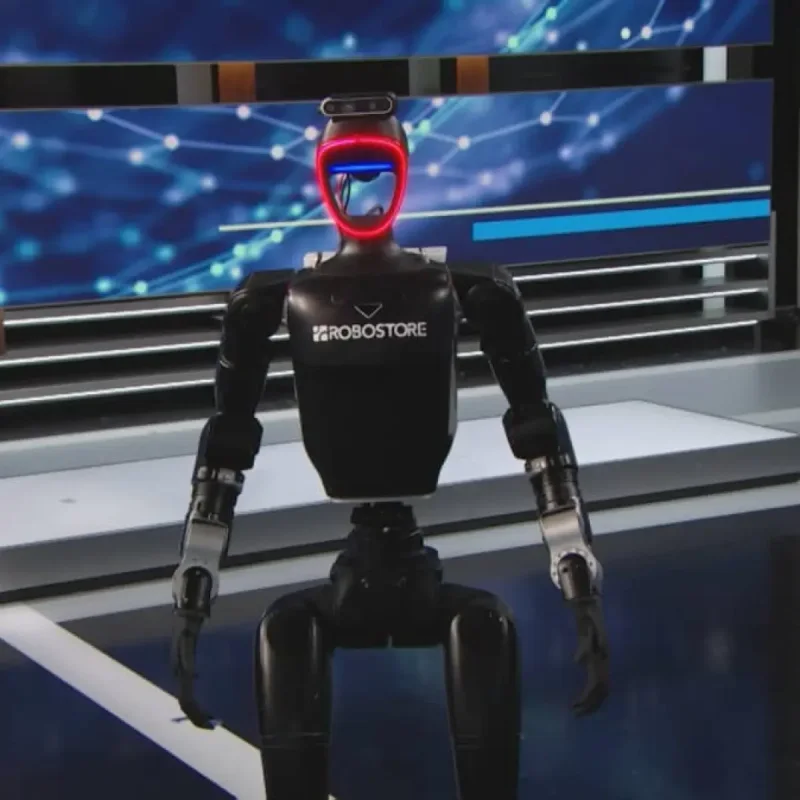
China's Commerce Ministry threatened retaliation on July 30, 2026, after the U. S.
Federal Communications Commission restricted foreign-made advanced robotic devices, including humanoids, over national security and cybersecurity concerns.
The FCC added foreign advanced robotics to its restricted import list on July 28, 2026, severely damaging bilateral trade stability according to Chinese officials.
The restrictions target new import approvals while allowing previously approved models.
Global Expansion of Chinese Robotics Firms
The regulatory move comes as Chinese robotics firms, including Geek+, AgiBot, and Unitree, expand globally.
Geek+ has deployed over 2,000 autonomous mobile robots across 10 logistics sites in the United Kingdom through its partner MotionTech.
UK logistics providers rely on automated mobile fleets to address labor shortages, improve picking speeds, and optimize warehouse storage footprints across major retail networks including Tesco, Asda, and Next.
MotionTech Account Director Barry Pemberton highlighted the immediate demand for automated warehouse logistics to maintain operational capacity. "Customers want fast deployable solutions," said Pemberton.
"They want high volume, high storage, fast picking... ultimately on a smaller footprint with a reduced headcount."
Pemberton noted that persistent worker shortfalls across Britain make automated adoption vital for market demand.
"We seem to have a very big shortage of labour in the UK at the moment.
These technologies are really important to keep businesses thriving and meet demand," Pemberton said.
Addressing future automation trends, Pemberton noted that humanoid units will serve complementary roles alongside specialized warehouse robotics.
"I don't think [humanoids] will change the landscape of the types of technology or the automation that's going to be put into place," Pemberton said.
"They're definitely going to be complementary."
The Trades Union Congress urged ministers to prioritize worker retraining and collaborative innovation during automation rollouts.
"Working with technologists, workers and unions can help steer the UK's research and innovation towards workers' priorities for automation...
avoiding job-cutting, low-productivity automation," the TUC said in its report.
China has integrated electric vehicle technologies, including sensors and batteries, into its expanding robotics sector under national strategic productivity initiatives.
Brookings Institution researcher Kyle Chan outlined the overlapping industrial technology ecosystem driving Chinese robotics development. "The robotics story builds directly on China's electric vehicle ecosystem," said Chan.
Chan noted that Chinese firms leverage manufacturing capacity and supplier networks across multiple robotics formats. "China is deliberately trying to build on some of those strengths," Chan said.
"As it reaches into new areas, from humanoid robots to industrial robots to delivery robots."
Automotive manufacturer XPeng unveiled its humanoid robot Iron as part of a broader corporate expansion into robotics.
"We want XPeng to be a high-tech company," said He Xiaopeng, Founder of XPeng. "In the future, any car company will transform into a car and robotics company."
Expanding end-to-end automation remains a primary long-term objective for logistics developers, according to Geek+ communications leadership. "We are working on...
end-to-end unmanned warehouse solutions," said Yanyu Liu, head of communications at Geek+.
North American distributor Robostore stated it is expanding U. S.
-based capabilities ahead of potential trade disruptions following the FCC decision.