A severe wave of wildfires across Britain has exposed a total absence of dedicated aerial firefighting aircraft.
Military helicopters remain deployed thousands of miles away in Cyprus as local emergency services battle hundreds of blazes.
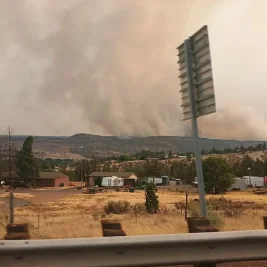
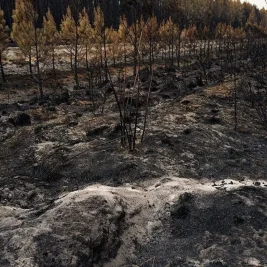
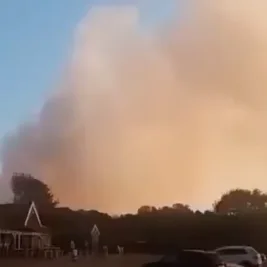
More than 200 blazes have broken out in England and Wales over a two-week period during prolonged dry conditions.
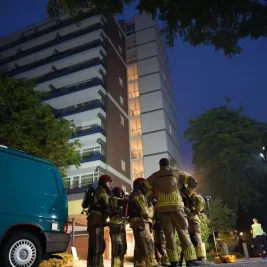
None of the 49 fire and rescue services in Britain currently possesses direct access to specialized water-bombing aircraft or firefighting helicopters.
The Ministry of Defence maintains Royal Air Force Chinook helicopters capable of dropping five tonnes of water per payload.
However, these aircraft and their specialized crews are stationed at RAF Akrotiri in Cyprus under long-standing operational agreements, rendering them unavailable for domestic containment efforts.
Devolved administrations have struggled with severe access limitations in remote regions.
Officials in North Wales waited 12 days before securing private helicopter support on July 24 to tackle a blaze at Rhinogydd, following delays caused by competing demand across the country.
“Given the vast and remote area I repeat my call for helicopter support to assist firefighting efforts,” said Liz Saville Roberts, Member of Parliament for Dwyfor Meirionnydd.
“The scale and inaccessibility of the Rhinogydd make this an exceptionally demanding incident. Every available resource should be considered.”
Scottish authorities recently rejected an offer of RAF assistance for a wildfire consuming 10 square miles near Aviemore in the Cairngorms.
First Minister John Swinney confirmed the military transport helicopters offered could only transport personnel and gear, rather than execute direct water drops.
“People deserve to know exactly what is happening and what support is being provided,” said Helen Jenner, MS for Bangor Conwy Môn and Deputy Leader of Reform UK Wales.
“They will also rightly question the Plaid Cymru Government's crisis management arrangements, as serious questions remain over why aerial firefighting support was not brought in sooner during such a fast-moving emergency.”
“Our immediate priority must be supporting those on the frontline and protecting local communities,” said Jenner.
“However, once this immediate threat has passed, Welsh Government must be prepared to answer difficult questions about its handling of these incidents and the lessons that must be learned to ensure Wales is better prepared in future.”
Unlike European partners operating large aerial fleets, such as France with 35 aircraft and Spain with 45, Britain historically relied on ad hoc private contractors.
Brexit also severed access to rescEU, the European Union's civil protection mechanism that pools emergency aviation assets among member states.
Sian Gwenllian, MS for Arfon, noted that emergency services hold differing views regarding helicopter integration.
She emphasized that general aerial capability falls outside Natural Resources Wales' remit, which covers only the Welsh Government Woodland Estate.
“Firstly, I should emphasise that the armed forces have no UK-based capacity at all for aerial firefighting, so we are unable to ask for their support,” said Sian Gwenllian, Gwynedd Maldwyn MS.
“I would also emphasize that providing general aerial firefighting capability for Wales is not within Natural Resources Wales’ remit.”
“Fire and Rescue Services lead the response to wildfire firefighting operations, including fire suppression, firefighter safety, incident command and decisions about tactics and deployment,” said Gwenllian.
“There are varying views within the emergency services and associated agencies about the role of helicopter firefighting support, but it was requested by the Fire and Rescue Service at the Rhinogydd site.”
“I intend to review the current capabilities available to fight wildfire, including aerial support, to identify what additional capabilities may be required, and what potential costs might emerge (recognising the context that these are UK-wide issues and will require discussions across the UK),” said Gwenllian.
Fire chiefs are pressing for permanent infrastructure upgrades.
Although the UK Government announced a £97 million asset modernization package to deploy specialized firefighters near vulnerable peatlands, leadership organizations warn that escalating climate risks necessitate dedicated aerial support.
“The science tells us we should expect larger, more frequent and more complex wildfires in the future,” said Phil Garrigan, Chairman of the National Fire Chiefs Council.
“That’s why we need continued investment in specialist wildfire capabilities, including aerial firefighting support, so we’re prepared for the risks ahead.”
Parallel developments in aerial firefighting technology are taking place globally.
Aviation developer Coulson Aviation introduced a next-generation long-term fire retardant named CFR HALO, engineered specifically for modern airtankers and delivery systems.
The specialized retardant features mission-optimized viscosity to reduce drift during air drops.
It is currently undergoing formal evaluation programs with CEREN in France and the USDA Forest Service in the United States.
“Wildfires have changed,” said Britt Coulson, President and Chief Operating Officer of Coulson Aviation. “The aircraft have changed.
The retardant hasn’t kept up.”
“Many legacy formulations trace their origins to an era before today’s airtankers and precision delivery systems,” said Coulson.
“We cannot keep fighting today’s fires with chemistry designed for yesterday’s aircraft.”
“As operators, we had to step in and build what the industry needs next,” said Coulson.
“CFR HALO is engineered for modern airtankers, with environmental performance built in from the start and a formulation designed to keep more of each load where firefighters need it.”
Coulson Aviation reported its global fleet has delivered over 10 million gallons of water and fire suppressants in 2026 across operations in North America, South America, and Australia.