Red Bull Racing and Williams F1 face distinct development challenges as Formula 1 enters its 2026 summer break after the Hungarian Grand Prix on July 30.
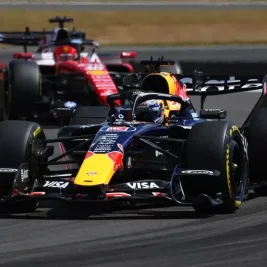
Red Bull has reduced its race pace deficit to top teams from 1.3 seconds in Australia and China to two or three tenths by the break, according to data from Paceteq.
The team introduced major update packages in Miami and Austria, heavily modifying the RB22 aerodynamically and shedding excess weight.
However, the $215 million cost cap imposes strict limits on further major car modifications for the rest of the season.
"We introduced a huge number of developments to the car between the first race and now to eliminate the large gap we started with as quickly as possible," said Team Principal Laurent Mekies.
"It is hard to imagine that we can maintain that pace. Nevertheless, we must continue to look at the best way to find those final three tenths."
Red Bull is also shifting its development timing, aiming to balance resources for next season earlier due to regulation stability.
"I do not know how other teams are handling that, but it is absolutely true that at a certain point we have to make a decision about the balance between this year and next season," Mekies said.
"I expect we will make that decision significantly earlier than last year, especially given the current regulations."
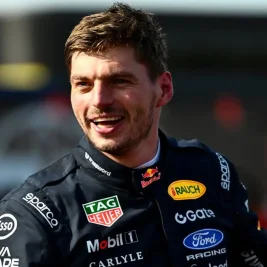
Despite finishing second in Hungary, Max Verstappen expressed strong frustration over the RB22's downshifting and balance.
Former driver Jeroen Bleekemolen noted that Verstappen's relentless standard pushes the team aggressively forward.
"I actually like Verstappen's mentality. He just wants to win, so finishing second is actually nothing to him," Bleekemolen said.
"When you hear him talk to the team, the car is nothing at all. He only had understeer and problems with downshifting.
If you think about it, it is not that bad, but with him it is black or white."
Bleekemolen highlighted that Verstappen's uncompromising demands require a resilient team environment.
"Yes, but that does not interest him at all. That is the funny thing about Verstappen.
It suits him though, because as I say, it is really black and white," Bleekemolen said.
Meanwhile, Williams sits ninth in the constructors' championship with 11 points, hampered by persistent aerodynamic balance issues on medium-to-high-speed tracks.
"This was a tough weekend for us. It was a constant struggle," said driver Alex Albon.
"We knew this circuit would not suit us and would expose our weaknesses. We struggled with balance issues all weekend and also suffered a lot from the wind."
Albon pointed out the team effort in the factory aimed at resolving these operational struggles.
"We know which issues we need to solve, and I think the work being done at the factory is the biggest collective effort I have seen within the team to improve this situation," Albon said.
He expressed hope for recovery after the mandatory break.
"I am convinced we are heading in the right direction. It is just a shame that we are in this position in the first place.
Hopefully, we can rest well during the summer break and come back stronger as a team," Albon said.
Teammate Carlos Sainz experienced mid-race contact with Oscar Piastri following a communication issue regarding blue flags.
"I actually drove a strong race and was able to fight with the Haas cars, which were another half a second faster than us," Sainz said.
"Throughout the race we had problems receiving information about blue flags.
During my battle with Fernando, Oscar suddenly appeared in my blind spot, causing us to unfortunately make contact."
A subsequent time penalty and double pit stop under the Virtual Safety Car dropped Sainz further down the order.
Sainz reflected on his personal speed while stressing the group's collective task ahead.
"Looking back at the first half of the season, I am satisfied with my consistent performance and the speed I manage to extract from the car every weekend, despite our problems," Sainz said.
"However, we have a lot of work to do for the second half of the season.
The most important thing is that we keep working together as a team as we are doing now."
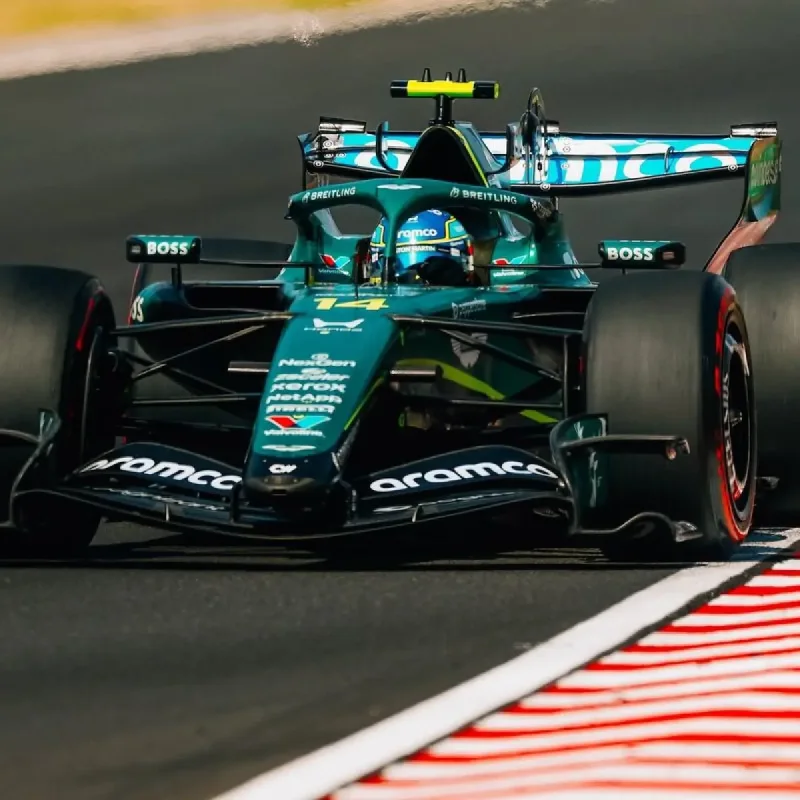
Sainz believes Aston Martin's sudden qualifying jump in Hungary proves that mid-grid teams can turn their fortunes around.
"As a team, we have to look at it in a positive way, and I want everyone to be positive about it rather than afraid," Sainz said.
"For me, it mainly proves that when you understand what your limitations are and you see another Formula 1 team with similar facilities to yours make such a big turnaround and add so many points of downforce to the car within six months, the courage is there for us to prove to them and to ourselves that we can do the same."
He urged Williams to critically evaluate its internal capabilities to match competitor progress.
"And if we do not do the same, why? Why do we not have that capacity?"
Sainz said.
"So for me, it is important looking ahead to show that we can also have the capacity to make a turnaround like another midfield team has just done right before our eyes."
Comparing development baselines, Sainz highlighted how quickly competitive orders shift.
"So Aston went from less downforce, a worse chassis than us in Spa, to currently having the best downforce in the midfield," Sainz said.
"So it is up to us to find the solution to add downforce and find the evolution.
So I see it positively, in the sense that the team should look at that and say: yes, it is possible if you do things right."
However, upcoming upgrades scheduled for Baku in September face cautious scrutiny within the squad.
"I do not know what kind of upgrade Aston had, I can only dream of that, we can only dream of such an upgrade," Albon said.
"All credit to them.
We will fight with them in some races purely because of straight-line speed, but I can tell you they are significantly faster than us in the corners."
Albon remains clear-eyed regarding the realistic scope of their upcoming developments.
"It is an eye-opener, also because I think we know what our Baku upgrade is, and it is not this, so we have work to do," Albon said.
Albon described the long-standing aerodynamic issues in the FW48 as fundamental traits present since 2014.
"We know the car's weaknesses, we know the direction we need to go, and the work done at the factory is the biggest effort I have seen from the team to address these genetic DNA issues," Albon said.
He emphasized that current package updates will not fully cure the handling limitations before next year's chassis reset.
"Is it cured by Baku? I doubt it.
Many of the Baku updates were planned a long time ago, and what we are really sinking our teeth into is next year's car," Albon said.
Explaining the handling inconsistencies on track, Albon highlighted how environmental changes disrupt performance.
"The wind gusts, and we are talking about free-wheeling.
You try to push, and I think there were six laps in the race where the wind stabilized and I could finally get into a rhythm.
Then the wind picks up again and you are back in that cycle where it feels like you are making mistakes, but you are not," Albon said.
He described the loss of predictable grip during stints.
"You drive in the same spots, do the same things, but it simply lacks consistency," Albon said.
Despite the current operational strain, Albon reiterated his support for the engineering team's trajectory.
"I really believe we are doing the right things, so it is a shame we are here in the first place.
But the effort to get back on track is the largest I have seen at the team," Albon said.
Williams now focuses its long-term engineering reset on eliminating these core aerodynamic flaws entirely for the 2027 season.