Republican Sen.
Cynthia Lummis of Wyoming blocked a Senate resolution on September 29, 2026, that criticized the Trump administration's use of taxpayer funds for televised advertisements featuring President Donald Trump.
The measure, introduced by Democratic Sen.
Maggie Hassan of New Hampshire, sought to express the sense of the Senate that government funds should not finance the broadcasts aired earlier in the month.
Hassan attempted to pass the resolution via a fast-track unanimous consent request, which failed after Lummis objected on the Senate floor.
Hassan argued that federal revenues should prioritize public welfare rather than political promotions, urging the president to fund personal messages with private wealth.
The resolution stated: "It is the sense of the Senate that the advertisements promoting President Donald Trump that aired in September 2026, which included the direct language 'paid for by the U.
S. Government,' should not be paid for by the United States government."
The New Hampshire Democrat emphasized that citizens expect government accountability regarding public monies.
"The American people want their tax dollars to go towards helping them and keeping them safe, not propaganda campaigns for a president," Hassan said.
"He's welcome to run whatever ads he wants with his own riches, but with taxpayer dollars, money that people have worked hard to earn, he needs to follow the law."
Lummis defended the broadcasts by aligning with White House assertions that the spots serve as standard public service announcements rather than campaign material.
"Presidents of both parties have used public service announcements to speak directly to the American people for decades," Lummis said.
The Wyoming Republican maintained that the overarching themes of the messages focus on foundational American principles.
"The message at the heart of these PSAs is a simple one: American values are worth defending against the failed ideologies of communism and socialism," Lummis added.
"If that is what has the senator from New Hampshire concerned, I'd suggest the concern says more about her side of the aisle than it does about the PSA."
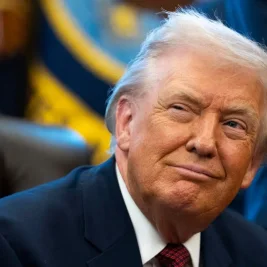
President Donald Trump rejected claims that the broadcasts constitute political advertising during an Oval Office briefing on September 30, citing his status regarding future ballots.
"Well, I'm not running for office, first of all, and so the ads are given by me, but I'm not running for office, and I don't talk about anybody," Trump said.
The president categorized the broadcasts as patriotic messaging designed to lift national morale.
"But when I'm talking about making America great, making our country great, that's a countrywide ad. That's an ad for the spirit of our country," Trump said.
Addressing potential financial disputes, Trump offered to cover the expenditures personally if formal determinations mandate it.
"Now, if somebody said that that's wrong, I'll gladly pay the money. But these are ads for the country," he added.
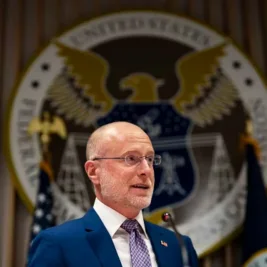
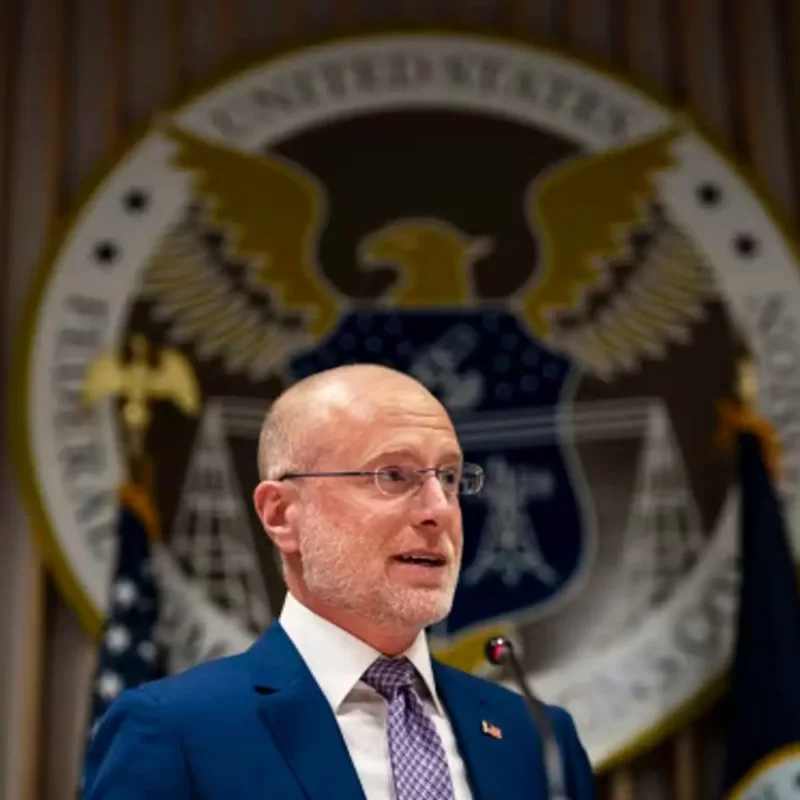
In a separate news conference on September 30, Federal Communications Commission Chair Brendan Carr dismissed demands for regulatory oversight of the government-funded broadcasts.
"It doesn't strike me as anything at all out of the ordinary," Carr said.
Carr characterized the spots as routine administrative communication and laughed off claims labeling them political propaganda.
"There's nothing in there that strikes me that merit any sort of FCC review," Carr said.
Responding to a complaint filed by progressive advocacy group Public Citizen regarding recycled 2024 campaign footage, Carr minimized the challenge.
"There's groups on the left that have, you know, long worked and pushed to weaponize the FCC's license renewal process," Carr said, adding that the ads "don't raise any red flags."
FCC Commissioner Anna Gomez, the sole Democrat on the panel, expressed concern regarding the timing and content of the broadcasts in a statement to NBC News.
"I recognize the concern shared by others that taxpayer dollars are being used to promote a political message, particularly given the timing of these ads coming so close to an election," Gomez said.
Gomez suggested that oversight responsibilities ultimately lie with lawmakers in Congress.
"While it is not surprising to see the FCC exercise a double standard when it comes to its investigative decisions, I am certain we will hear more about this from folks in Congress, who are ultimately responsible," her statement said.
The administration's ad usage has drawn broad pushback, with Senate Majority Leader John Thune telling reporters, "It's a great message.
I like the message, but it shouldn't be paid for with taxpayer dollars."
Retiring GOP Sen.
John Cornyn of Texas noted that the practice is inappropriate, stating, "It's not even a close question," while Senate Minority Leader Chuck Schumer called the funding an "absolute violation of what democracy is supposed to look like."
Public Citizen's complaint asserts that federal law expressly bars using public appropriations for government propaganda or political advertising.