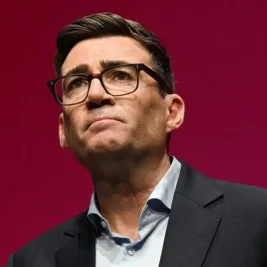
Drivers across England, Scotland and Wales will get stronger protection from unfair private parking charges under a new government code introduced by Prime Minister Andy Burnham.
The code, laid before Parliament on October 20, 2026, guarantees time to decide whether to park, extra time to leave, and cancellation of charges in specified circumstances.
Motorists will receive five minutes to decide whether to use a car park and 10 minutes to leave after their parking session ends.
Charges must be cancelled on appeal when drivers provide evidence of qualifying circumstances, including medical emergencies, vehicle breakdowns and malfunctioning ticket machines.
The rules also cover honest mistakes, such as briefly stopping to check directions.
For minor errors, including forgetting to display a parking permit, entering an incorrect registration number or failing to confirm a vehicle's registration at a payment machine, the maximum charge after a successful appeal will be £20.
The maximum private parking charge will remain capped at £100.
Operators that fail to comply with the code risk losing access to Driver and Vehicle Licensing Agency data, making it harder to identify registered vehicle owners and pursue payments.
Burnham said the changes were intended to prevent motorists from facing disproportionate penalties for brief delays or genuine mistakes.
"Being a few minutes late back to your car or typing one digit of your numberplate wrong shouldn't end with a hefty fine landing on your doormat," he said.
"These charges leave people feeling ripped off and out of pocket, so I'm putting a stop to them.
We are introducing clearer rules, longer grace periods and lower charges for genuine mistakes, while going after the deliberate scams that rip drivers off."
The Department for Housing, Communities and Local Government said the code would establish clearer standards for private parking operators.
Secretary of State Angela Rayner said the measures would provide motorists with protected time to park and leave while strengthening oversight of the industry.
"Parking should be straightforward, not another everyday hassle," she said.
"These changes mean drivers get a fairer deal, protected time to park and leave without fear of being unfairly charged, and confidence that private parking providers are held to a higher standard."
The government also announced tougher action against businesses that manipulate vehicle odometers to conceal a car's actual mileage.
Known as car clocking, the practice is already illegal, but its addition to the prohibited practices list under the Digital Markets, Competition and Consumers Act 2024 is intended to make enforcement easier and protect used-car buyers.
Industry and Consumer Reaction
Private parking enforcement has expanded significantly.
RAC analysis of government data put the number of parking charges issued during 2025-26 at approximately 17 million, a 17% increase from the previous year.
Separate figures cited by the government put the total at just under 17 million.
The RAC and consumer advocates have argued that the proposed protections do not address every concern.
Which?
criticized the decision to retain the £100 maximum charge instead of adopting its proposed £50 cap, and raised concerns about the absence of a fully independent appeals body.
Jack Cousens, head of roads policy at the AA, said the measures could improve protection against operators that pursue motorists aggressively.
The British Parking Association also welcomed the framework, while noting that many of its principles already appeared in the industry's voluntary code introduced in 2024.
RAC head of policy Simon Williams said the proposals fell short of the organization's demands.
The RAC has called for debt recovery fees added to parking charges to be prohibited and for existing industry-run appeals bodies to be replaced by a single independent organization.
The government has committed to consulting on debt recovery fees as soon as possible in 2027.
These additional fees are currently capped at £70, and the consultation will consider whether they should be reduced or abolished.
The code follows a public consultation conducted from July to September 2025 that received 4,526 responses from members of the public and industry representatives.
Parliament will scrutinize the framework before ministers move to bring it into force as soon as possible.
The government also plans to establish an independent Scrutiny and Oversight Board to examine operator data, enforcement practices and the handling of appeals.