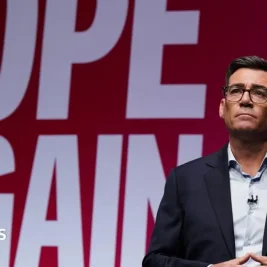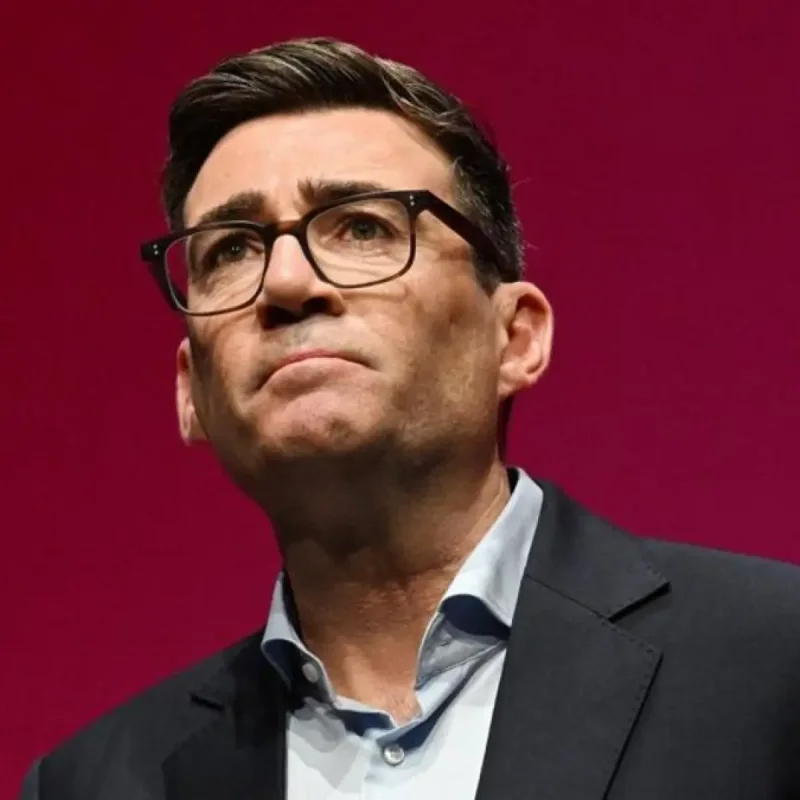
British Prime Minister Andy Burnham announced plans during his party conference speech on October 2, 2026, to pass legislation in the current parliament modifying the state pension triple lock policy.
The change aims to redirect long-term financial savings toward funding a free-at-the-point-of-use national care service in England.
Official guidance accompanying the prime minister's address confirms that lawmakers will vote on structural changes to the policy during this parliamentary session.
While the current triple lock guarantee will remain operational until 2030 to fulfill Labour's manifesto commitment, future adjustments will modify the earnings growth component to curb substantial automatic pension surges caused by temporary wage spikes.
Projected Savings and Economic Uncertainty
Government projections estimate that the statutory adjustment will lower state pension expenditure by 15 billion pounds annually by the end of the 2030s, escalating to an annual savings of 50 billion pounds by 2050.
Economic research published on Friday by the Resolution Foundation indicated that actual fiscal savings remain dependent on broader economic stability, estimating potential annual savings between zero and 24 billion pounds based on historical wage trends.
Think tank leadership noted that long-term fiscal performance under the adjusted model will closely reflect broader earnings trends.
"The adjusted triple lock saves most in a volatile world, and so saves nothing in the 90s or 00s, and £24bn in the 10s," said Ruth Curtice, chief executive of the Resolution Foundation.
Curtice highlighted the economic risks associated with prolonged stagnation in worker pay.
"Over the longer term, which will most likely deliver some mixture of all of these economic realities, the new mechanism should trend closer to earnings," said Ruth Curtice, chief executive of the Resolution Foundation.
She stressed that structural protections inside the reform could remain costly without wage growth.
"If real earnings growth permanently disappoints then even the protections in the new mechanism could prove expensive.
A new, if not the main, reason to fight to avoid stagnant wages," said Ruth Curtice, chief executive of the Resolution Foundation.
The policy announcement faced immediate pushback from opposition party leaders, including the Conservatives, Reform UK, and the Liberal Democrats.
Union leaders also warned against altering pension guarantees.
Getting rid of the pension triple lock to help fund social care changes would be "electoral suicide," said Sharon Graham, general secretary of Unite.
Despite political criticism, recent survey data from YouGov indicates public support for the government's proposal, with 48 percent of surveyed voters backing Burnham's plan compared to 28 percent opposed.
Under the proposed overhaul, millions of retirees are expected to benefit from the newly established English national care system, which will mirror Scotland's model by covering individual care costs while excluding residential accommodation fees.
Additionally, the government pledged to exempt lower-income pensioners from income tax obligations during the current parliamentary term.