Pochettino said.
The American coach defended his role, stating his primary responsibility remained preparing the available squad.
"It's a rule for the federation to apply and to try [to overturn the ban]. My position was to train the team.
If Balogun is available because FIFA allow for you to have the player, it's not a problem," Pochettino said.
He concluded by expressing disappointment over how external arguments took precedence over football history. "I feel disappointed with too many people.
They put politics and manipulation, talk about ethics and integrity [first].
If we talk about the history of this game, I am disappointed in a personal way," Pochettino said.
United States defender Tim Ream supported his coach's view, stating the locker room remained insulated from the public debate.
"No, it had no impact. We've done a good job with this group of allowing outside noise to be outside noise.
It's got nothing to do with us as players and getting ready for games," Ream said.
Ream minimized the distractions as a standard reflection of modern media environments. "It's one of those things.
That's the world we live in.
We were fully focused on us as a group and as a team and fully focused on the game and not really worrying about what was being said or debated in the outside world," Ream said.
The controversy has generated demands for leadership changes within football's governing body from political figures like Liberal Democrats leader Sir Ed Davey.
"Infantino must go," Davey said, criticizing the apparent political interference.
Davey emphasized the cultural ownership of the tournament beyond organizational bodies. "No matter where it is held, the World Cup belongs to the fans," Davey said.
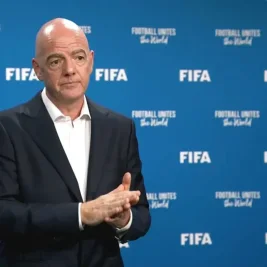
FIFA president Gianni Infantino, who defended the independence of the disciplinary committee, has no intentions of stepping down ahead of next year's elections.
>>> Pudu Robotics to Open Fully Autonomous Robot Hotel in Guangdong by 2027
He holds solid support from South American, Asian, and African member associations.