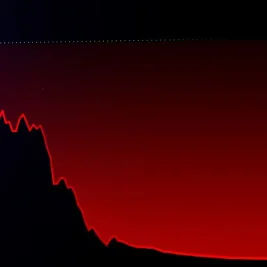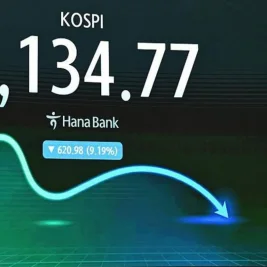
In early July 2026, the Direxion Daily Semiconductor Bull 3X Shares (SOXL) declined by approximately 30% over the preceding month, tracking a sharp cooling in chip stocks.
This decline highlights the structural volatility risks inherent in leveraged funds.
The exchange-traded fund manages around $11.5 billion in assets and targets 300% of the daily returns of the NYSE Semiconductor Index.
Its concentrated exposure includes major chip companies, with Nvidia comprising roughly 8.4% of the underlying index as of March 31, 2026.
Volatility Decay and Daily Reset Mechanism
The fund operates with a net expense ratio of 0.75%, capped through September 1, 2027, against a gross ratio of 0.91%.
Due to its daily reset mechanism, the fund is engineered strictly for short-term tactical trading rather than long-term holding.
The mechanics cause mathematical erosion known as volatility decay or beta slippage when markets move sideways.
A two-day simulation demonstrates how a 3x leveraged fund loses value even if the underlying index experiences symmetrical percentage shifts.
For example, if the index rises 10% on day one and falls 10% on day two, the index returns -1% net.
However, the 3x fund would drop 9% over the same period, illustrating the compounding drag.
This compounding drag caused the fund to collapse roughly 90% in 2022, while the broader semiconductor sector dropped around 35%.
Management from Direxion explicitly states that the vehicle is designed for single-day exposure rather than durable long-term investment.
As of early July 2026, the fund trades within a range of $180 to $200.
Future performance remains dependent on AI infrastructure spending, realized market volatility, and corporate earnings from major index drivers like Broadcom and Nvidia.