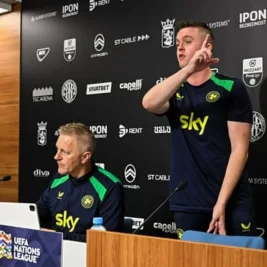

The Football Association of Ireland (FAI) has announced its intention to relocate the upcoming home UEFA Nations League match against Israel from Dublin to a neutral venue, pending approval from UEFA.
The game, scheduled for October 4, is expected to move from the Aviva Stadium to a neutral ground, with Budapest, Hungary considered a likely alternative, according to RTÉ Sport.
The decision follows intense domestic pressure and widespread public calls for a boycott of the fixtures due to the ongoing conflict in the Middle East.
The FAI board held consecutive meetings to determine operational logistics and engaged in discussions with UEFA before opting to delay an official statement until after its next board meeting on June 11.
"The association reiterates that it is the responsibility of the board of the FAI to protect the future interests of football in Ireland," the FAI stated in a media release, emphasizing that outside pressures would not dictate its operational choices.
Political Reactions
Irish government officials and political parties expressed diverging views.
Opposition groups tabled motions in the Dáil demanding a total cancellation of the matches rather than a venue alteration.
Sinn Féin leader Mary Lou McDonald said, "Our motion supports the Stop the Game campaign - the call is quite clear for the game not to proceed in Ireland or anywhere."
McDonald insisted that moving the match failed to address core ethical issues.
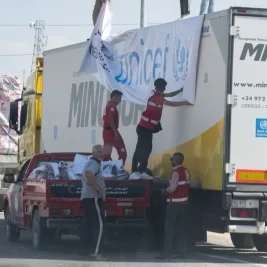
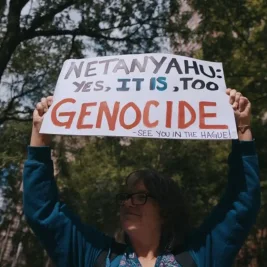
"There is no support for our national team to play, under our tricolour, against Israel while there is a genocide ongoing," she said.
The Social Democrats also voiced disapproval, with spokesperson Sinéad Gibney characterizing the venue shift as an evasion of responsibility.
"Moving the fixture is an attempt to brush this under the rug - and will deny the Irish people an opportunity to engage in peaceful protest," Gibney said, adding that it does not change the fact that the game should not be played.
She urged state authorities to intervene.
Government Stance
Taoiseach Micheál Martin focused on regulatory penalties Ireland would face from UEFA if they refused to play.
"That has been my main concern, that the Irish team does not unduly suffer as a result of anything that may happen," he said, acknowledging public distress over humanitarian conditions in Gaza.
Tánaiste Simon Harris clarified that neither players nor the government have legal power to decide on international fixtures.
"This nothing to do with the players, and there should be no pressure applied to the players who play with distinction wearing our national jersey," Harris said, noting that legislative votes would not alter the regulatory framework.
Harris urged the FAI to resolve the matter swiftly.
"I really encourage the FAI to come to that decision this week to bring clarity to the matter.
This shouldn’t drag on and on," he said.
He also pushed back against assertions that moving the match would harm diplomatic standing, emphasizing the need to differentiate between government actions and citizens.
The Stop the Game campaign group vowed to sustain demonstrations regardless of the venue change, comparing the scenario to historical sporting boycotts against apartheid South Africa.
"Our message for the FAI and government will continue to grow louder: Not here, not anywhere. No game," the group stated.
The FAI previously noted that a refusal to play would result in a forfeit and potential tournament disqualification under UEFA guidelines.