A severe humanitarian crisis persists in Gaza as Israeli military expansion and stringent border restrictions block structural reconstruction nearly a year after a ceasefire endorsement.
Israeli forces have systematically expanded control to nearly 70 percent of the enclave while blocking essential structural materials from entering through border checkpoints.
Severe restrictions on items categorized as dual-use have halted essential repairs across the region.
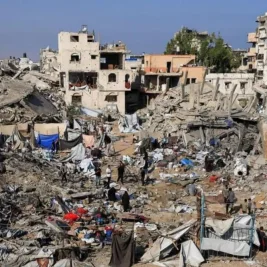
On September 16, a damaged residential building in Gaza City collapsed, killing at least 21 people who had returned due to a lack of shelter options.
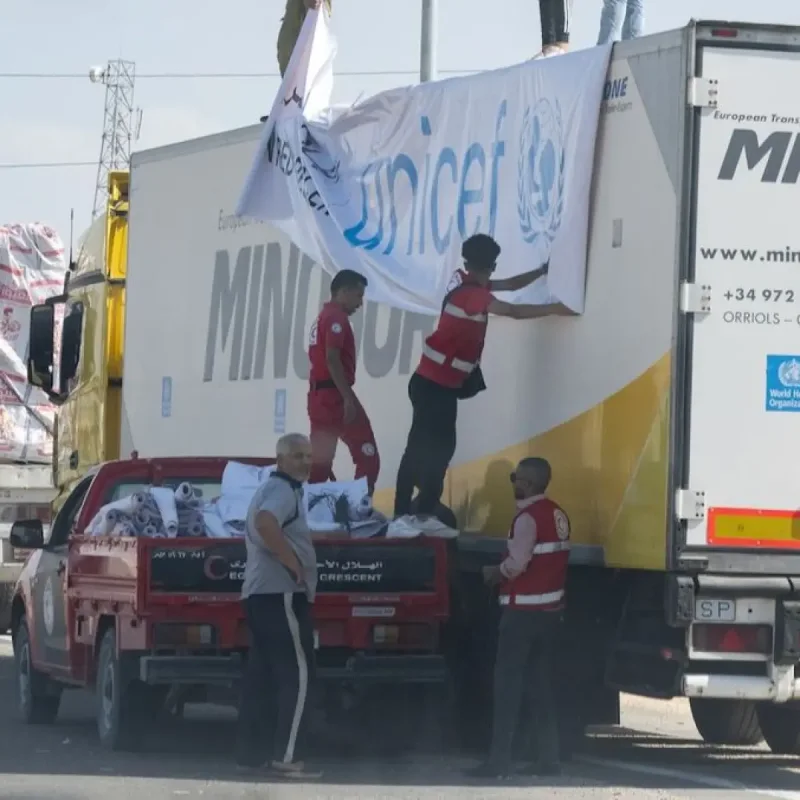
Humanitarian groups, including the Norwegian Refugee Council, report that Israel continues to block caravans, tent supplies, and basic building materials.
Despite ceasefire terms requiring Israel to permit 600 aid trucks daily, average entries dropped to just 69 trucks per day during July and August 2026.
While commercial food shipments have eased the famine, non-food necessities remain heavily restricted.
Israeli authorities continue to enforce a control list expanded from standard international agreements, withholding approval for items such as generators, metal pallets, crutches, and medical equipment.
Border controls are currently harder to navigate than at any point since October 2023, according to diplomats and relief workers.
Meanwhile, the National Committee for the Administration of Gaza (NCAG), established under the international Board of Peace roadmap, remains stranded in Cairo without access to the territory.
Simultaneously, the physical markers of the ceasefire line, known as the Yellow Line, are being moved deeper into the enclave.
Satellite imagery shows concrete markers shifted by hundreds of meters in areas like Beit Lahia, Jabalia, and Al-Tuffah, effectively shrinking the living area for Gaza's 2.1 million residents to roughly one-third of the territory.
A report from the International Crisis Group indicates that Israeli forces have cleared entire neighborhoods behind the line to establish a no-go zone.
At least 40 buildings were destroyed in Al-Tuffah alone following marker repositioning, and over 1,200 people have been killed in Gaza since the ceasefire took effect.
Professor Andreas Krieg, a Middle East security expert at King's College London, described the movement as a "tool for territorial engineering," arguing that the gap between the mapped line and physical markers could allow the area accessible to Gazans to change without a formal announcement.
The military maneuver aligns with broader statements regarding control over the territory.
During a December visit to Gaza, Israeli army chief of staff Lieutenant General Eyal Zamir described the ceasefire line as "a new border," referring to the military's strategic positioning along the boundary.
Political directives have further accelerated these spatial shifts.
In May 2026, Benjamin Netanyahu said Israeli forces controlled 60 per cent of the territory and directed the military to move towards 70 per cent.
The extensive destruction has left roughly 81 percent of Gaza's structures damaged or destroyed, including 90 percent of homes and 93 percent of schools.
With selective reconstruction currently proposed only in designated zones, rights organizations warn that the ongoing restrictions risk permanently partitioning the enclave while leaving most residents in prolonged deprivation.