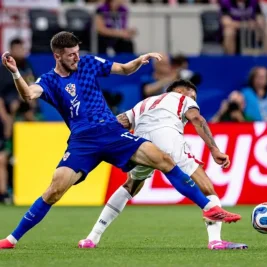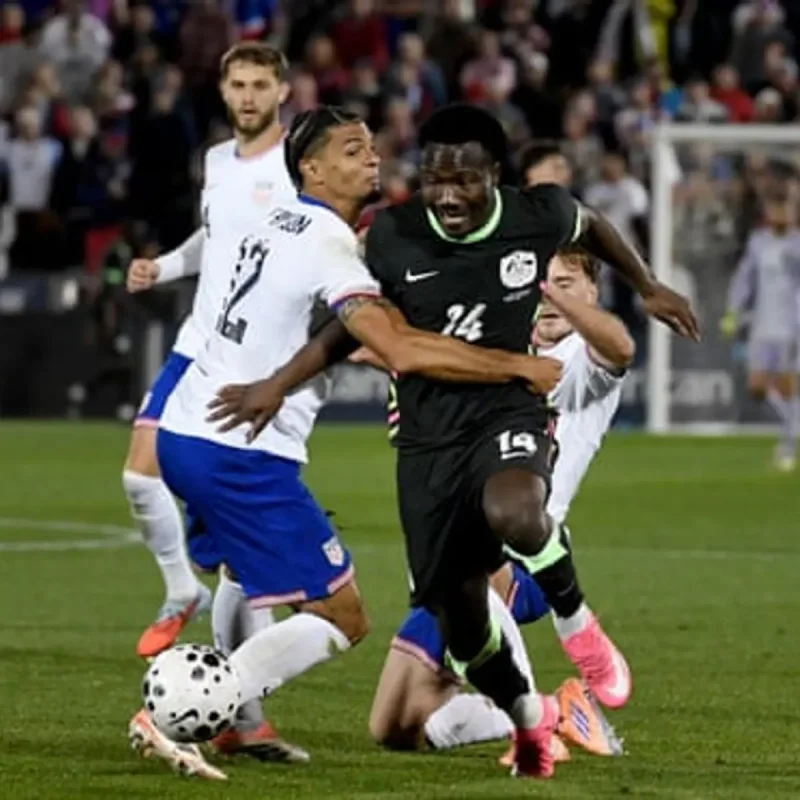
The Group D clash between the United States and Australia in Seattle has been billed as the next chapter in a growing rivalry, but the two nations share remarkably similar soccer journeys.
Both countries are fighting for relevance in sporting landscapes dominated by other codes. In the US, American football, basketball, and baseball reign supreme.
In Australia, AFL and NRL dominate winter, with cricket leading summer.
Socceroos midfielder Aiden O'Neill, who plays for New York City FC, sees the parallels.
“Soccer in the US is similar to Australia, it's starting to change here in America,” he said.
“You've got some massive other sports, but I think it's starting to grow in popularity.”
Despite being the top organized sport for youth in the US, with over 7 million participants aged 7-17 in 2025, soccer still faces stigma.
Bernardo Ramallo of Soccer Without Borders recalls taunts from his Virginia childhood: “Soccer is weak, football's a real sport” and “soccer is a girls' sport.”
In Australia, football has about 850,000 participants under 17, trailing only swimming, but the sport similarly battles for mainstream attention.
Noelle Shaw, a former junior goalkeeper from Oakland, believes soccer doesn't get the respect it deserves.
“Soccer is a hard sport, and I don't think a lot of people realise that to run back and forth on that field for 90 minutes, no time-outs, no anything, that takes a different level of grit and drive.”
Shared Challenges and Hopes
Edreece Arghandiwal, co-founder of Oakland Roots in the USL, sees soccer's potential in the US. “America is a very diverse place, especially here in Oakland.
Soccer belongs here, it always has been here, it just needs the right vehicles, the right voices, the right stories to get to the minds and hearts of people.”
Longtime sports writer John Shea remains skeptical about lasting change.
“I've heard about that narrative every few years for decades, and it hasn't changed to the point where soccer has emerged as a first or second or third sport nationwide in viewing.”
He compares the World Cup buzz to the Olympics, which draws short-term interest before habits return.
Despite the hype, the match is also a moment for reflection on the broader US-Australia relationship, including defense deals and political shifts.
But on the ground, fans hope for unity.
“At the end of the day it's all sports, and sports are meant to unify us and bring us all together,” Shaw said.
Ramallo echoed that sentiment: “Beer, drinking, laughs, jokes … so I think there shouldn't be hatred. Instead, it should be a giant party.”