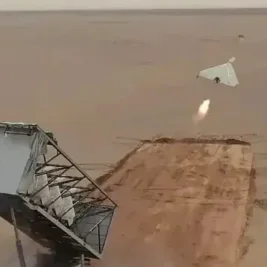
Iran's Revolutionary Guard launched joint missile and drone strikes targeting United States military installations in Bahrain and Kuwait on Sunday, June 28, 2026.
The attack escalated regional hostilities following American airstrikes on Iranian positions amid disputes over the Strait of Hormuz.
The military confrontation erupted less than two weeks after both nations signed an interim memorandum of understanding on June 17 to halt a four-month conflict.
Each side now accuses the other of violating the ceasefire terms.
Maritime friction intensified after a Panama-flagged tanker and the Singapore-flagged container ship Ever Lovely were targeted by drone and projectile attacks while navigating through the critical trade waterway.
Those incidents prompted retaliatory actions from Washington.
Political Rhetoric and Military Responses
American leadership issued stark warnings regarding continued military compliance along the shipping channels.
Donald Trump stated on Truth Social that Iran would "no longer exist" if Tehran continued breaking the ceasefire agreement.
The US Central Command clarified that American counter-strikes on Iranian radar sites, air defenses, and drone facilities were executed in direct response to persistent interference with commercial vessels.
"Iran was given a chance to honor the ceasefire agreement but elected not to," US Central Command stated.
The Iranian Revolutionary Guard rejected claims of American military success, emphasizing that US actions would not alter Iranian territorial dominance over the strategic waterway.
"America's blind shots at Sirik will not resolve our dominance over the Strait of Hormuz.
But our shots at violators will remind the rest of the vessels of the clear passage route," the Islamic Revolutionary Guard Corps stated.
In Baghdad, Iraqi officials held urgent talks with visiting Iranian dignitaries to push for a diplomatic resolution and ensure the safe passage of global energy supplies.
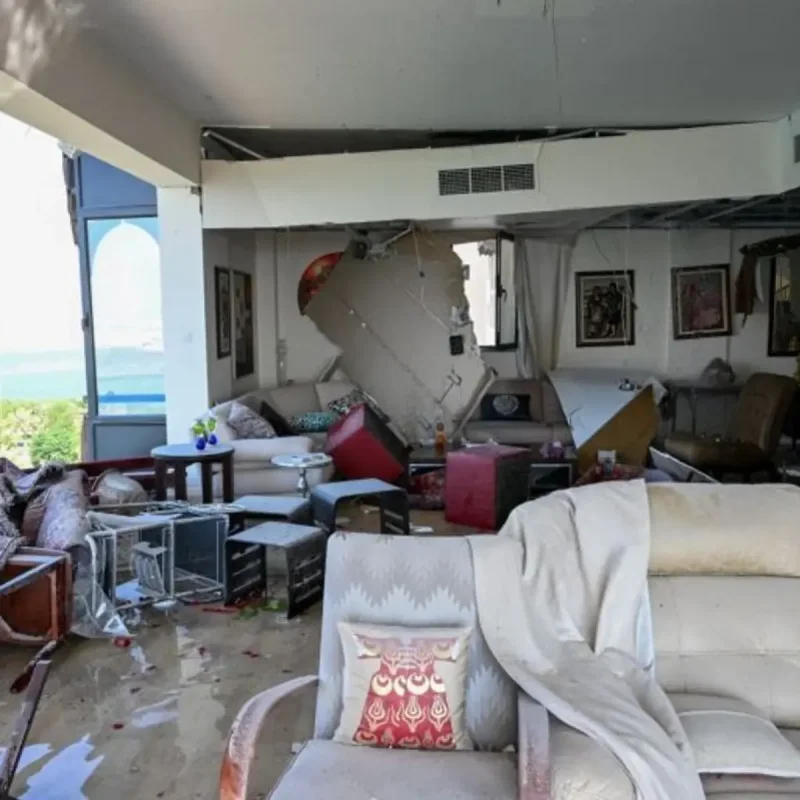
Lebanese Culture Minister Ghassan Salame noted that Israeli military operations targeting suspected Hezbollah assets complicated regional cultural assessments, with extensive infrastructure damage across southern historical sites.
Military analysts noted that political communications remained open via neutral channels to prevent full administrative collapse of the diplomatic accord.
Mohebi posted on X disputing Washington's claims about a direct military hotline, stating, "The Strait of Hormuz is Iranian territory and has no connection to the United States."
American officials previously indicated that informal coordination channels had been established through representatives in Doha to manage ongoing maritime transit arrangements.
Vice President JD Vance stated to UnHerd that Iran agreed to send an IRGC representative to Doha to settle disputes with CENTCOM.
Vance urged Iranian authorities to utilize established political lines rather than kinetic force, posting on X, "If they have disagreements about how the MoU is being applied, they can pick up the phone."
He also stated that "violence will be met with violence."
Shipping Disruptions and Maritime Intelligence
Maritime tracking data from Kpler indicated that 172 vessels have transited the strait since the peace agreement, significantly below the pre-conflict average of 138 daily crossings.
Expert analysts from the Eurasia Group observed that the recent military exchanges represent tactical posturing rather than a complete dissolution of the ceasefire framework.
"The MoU addresses the strait, but doesn't fully clarify what the status is going to be moving forward," said Gregory Brew, senior Iran analyst at the Eurasia Group.
He explained that Tehran is seeking to institutionalize permanent influence over the global shipping channel, adding, "The Iranians are trying to push their luck and see how far their leverage can extend and the US is pushing back."
The Joint Maritime Information Center continues to conduct mine clearance operations in the central lanes, advising commercial operators to utilize the southern Omani corridor to avoid active underwater explosives.
The Persian Gulf Strait Authority stated, "No vessel is permitted to pass through the Strait of Hormuz without a valid passage permit issued by the PGSA."
Industry monitors from EOS Risk Group noted that commercial compliance remains split, as some shipowners hesitate to apply for permits from the sanctioned Iranian authority.
"We saw tankers passing along the southern corridor at the end of last week and then when Iran declared the strait closed again on Saturday 20 June the transits stalled," said Jemima Shelley, research analyst at United Against Nuclear Iran.
Despite the volatile environment, commercial operations partially persisted as the CMA CGM Galapagos container ship successfully exited the northern route on Sunday morning.