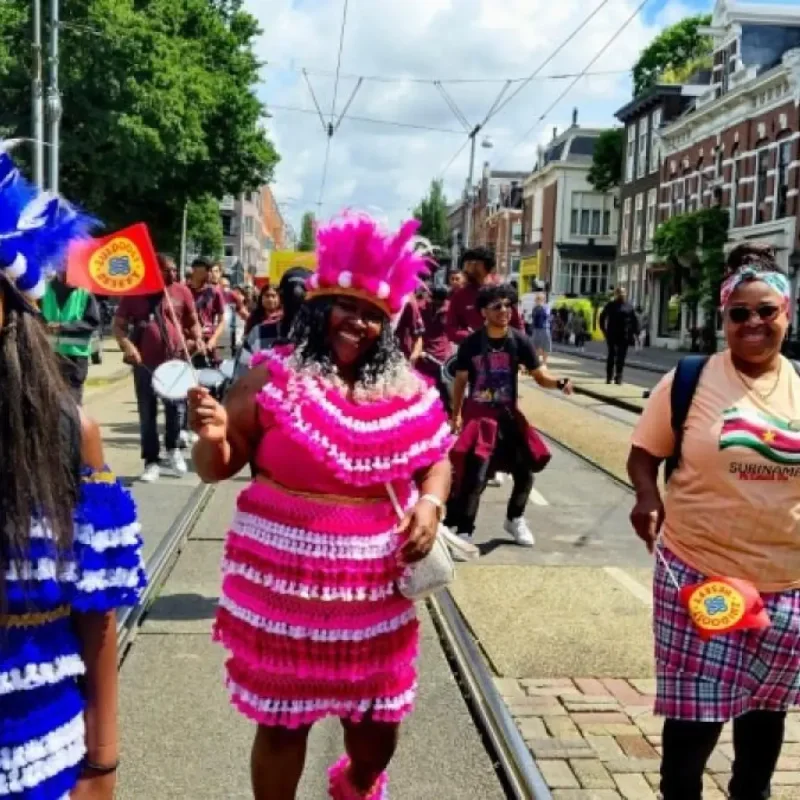
Dutch municipalities observed the annual Keti Koti commemorations on July 1, 2026, to mark the historical abolition of slavery.
Communities in Zeeland and Hoorn held solemn gatherings and raised flags to confront local colonial histories.
Commemorations in Middelburg
In Middelburg, an evening wake took place at the Zeeland Slavery Monument, drawing around 60 attendees. The event featured traditional mourning attire and memorial songs.
Angélique Duijndam, chairwoman of Keti Koti Zeeland, introduced the performing women as "tantes." The women sang ten memorial songs to honor African ancestors who were enslaved.
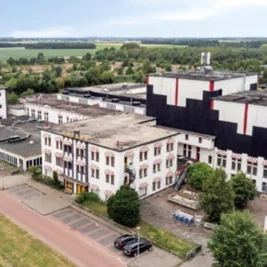
During a dinner at the historic Middelburgse Commercie Compagnie warehouse, Duijndam noted resistance to acknowledging the local slave trade.
She described the pushback as "laatste stuiptrekkingen" (final convulsions).
She expressed anger regarding municipal decisions to alter historical walking routes or omit key colonial figures, calling such actions "giftig" (toxic).
Former director of the Zeeland Archives, Hannie Kool-Blokland, stated that local recognition of slavery history developed gradually over decades, "stapje voor stapje" (step by step).
She recalled receiving critical feedback during the initial exhibitions organized in the 1990s and early 2000s. "Toen kregen we best veel commentaar.
Waarom moeten we dat weten? Waarom is dat nu belangrijk?
De weerstand en onbekendheid was groot," she said.
Siegfried Steglich, co-initiator of the slavery monument, emphasized that the nation's historical missteps must be actively studied rather than dismissed.
He referred to "de zwarte bladzijde waar Rutte het over had" (the black page that Rutte spoke about).
He noted that global events often overshadow local historical reflections, as "er veel gaande is in de wereld" (there is a lot going on in the world).
According to Steglich, discussing colonial history remains a difficult public topic, calling it "geen sexy onderwerp" (not a sexy subject).
Flag-Raising in Hoorn
In Hoorn, Alderman Dennis Boutkan raised the Keti Koti flag for the first time in front of the city hall on July 1, 2026.
Boutkan acknowledged the ongoing societal impact of the colonial past.
"We zien de doorwerking van dit verleden nog iedere dag terug," he said.
The ceremony commenced with a traditional libation ritual to honor enslaved ancestors before Boutkan delivered his address.
"We weten dat de stad sterk heeft geprofiteerd van de handel in tot slaaf gemaakten. Het was geen voetnoot in de geschiedenis.
De sporen van het verleden zijn nog steeds zichtbaar in de stad. Het vraagt ons hoe we naar onszelf kijken, onze geschiedenis en onze stad," Boutkan stated.
Boutkan committed to expanding educational initiatives regarding historical freedom and equality within the municipality.
"Ik ga namens de stad door met betere educatie en het voeren van meer gesprekken over wat vrijheid nu echt betekent," he said.
The official expressed hope that the remembrance day would become an enduring tradition for the community. "Vrijheid zit in kansen, en verlossing van institutioneel racisme.
Ik hoop dat Keti Koti een vaste waarde wordt in de stad Hoorn.
Hoe we de toekomst vormgeven bepalen we met elkaar, en niet door weg te kijken," Boutkan added.