DR Congo's iconic "living statue" superfan Michel Nkuka Mboladinga, known as Lumumba Vea, missed the World Cup knockout match against England due to US visa processing delays.
He remained stranded in Mexico after travel restrictions tied to an Ebola outbreak and regional conflict near the Rwandan border slowed his application.
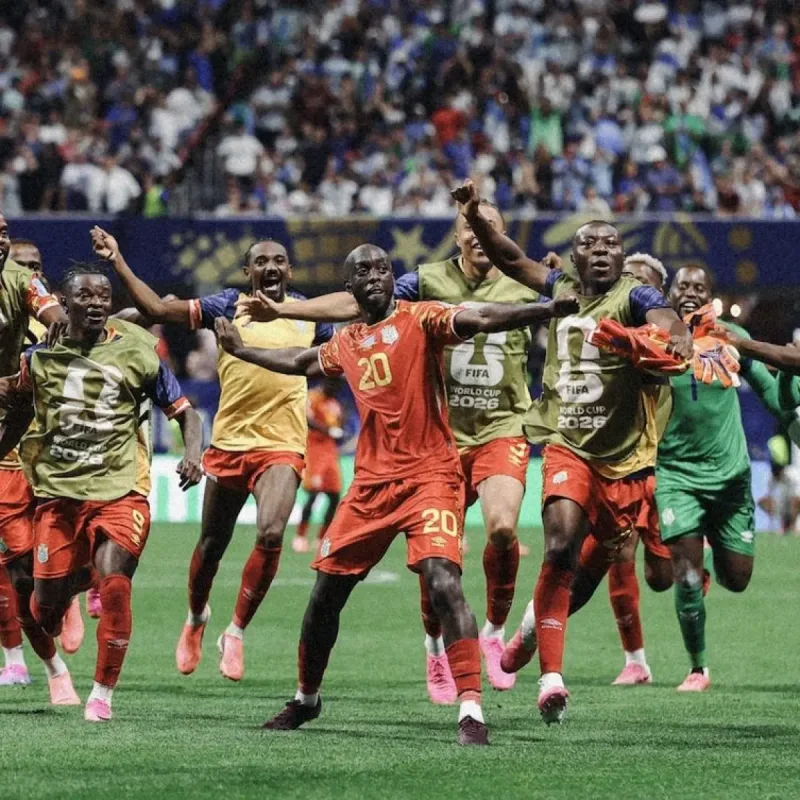
Enock Kabwende stepped in as "Lumumba Junior" inside the Mercedes-Benz Stadium in Atlanta on Wednesday, July 1, 2026.
He replicated the traditional static tribute to independent Congo's first leader, Patrice Lumumba.
The diplomatic team confirmed that the substitute fan underwent physical preparation to remain completely still on a podium throughout the entire 90-minute fixture.
Substitute Superfan Keeps Tradition Alive
"I want to keep the culture going," said Enock Kabwende. "[Mboladinga] didn't come here, but we have to represent our country.
Patrice Lumumba represents liberty, storing power, prosperity and freedom in our country."
The continuous tribute mirrors a prominent monument in Kinshasa, featuring distinctive red, yellow, and blue national colors.
"If Lumumba Vea cannot travel, then Lumumba Junior will carry the torch in Atlanta," said Yvette Kapinga Ngandu, DR Congo's ambassador to the US.
"Michel is the real one but junior is smaller and a bit younger; he's the Generation Z fan."
Ngandu noted that the bureaucratic delay did not constitute an outright rejection and expressed confidence that the original fan would secure entry for subsequent rounds.
"Lumumba Vea is here in spirit," said Ngandu. "He means so much to the nation and now he means so much to other nations.
He probably will get a visa when we win against England but won't get one in time for this match."
The diplomat added that the national team drew immense motivation from overcoming ongoing domestic hardships and watching other African nations succeed in the tournament.
"We are beating England," said Ngandu.
"When Congo win, it is going to send a message to the world that DRC is coming of age.
The World Cup is strengthening our determination to show to the world the DRC is not just a crisis, not just a disease but a country of people who are extremely resilient."
Before experiencing these travel hurdles, Mboladinga had discussed his rigid routine with international media during his journey through Mexico.
"Patrice Lumumba is a symbol of unity – the one who taught Congolese to stand and to be proud," said Mboladinga.
The activist received a state-funded off-road vehicle upon returning from the Africa Cup of Nations in Morocco due to his growing cultural influence.
"Believe it or not, but I do practise," said Mboladinga.
"I can actually practise 20 days out of a month, but I'll also take a lot of rest.
I am a living statue."
Mboladinga later shared positive messages regarding football's broader social role via social media.
"Football is a passion. Football for Peace and cohesion," said Mboladinga.
England Faces Defensive Woes Ahead of Match
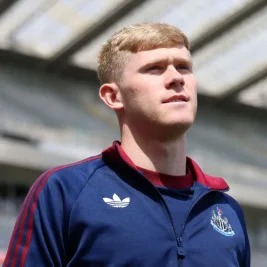
Meanwhile, the opposing English camp entered the knockout match grappling with severe defensive issues following injuries to primary right-backs Reece James and Jarell Quansah, forcing manager Thomas Tuchel to rely on Djed Spence.
"Tuchel has got Spence, who he rested the other day," said Gary Neville, former England right-back.
Football analysts heavily criticized the selection structure that left key Premier League defenders out of the initial tournament squad entirely.
"If you went across the professional game and asked, I don't know, 20 football managers, I think 19 would have taken Trent, I really do," said Alan Pardew, former Newcastle manager.
Pardew highlighted that tactical instability across the backline hampered the squad's cohesion during the group stages.
"I can't see the logic of why not taking him," said Pardew.
The tactical setup drew further scrutiny regarding structural vulnerabilities ahead of the high-stakes match against the Congolese side.
"I think Panama was a bit more tricky, I could understand why he didn't take him, I personally would have taken him," said Pardew.
The pundit stressed that the lack of established player pairings made the team highly susceptible to an early exit.
"And I think that's really [been] underlined [in] the last couple of games," said Pardew.
According to talkSPORT, the winner of the knockout match in Atlanta secures a place in the World Cup quarterfinals.
"But I just don't think we look at a team that's together," said Pardew.
The team dynamic appeared noticeably detached compared to rival nations competing in North America.
"We look like a team that's in the dark, searching for clues, searching for a relationship," said Pardew.
Pardew warned that a failure to establish chemistry between the goalkeeper and the central defenders could prove disastrous.
"Whereas when I'm looking at some of the top teams, I can see relationships and I can see a bond a little bit," said Pardew.
The right side of the defensive line remained the biggest point of concern for the English squad.
"Well, I think we've got problems, but obviously, we have an issue at right-back," said Pardew.
The structural cracks threatened to derail England's tournament progress against a highly motivated opposition.
"But when you look at the relationships in a group, in a team, a good team, then you can start seeing some cracks in our team," said Pardew.
Pardew concluded that England faced a narrow path to victory unless their defensive communication improved immediately.
"I think our team are either on the verge of squeezing through on penalties [against DR Congo], which we could possibly do, or actually, getting really turned over, which I think is a possibility," said Pardew.