The European Commission has invited air industry representatives to an urgent meeting next Tuesday to address mounting concerns over the newly implemented Entry and Exit System (EES).
Major airlines and airport operators are warning of severe disruptions during the peak summer travel season, as reported by The Guardian.
Ryanair, Europe's largest airline, issued a stark warning regarding potential 'queue chaos' at European Union airports due to the newly introduced fingerprint checks.
The airline emphasized that passengers traveling for summer breaks should not be utilized as 'guinea pigs' for a 'half-baked' border control framework.
Industry groups, including Airlines for Europe and the Airports Council International, have formally requested the Commission to suspend the new border regulations.
Their proposal seeks a suspension throughout July and August at a minimum, or potentially a full deferral until the next summer period.
Airlines and airport authorities expressed deep concerns that infrastructure is unready to handle high passenger influxes during peak season.
They noted that staff members face increasing abuse as queues lengthen during the fingerprinting process, threatening the wider travel sector.
On Thursday, Ryanair confirmed it previously advocated for a suspension lasting until September within the most exposed nations.
The carrier stated that current airport infrastructures are unready to manage the high passenger volumes forecasted from mid-July.
The airline identified seven specific airports currently enduring major operational disruptions, with heavier congestion anticipated as holidays peak.
The listed locations include Tenerife South, Palma, Alicante, and Málaga in Spain, Milan Bergamo in Italy, Krakow in Poland, and Paris Beauvais in France.
Neal McMahon, Ryanair’s chief operating officer, commented on the readiness of the infrastructure.
'It is clear that the entry/exit system (EES) is still not ready for peak summer volumes.
Passengers and families should not be used as guinea pigs for a half-baked passport control system that risks creating long queues, missed flights and unnecessary stress at airports this summer.'
Conceived a decade ago, the EES aims to provide Schengen travel area countries greater transparency over individuals entering and departing the EU.
Ireland and Cyprus are the only two European Union member nations not participating in the passport control program.
The official launch of the system suffered multiple delays before its implementation last October.
At that time, member states received options to opt out temporarily while technology and passenger fingerprinting logistics underwent testing.
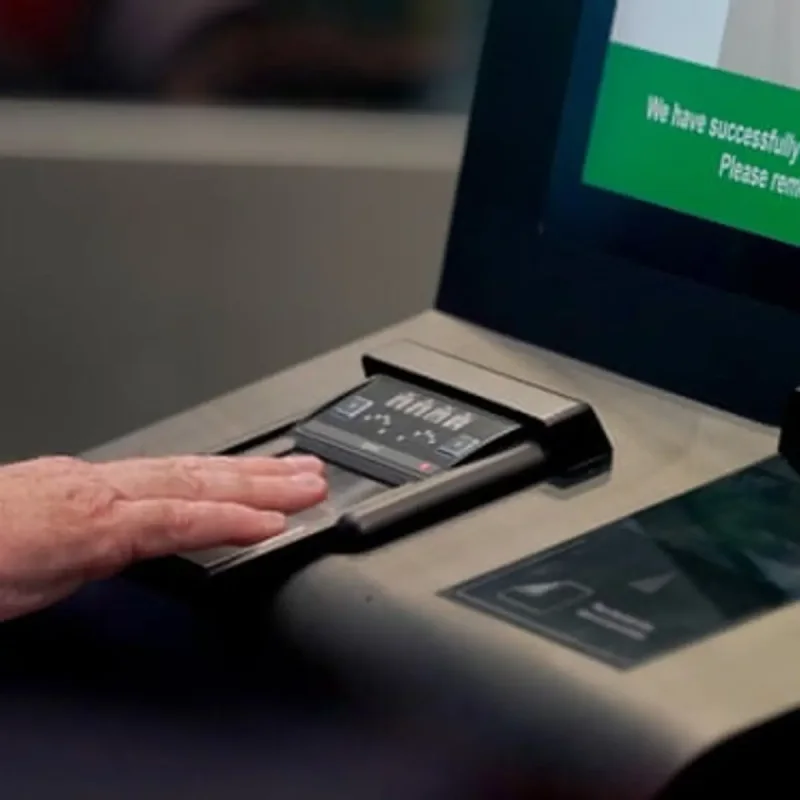
Under current EES regulations, non-EU travelers must register their fingerprints and facial images upon their initial entry into the Schengen zone.
Subsequent trips require travelers to verify their fingerprints or facial images at border security checkpoints during entry and exit.
The air travel industry sent a formal letter to European Commission President Ursula von der Leyen on Wednesday outlining operational difficulties.
The industry stated it worked closely with Brussels for years, but the live system is now creating clear operational consequences.
The letter requested immediate intervention before conditions deteriorate further for travel authorities.
It noted that border officials, airports, and airline companies are already operating under unsustainable levels of pressure.
Recent weeks have seen numerous reports of lengthy airport queues, which caused passengers to miss flights returning to the United Kingdom.
These delays forced several commercial aircraft to depart half empty due to traveler holdups at border security checkpoints.
Aletta von Massenbach, the chief executive of Berlin airport, shared specific insights into passenger wait times on Thursday.
She stated that non-EU citizens face security lines lasting up to two hours, describing the current situation as unbearable over the summer.
The European Commission is now moving forward with next Tuesday's meeting to find actionable solutions with airline and airport officials.
Reports indicate that over 100 million entries and exits have been documented under the new digital framework so far.
Several European nations, including France, Italy, and Greece, have not yet fully or even partially deployed the border verification technology.
While EU rules permitted this partial rollout initially, all member states face a mandate to fully implement the system by September.
Airlines for Europe, the Airports Council International, and the International Air Transport Association plan to lobby Brussels further.
The organizations intend to urge the European Commission to delay full system implementation until the summer of 2027.
A spokesperson for the Commission stated that the body continues to support the aviation industry during this transition phase.
The representative added that the Commission remains willing to expand its assistance ahead of the demanding summer travel period.
The Commission official also confirmed the upcoming schedule for regulatory talks.
The representative stated that the executive branch would be calling for another meeting with representatives of the industry to take place in the next days.