A highly contagious strain of avian influenza has officially reached the Australian mainland.
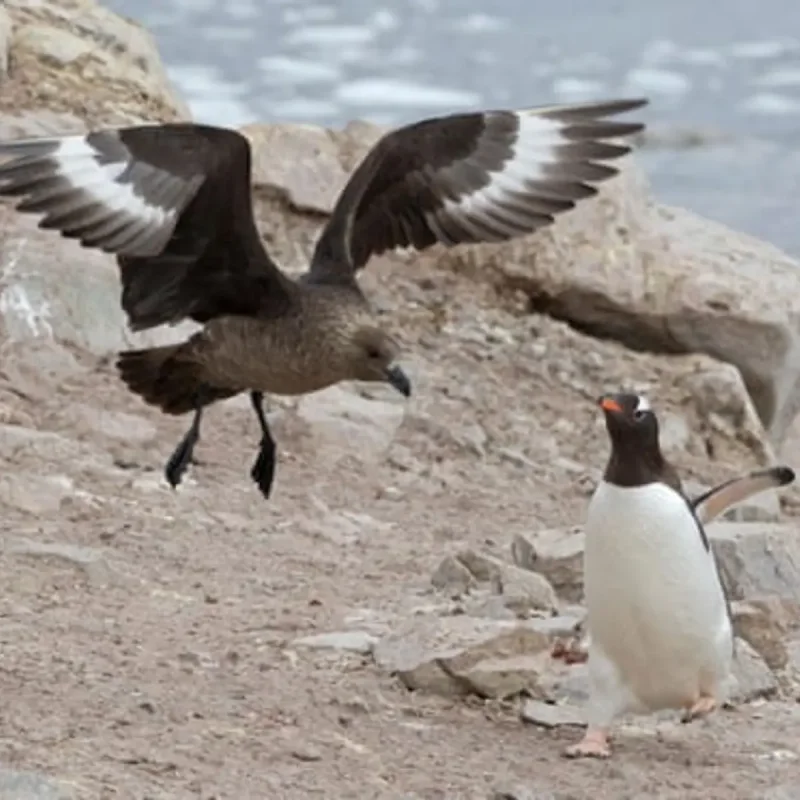
Federal Agriculture Minister Julie Collins confirmed that a brown skua found sick in Western Australia died from the H5N1 virus.
The death of this wild migratory bird ends Australia's status as the only continent previously free of the highly pathogenic virus.
Globally, the H5 bird flu strain has devastated animal populations since 2021, killing millions of wild birds and thousands of marine mammals.
Authorities have now confirmed five cases in migratory sub-antarctic birds. Four were located in Western Australia and one in South Australia.
A potential sixth case involving a giant petrel discovered north of Newcastle in New South Wales is awaiting test results.
The deadly bird flu strain, specifically designated as H5N1 clade 2.3.4.4b, originated in Asia.
It spread across Europe and the Americas before reaching Antarctica during the 2023-2024 summer season.
Researchers estimate the virus first entered Australian territory in August 2025 on Heard Island, southwest of Perth.
The disease quickly infected local wildlife, causing the deaths of over 13,000 southern elephant seal pups and hundreds of king penguins.
The mainland incursion was identified after a sick brown skua was discovered at Cape Le Grand National Park near Esperance.
The initial positive test result was later verified by the CSIRO’s Australian Centre for Disease Preparedness.
Impact on Agriculture and Human Health Risks
This H5 strain is distinct from the H7 bird flu, which triggered poultry farm outbreaks across multiple Australian states in 2024 and 2025.
Those previous outbreaks required the euthanization of hundreds of thousands of chickens.
According to Dr. Michelle Wille, an avian influenza expert at the University of Melbourne, the H5 virus has crippled agricultural sectors worldwide.
In the United States alone, the epidemic has led to the culling of more than 200 million chickens.
Human infections from bird flu remain rare and are typically linked to direct contact with infected poultry or dairy cattle.
The Australian Centre for Disease Control states that while human cases are infrequent, the virus can cause severe illness or death.
World Health Organization data shows that from 2003 to early 2026, there were 997 reported human H5 infections across 25 countries, resulting in 478 fatalities.
In the United States, two deaths have been recorded out of 71 total cases.
Threats to Native Wildlife and Response Plans
Environmental groups and conservationists view the mainland arrival as a severe threat to Australia's unique ecosystems.
The Australian Marine Conservation Society warned that the virus poses a real extinction risk for the endangered Australian sea lion, which has a population of just 12,000.
Government authorities have already drafted over 100 response plans for vulnerable animal species and critical ecological sites, including Ramsar wetlands.
Species deemed at risk include the Tasmanian devil, the critically endangered orange-bellied parrot, and the Australian fur seal.
Wildlife Health Australia reports that the virus has impacted more than 560 wild bird species and over 100 mammal types globally.
Members of the public are advised to avoid contact with sick or dead animals and report sightings to the emergency animal disease hotline.