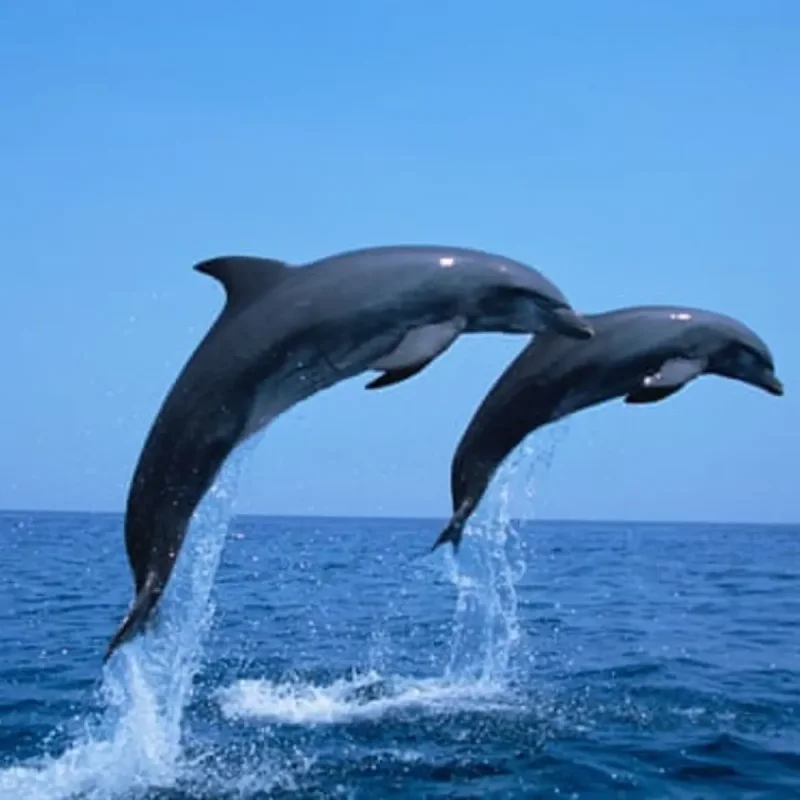
Bottlenose dolphins in the Adriatic Sea are increasingly following trawlers to scavenge for food, as severe overfishing has depleted their natural prey, according to a study published in Frontiers.
Researchers monitored offshore trawlers for 148 days, conducting 859 inspections across two regions. They found that dolphin reliance on these vessels has surged compared to previous decades.
In the 1990s, only 10% of Adriatic trawlers were followed by dolphins.
The recent study shows that up to 76% of fishing boats were pursued in one specific area.
“These days the easiest way to find [bottlenose dolphins] is to look for trawlers,” said Giovanni Bearzi, a co-author and president of Dolphin Biology and Conservation in Italy.
Overfishing Drives Behavioral Shift
The Mediterranean region experiences fishing pressure at twice the level considered sustainable by the UN Food and Agriculture Organization (FAO).
This forces animals to find food near human activities.
“When I say scavenge, I mean that they also feed on discards and unwanted organisms. Dolphins are following the trawlers because natural prey is very hard to find.
Why is it hard to find? It’s overfished,” Bearzi said.
The research team emphasizes that while dolphins are opportunistic feeders, this behavioral shift exposes them to dangers such as physical injuries and chronic noise pollution.
“It is known that bottlenose dolphins are occasionally injured or killed by trawl gear, and that foraging behind trawlers can affect dolphins’ diet, social organisation and communication,” said Dr Randall Reeves, a study author and chair of the Committee of Scientific Advisors at the US Marine Mammal Commission.
Dolphins may also suffer hearing damage from chronic exposure to trawler noise. However, finding sufficient prey away from trawlers in an overfished sea may be too difficult.
“It appears that for these animals, taking the risks is better than going hungry,” Reeves said.
The learned behavior has become a cultural transmission within the local marine ecosystem.
“The baby dolphins follow the trawlers with their mothers, watch the adults foraging and learn that kind of behaviour.
It is transmitted culturally,” Bearzi added.
The study notes that other dolphin species have suffered severe declines in the same ecosystem. Common dolphins have virtually vanished from the Adriatic except for a few hotspots.
“The common dolphins are not common any more,” Bearzi said. “One species has gone and that is not a good sign.
It’s a warning sign.”
The scientists urge authorities to restrict destructive fishing to allow marine biodiversity and fish stocks to recover.
“If you stop destructive fishing, the marine resources would bloom very quickly.
Dolphins would be able to feed again on their natural prey, as they did for centuries in this same area,” Bearzi said.
The authors advise fishery managers to implement less damaging harvesting methods.
“Fish less. Fish in less destructive ways.
This is really the message,” Bearzi said.