U. S.
Immigration and Customs Enforcement agents continued arresting and detaining Venezuelan immigrants across the country after the June 24, 2026, twin earthquakes devastated their homeland.
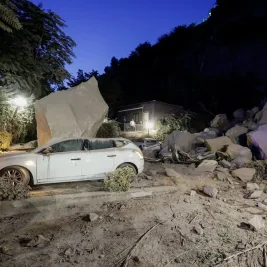
The disaster left 2,295 people dead and more than 11,000 injured, according to official reports. External analyses indicate approximately 60,000 buildings sustained damage.
The earthquakes struck just as a U. S.
Supreme Court decision on Haitian and Syrian Temporary Protected Status effectively gave the Department of Homeland Security absolute discretion over the program.
This ruling crippled efforts to reinstate TPS protections for Venezuelans.
Activists say the convergence of the legal ruling and the natural disaster created an unprecedented humanitarian crisis for the Venezuelan diaspora.
Adelys Ferro, founder and executive director of the Venezuelan American Caucus, described the emotional toll on the community.
"We are still in a state of shock, despair, uncertainty, sadness, grief," Ferro said in Spanish.
She emphasized that the Supreme Court ruling severely limits legal avenues to protect vulnerable individuals.
Ferro explained that granting legal status would allow immigrants to secure formal employment and send financial relief to crisis-stricken Venezuela.
"If you give them that legal status, you allow them to have work permits again, to work legally.
Remittances to Venezuela would continue to arrive at the most crucial, important, and critical moment to help, even if only a small part, the economic problem that has just been magnified in Venezuela with the two earthquakes," she said.
Community members joined organizations to collect essential provisions in cities like Miami, drawing support from multiple Caribbean nationalities.
Florida resident Daniel Troconis argued the devastation meets the statutory definition of a natural disaster required for a humanitarian designation.
"It is a disaster we cannot even imagine, with all the deceased we have in our Venezuela," he said.
Despite the catastrophe, federal authorities maintained enforcement operations. On June 27, 2026, ICE arrested food delivery workers in Washington D.
C. An anonymous witness detailed widespread fear among workers who rely on their income to send aid.
"We are scared," she said. "This work is our livelihood.
We are sending a lot of help to Venezuela with our salaries."
Enforcement actions also impacted long-term residents facing routine immigration check-ins.
Ariel Whaley recounted the distress of her husband, Nelson Contreras, who was detained during his immigration appointment in Maryland and transferred to a Pennsylvania detention center.
"He was working when he heard the news, shaking his head, looking very sad and affected," Whaley said.
Whaley explained that Contreras anticipated his detention during their final phone call before the appointment. He asked her to take a screenshot of them together.
"Maybe he felt that would be one of the last times he would see his face before they could send him back to Venezuela," she recalled.
Whaley expressed deep concern over geopolitical instability following the January 3 military capture of Nicolas Maduro.
She noted that infrastructure collapse has left the current administration unequipped to manage disaster response. "Since Maduro's arrest on January 3, I have lived in terror," she said.
"The humanitarian crisis was already very serious, and the earthquake has aggravated it enormously.
It has also revealed how ill-prepared the Venezuelan government is to meet the needs of its population.
I would be very afraid if he, or any other Venezuelan, were sent back amid so much confusion, pain, destruction, and need."
The physical distance has not lessened the psychological impact on families watching the destruction from U. S.
cities.
New York asylum seeker Yonatan Matheus described the agony of waiting for communication from his vulnerable hometown of La Guaira.
"Several relatives and close people lost their homes, other families lost everything, and many members of my community died.
It is a very difficult feeling to explain: you want to be there to hug, help, and accompany, but you simply cannot," he said.
Records show the U. S.
government deported nearly 14,000 Venezuelans last year and currently holds approximately 6,000 in detention facilities.
On the day of the earthquakes, a deportation flight from Texas returned 147 individuals to Caracas. The majority died after their processing hotel collapsed.