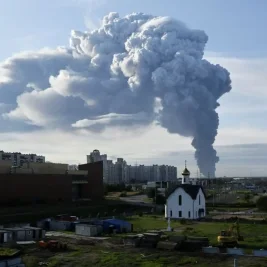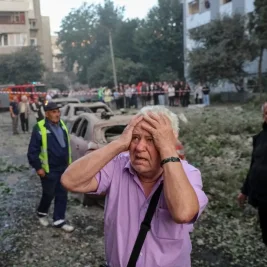
The paramilitary Rapid Support Forces (RSF) have intensified drone strikes against the strategic city of El Obeid in Sudan, raising alarms over a potential humanitarian disaster.
The United Nations human rights office reported that 15 drone strikes between June 6 and June 28 killed at least 45 people and injured 41 others.
Volker Türk, the UN high commissioner for human rights, described the situation as a clear and unmistakable sign of another human rights catastrophe in Sudan.
“This is not a drill.
It is a red alert that needs to land on the desks of heads of state and government around the world,” Türk told delegates in Geneva.
Civilian Infrastructure Under Attack
An aid volunteer using the pseudonym Fatima said drone strikes have consistently targeted critical civilian infrastructure, including schools and fuel stations.
“Over the past few months, seeing 40 or 45 drones is the norm. You can literally count them,” Fatima said.
A recent attack on the primary power station left most of the city without electricity, while merchants have raised prices due to supply routes being targeted or looted.
“I cannot begin to describe how terrible the situation is right now,” Fatima added.
Another humanitarian worker, using the pseudonym Ahlam, confirmed that essential services have been systematically compromised over the last two weeks, trapping residents who cannot afford inflated transport costs.
“In just the past two weeks, nearly every essential service and piece of critical infrastructure has been hit,” Ahlam said.
The continuous bombardment aligns with a report from the Yale Humanitarian Research Lab, which documented intentional damage to life-sustaining infrastructure.
Meanwhile, the Sudanese military has constructed 30 miles of defensive positions around the city.
Will Davies, Sudan director at Avaaz, noted that the evidence does not suggest a large enough force to capture the city, but the situation remains extremely dire.
The conflict originally began in April 2023 due to a power struggle between Gen Abdel Fattah al-Burhan of the national army and Gen Mohamed Hamdan Dagalo of the RSF, resulting in hundreds of thousands of deaths.
On Monday, the Raoul Wallenberg Centre for Human Rights and a coalition of civil organizations referred high-level officials from the UAE, Iran, Turkey, and Egypt to the International Criminal Court for supplying arms and logistical support.