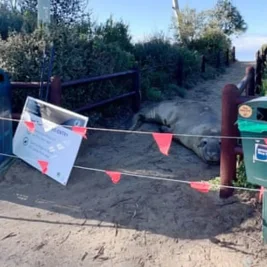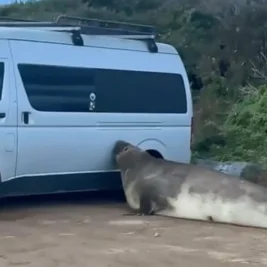
Tasmanian environmental authorities warned the public on Thursday that a popular 2,200-pound elephant seal named Neil faces severe safety risks due to reckless crowds in southern Australia.
The 5-year-old marine mammal hauled himself ashore in June for his biannual molting season, disrupting local towns by blocking roads and damaging infrastructure.
Neil has amassed 1.4 million TikTok followers, sparking fears that growing human curiosity could result in a dangerous encounter for both the public and the seal.
Wildlife officials expressed deep concern over spectators who crowdsource the animal's specific locations online, complicating monitoring efforts by rangers and police.
"Neil's fame is a bit of a double-edged sword," said Kris Carlyon, an official from Tasmania's Department of Natural Resources and Environment.
Carlyon noted that onlookers have repeatedly engaged in hazardous actions near the heavy mammal to capture social media content.
"We have had some pretty silly behavior, instances with people carrying their small babies up close to him and simply trying to get that shot for Instagram," Carlyon said.
The official referenced the 2023 euthanasia of a famous walrus named Freya in Norway, which occurred after crowds ignored repeated safety warnings.
"There is a risk here of essentially loving Neil to death," Carlyon said.
Rangers have attempted to usher the seal away from populated areas, but the animal persistently returns to the exact same roadside spot.
"He's obviously decided this puddle surrounded by bollards, which are horizontal at the moment, is his spot," Carlyon said.
Experts stated that Neil's disruptive behavior, including confronting parked vehicles, stems from a lack of other juvenile seals to practice dominance battles with.
If Neil survives to breeding age, he could eventually reach 16 feet in length, though scientists state roughly 90 percent of male elephant seals die before reaching full maturity.
"Humans got rid of those animals and now maybe they are coming back and repopulating areas that they were previously seen in," said Sophia Volzke, an elephant seal scientist at the University of Tasmania.
Volzke emphasized the long-term necessity of adjusting local infrastructure and community mindsets to accommodate returning native species.
"We do need to find a way to coexist," Volzke said.
While authorities worry about public safety, some local residents view the animal's presence as a unique element of their coastal town.
"He's one of our biggest exports at the moment," said Dale Creamer, a local resident.
Creamer indicated that community members have largely adapted to the daily disruptions caused by the giant seal sleeping on their sidewalks.
"It's Neil's world and we're just living in it," Creamer said.