The Paris Appeals Court is set to announce its decision on Tuesday, July 7, 2026, at 1:30 p.
m. regarding the five-year ineligibility sentence of National Rally leader Marine Le Pen.
The ruling will determine whether she can stand as a candidate in the 2027 presidential election.
The case stems from allegations of embezzling European Parliament funds, which led to a first-instance conviction on March 31, 2025.
Le Pen was sentenced to five years of ineligibility with provisional execution, four years in prison with two years suspended under electronic monitoring, and a fine of 100,000 euros.
During the appeals trial, the prosecution maintained harsh demands, calling for five years of ineligibility and four years of imprisonment with three years suspended, according to Le Figaro.
Party Reactions and Internal Dynamics
National Rally officials have expressed a mix of anxiety and resilience ahead of the judicial decision.
The outcome could force party president Jordan Bardella into the presidential spotlight, as party members have criticized the trial's political implications while preparing their campaign strategy regardless of the legal result.
Le Pen acknowledged that her political future rests entirely in the hands of the judiciary.
"I know very well that the decision on my candidacy does not depend on me.
It depends on three magistrates who will decide whether or not the millions of French people who want to vote for me can do so," she said.
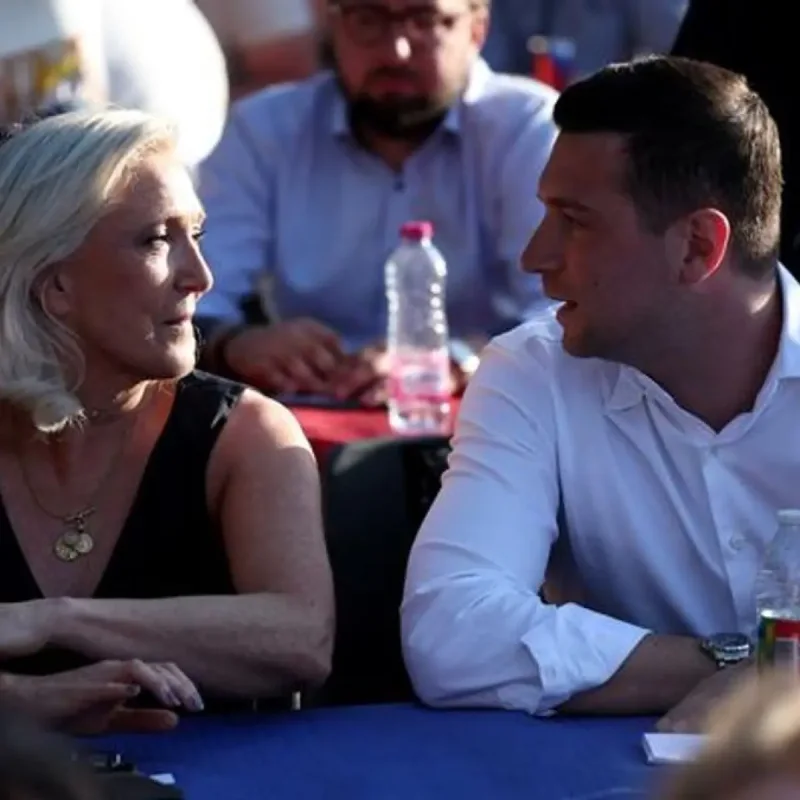
Recent polling has shown Bardella leading Le Pen in national popularity and voter intentions.
Party representatives noted that the duo maintains distinct political roles and strategies to maximize their electoral base.
"They are not clones; they each have their own sensitivity and way of expressing themselves," justified National Rally Deputy Julien Odoul.
While some loyalists worry about Bardella's rising ambitions, others view a potential candidacy change as a strategic opportunity.
Party officials confirmed that Bardella is ready to step in if Le Pen is barred.
"To my great astonishment, he really wants to be a candidate," confided an unnamed National Rally official.
Le Pen's supporters described her as a durable political figure who has consistently overcome obstacles. "She is a woman who has seen worse.
Her entire life has been strewn with obstacles. She awaits with serenity and conviction," said National Rally Spokesperson Andréa Kotarac.
Other representatives expressed concern over the legal process deciding presidential candidacies instead of the electorate. "There is anger, stress, and hope.
We are living in an exceptional situation. Usually, members choose their candidate.
For us, it will happen in a judge's office; it's worrying for democracy," sighed National Rally MEP Gilles Pennelle.
A confirmed ineligibility ruling would legally block Le Pen's fourth presidential campaign attempt.
Party advisors argued that such an outcome could reframe her public image into that of a political martyr.
"If she were prevented, she would acquire a particular moral notoriety, not at all untouchable, because she would be a victim of a huge injustice, a bit like Nelson Mandela.
When you prevent the main opponent from running, even dressed in legal terms, it gives him a stronger voice," said European Parliament Deputy and Special Advisor Philippe Olivier.
National Rally members admitted that an adverse ruling would carry a heavy emotional toll. "Her public life has been entirely devoted to politics and the conquest of power.
If she were to stumble on this final judicial obstacle, it would be morally and psychologically very difficult to bear," confided National Rally Deputy Roger Chudeau.
Despite the high stakes, the defense strategy during the second trial remained largely unchanged from the first instance.
Legal representatives reminded the court of the democratic weight attached to their final determination.
"This presidential election makes the ruling you will have to render dizzying," warned an unnamed defense lawyer for Le Pen.