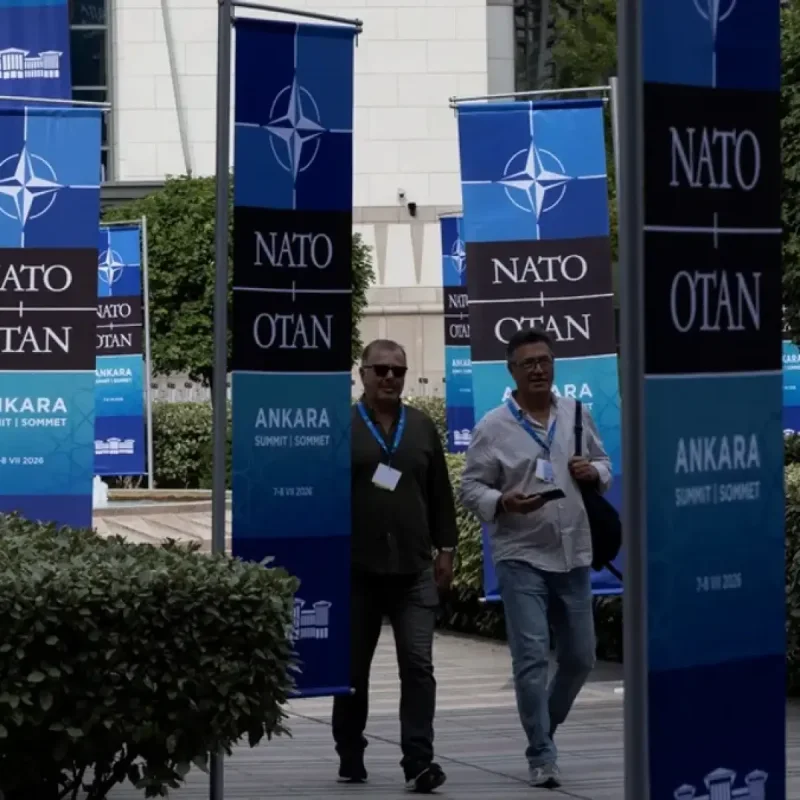
Turkish authorities deployed over 50,000 police officers and arrested more than 300 individuals in Ankara on July 6, 2026, to enforce strict security measures on the eve of the NATO summit.
The large-scale operation included closing major roads and establishing checkpoints across the capital to secure the high-profile diplomatic event.
Detentions and Concerns
Among the 300 detained are journalists, lawyers, and academics, with a significant portion arrested during a communist party protest against the alliance.
Government officials linked the detainees to terrorist organizations, but human rights groups expressed concern that these measures suppress political critics.
NATO Secretary General Mark Rutte addressed the security measures and press freedom concerns during a press conference in Ankara.
“Of course, a democracy means that people may organize demonstrations if they wish. Democracy is about much more than just free elections.
That also applies to freedom of the media,” Rutte said.
Internal friction persists within the alliance regarding Turkey’s human rights record, rule of law, and press freedom, highlighted by the denial of summit accreditation to several Turkish opposition journalists.
Defense Sector and Strategic Role
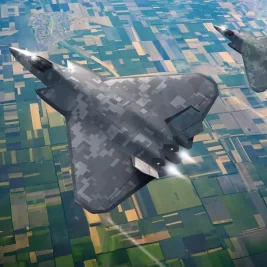
The defense sector remains a critical focus for Turkey as defense expenditures dominate the summit agenda.
Turkey boasts over 3,500 defense companies exporting drones, weapons, and ammunition to more than 170 countries, with export values this year already surpassing last year’s eight billion euros.
Foreign arms embargoes following Turkish military operations in Syria drove the country to heavily invest in self-reliance.
Turkish authorities stated that the nation has reduced its foreign defense dependency to just 20 percent in 2026.
Former NATO Ambassador and former Turkish Ambassador to the Netherlands Tacan Ildem emphasized the growing necessity of direct bilateral cooperation with Turkey among European Union nations.
“More and more EU countries are choosing to cooperate bilaterally with Turkey. Countries like Poland, Romania, Spain, Italy, and even France are already doing so,” Ildem said.
Ildem noted that European allies are increasingly recognizing Turkey’s logistical and production capabilities to meet expanding defense requirements.
“It is not enough to just spend more money on defense. You also need to know where to get the necessary capacity and resources.
Turkey is an important partner in that, and more and more countries are starting to realize that,” he said.
Ildem acknowledged the political anxieties felt by alliance partners but maintained that Turkey’s strategic importance has grown, pointing out that Western nations face their own democratic struggles.
“Of course there can be criticism.
But if we look today, we see that the United States and European allies are also facing challenges in democratic norms.
Of course, every country must take its own responsibility and address shortcomings. But it is not right to always use those points as an argument,” he said.
The diplomat highlighted Turkey’s unique position as a mediator, referencing its successful negotiation of the 2022 Black Sea grain deal alongside the United Nations, which allowed millions of tons of grain to reach global markets before Russia violated the pact in 2023.
Turkey continues to utilize its geopolitical advantage and its status as the second-largest military force within NATO to secure its position.
“Since 2022, we see that allies are saying: fortunately there is someone who can talk to Russia. Turkey has kept an important communication line open,” Ildem said.
Ankara aims to use the summit platform to bolster its influence within the alliance while generating new export opportunities for its domestic defense industry.