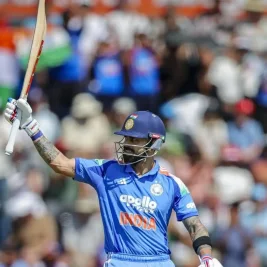
Canada's national men's soccer team concluded its historic FIFA World Cup run with a 3-0 defeat against Morocco in the Round of 16 on Saturday, July 4, 2026.
The match drew a record-breaking domestic television audience despite the elimination.
Data released by Bell Media on Monday indicated that the match averaged 5.4 million viewers across TSN, RDS, CTV, Noovo, and Crave.
The broadcast marked the most-watched non-final World Cup match in Canadian history, reaching 11.7 million viewers at its peak as Canada attempted a late-game comeback.
Tournament Performance and Viewership
The tournament performance represented a significant turnaround for Canada, which was ranked 120th globally in 2017 when designated as a tournament co-host.
According to preliminary Numeris statistics, 28.2 million Canadians have watched portions of the World Cup since its June 11 kickoff, with Round of 32 matches drawing an average of 1.9 million viewers.
National support remained strong throughout the tournament, during which Canada achieved a 1-1 draw against Bosnia-Herzegovina, a 6-0 victory over Qatar, and a knockout stage win against South Africa before facing seventh-ranked Morocco.
Fans expressed pride and disappointment.
"We are very proud of the boys," said Yadira Ramirez, a fan who attended an outdoor viewing event in Vancouver.
"We cannot take away from all the hard work and the dedication they did have. It wasn't this time.
It might be next time."
Longtime soccer enthusiasts noted the unexpected progress of the national program. "It's tough," said Colin Paterson, 31, a fan who watched the match in Vancouver.
"I'm disappointed, because I feel that they played so well. Maybe they could have got a result.
But we were in the round of 16. I would have never expected that."
Supporters in Montreal celebrated the community atmosphere surrounding the high-stakes knockout match.
"I just wanted the best team to win," said Odette Leclerc, 87, who watched the fixture in Montreal-Nord.
"I'm happy for my Moroccan friends."
Her peer echoed the sentiment, valuing the cultural gathering as much as the athletic result. "Being here with everyone is what matters most," said Ali Abdel, 23.
"The win is just the cherry on top."
Public officials expressed immediate appreciation for the national squad's performance following the final whistle.
Prime Minister Mark Carney described the tournament as "an incredible run and a sign of what's to come" while offering gratitude to the fans.
The national sporting body acknowledged the emotional difficulty of the elimination while focusing on future development.
"We came here believing we could keep writing history, and when you believe that deeply, the final whistle is not easy to accept," stated Canada Soccer in a public social media update.
The federation emphasized that the tournament generated deeper domestic soccer engagement across schools, parks, and local communities.
"History wasn't just made on the pitch," the Canada Soccer statement continued. "It was made in homes, schools, parks, pubs and communities across this country.
It was made every time someone chose to believe. Canada's World Cup comes to a close.
Canada's football journey is only just beginning."
Local fans reflected on the tactical dynamics of the match prior to Morocco securing their three-goal advantage.
"Yeah, we fully had them in the first half," said Josh Killins, a spectator at the Vancouver watch party.
Other observers noted the vast long-term improvement of the men's national pool over the previous decade.
"Because it was only 15 years ago that we were losing 8-1 to Honduras," said Colby Foster, who expressed hope that the run would increase local support for domestic soccer clubs like the Vancouver Whitecaps.
Morocco advances to the tournament quarterfinals, where they are scheduled to play either France or Paraguay in Boston on July 9, 2026.