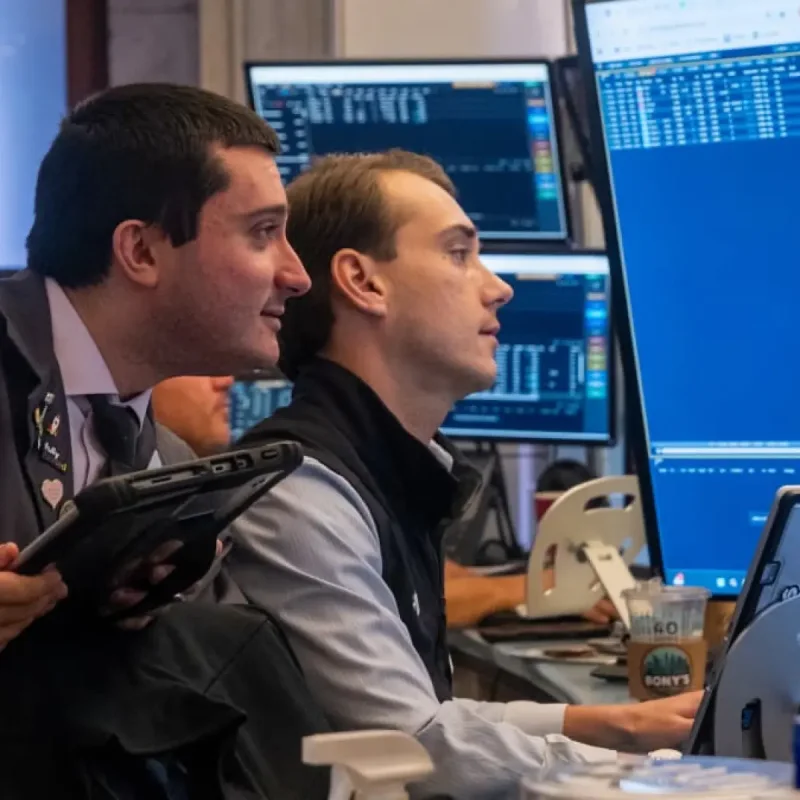
Global stock futures fell sharply on Wednesday after U. S.
President Donald Trump announced at the NATO summit in Turkey that the ceasefire with Iran has ended, sparking renewed market anxieties over Middle East hostilities.
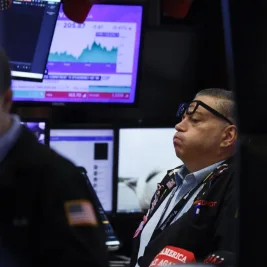
Futures tied to the Dow Jones Industrial Average dropped 351 points, or 0.67%, by 4:30 a.
m. ET.
S&P 500 futures fell 0.44%, and Nasdaq 100 futures slid 0.54% following the announcement in Ankara.
In Europe, the pan-European Stoxx 600 index declined 1.46% early Wednesday.
Germany's DAX led losses by dropping 1%, as nearly all major regional bourses and sectors fell into negative territory.
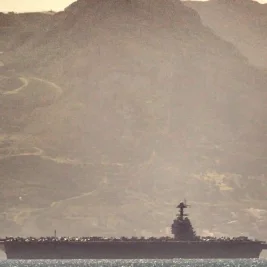
The market downturn followed a series of powerful military strikes launched by the U. S.
Central Command on Tuesday evening against Iran. The strikes retaliated for recent attacks on three commercial vessels in the Strait of Hormuz.
Additionally, the U. S.
Treasury Department revoked a license that previously allowed Iran to globalize its oil sales.
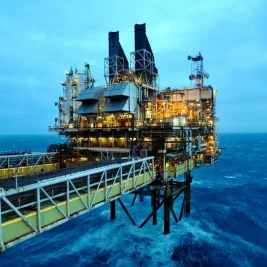
This prompted West Texas Intermediate crude futures to jump 5.38% to $74.31 per barrel, and Brent crude to rise 5.31% to $78.10 per barrel.
The Iranian foreign ministry issued a statement on Wednesday condemning the military actions and asserting their geopolitical stance.
"The powerful armed forces of the Islamic Republic of Iran, as they have repeatedly shown, will not hesitate to defend Iran's territorial integrity, national sovereignty, and national security against American military aggression," the ministry said.
Responding to the escalation, NATO Secretary General Mark Rutte addressed journalists at the summit in Ankara on Wednesday to back the American military response.
"When you have a ceasefire and Iran is basically violating the ceasefire — we see what happened yesterday with ships being attacked — I think it is totally crucial that the U.
S. forcefully reacts," Rutte said.
Market analysts noted that the sudden escalation disrupted previous investor expectations regarding geopolitical stability in the Middle East.
"Renewed tensions in the Middle East have interrupted what had become an increasingly complacent market narrative, prompting investors to reassess geopolitical risks after several weeks of pricing in a smooth path toward de-escalation," said Daniela Hathorn, senior market analyst at Capital.
com.
Hathorn noted that the renewed hostilities shattered the market assumption that regional friction would steadily decrease.
"The latest attacks have reminded investors that while a ceasefire remains in place, a lasting agreement between the U.
S. and Iran is far from guaranteed.
Markets had become comfortable with the idea that the conflict would gradually fade into the background but recent developments suggest that assumption may have been premature," Hathorn said.
In Asian markets, South Korea's Kospi fell 5.35% into a bear market, prompting the local exchange to briefly trigger a five-minute "sidecar" trading halt.
Major semiconductor chips Samsung Electronics and SK Hynix plunged 6% and 4% respectively.
Meanwhile, investors prepared for the 2 p. m.
ET release of the Federal Open Market Committee's June minutes to gain clarity on Federal Reserve Chairman Kevin Warsh's monetary policy outlook.
Financial experts expect the upcoming central bank records to carry a significantly firmer tone regarding future interest rate trajectories.
"The FOMC minutes will be [a] wildcard simply because Warsh was so opaque at the most recent press conference," said Adam Crisafulli, founder of Vital Knowledge.
Crisafulli added that the upcoming release could contrast with previous communication styles seen under the central bank's former leadership.
"Normally, [Jerome] Powell provided fairly comprehensive accounting of the meeting discussion, but that didn't happen with Warsh, so the minutes, which are likely to be hawkish in tone, could contain some surprises," Crisafulli said.