In northeast Syria, a unique female-led commune offers a peaceful sanctuary for women fleeing war and domestic hardship.
The village of Jinwar, near Qamishli, was established in 2018 and now houses about 25 residents and their children from Kurdish, Arab, and Yazidi backgrounds.
The settlement features around 30 self-built mud-brick houses. Residents cultivate their own food, manage livestock, and run a local school.
External male visitors are allowed during daylight hours but cannot stay overnight.
Many residents lost their husbands in the war against the Islamic State or escaped abusive domestic situations. Welat, a 55-year-old resident, arrived after separating from her husband.
“Life wasn’t going well,” she says. “I could barely get by.”
After discovering the commune, she attended Kurdish-language classes and joined community watch duties. “Here I found myself – my true self,” she says.
Welat emphasizes the psychological support among mothers. “The mothers work side by side.
The relationships among women are beautiful. The psychological environment is good, the spirit very high.”
She hopes the model inspires global awareness of female empowerment. “I want all the mothers of the world to be aware of their own strength,” she says.
“If they have strength, they have freedom.”
Finding Community After Loss
Nujîn Mihemed, 57, relocated to Jinwar after her husband’s death and severe social isolation. “I suffered a great deal.
I endured a lot of hardship. Both because of so-called ‘morality’ and because of society,” she says.
“Our society has no mercy.” Today, she contributes to the bakery, medical center, and village shop.
“We are each different from one another, but we’re all like one household,” she says. “Whatever work there is, we do it together.”
Jasmin, 28, left Aleppo and altered her plans to migrate to Europe after discovering the commune. “I was about to leave for Germany,” she says.
“But then I discovered this village and everything changed.” She notes that women of all religions and peoples live together peacefully.
“For me, this village is an example of revolution and peace for the world,” she says. She advocates for broader female participation in leadership and politics.
“When women take steps forward, everything changes.”
Grassroots Cooperatives and Self-Management
Nearby, the ecological village of Jarudi operates via cooperative agricultural models where men and women share governance.
Nehrîman co-chairs the commune, managing a shared public garden established in 2013. Nesrin Boza, a 28-year-old council leader, joined after working with advocacy groups in Kobani.
“Since I came here, my life is less angry and I am stronger in giving to others,” she says.
“We are united with one another, as we are united with nature.”
In Qamishli, women lead civil defense committees known as HPC-Jin, focusing on security and community stability.
Members Remziye Mihemmed İsmail, Niismiye Eemsedin, and Wadhen Husseyn Sexmus oversee neighborhood protection. “As a mother, I don’t want war, but peace,” says Mihemmed İsmail.
Eemsedin joined the self-defense initiative in 2023. “Protecting the values of the revolution is important to me,” she says.
“We are women, used to hardship, ready to fight.”
Environmental reconstruction is also critical.
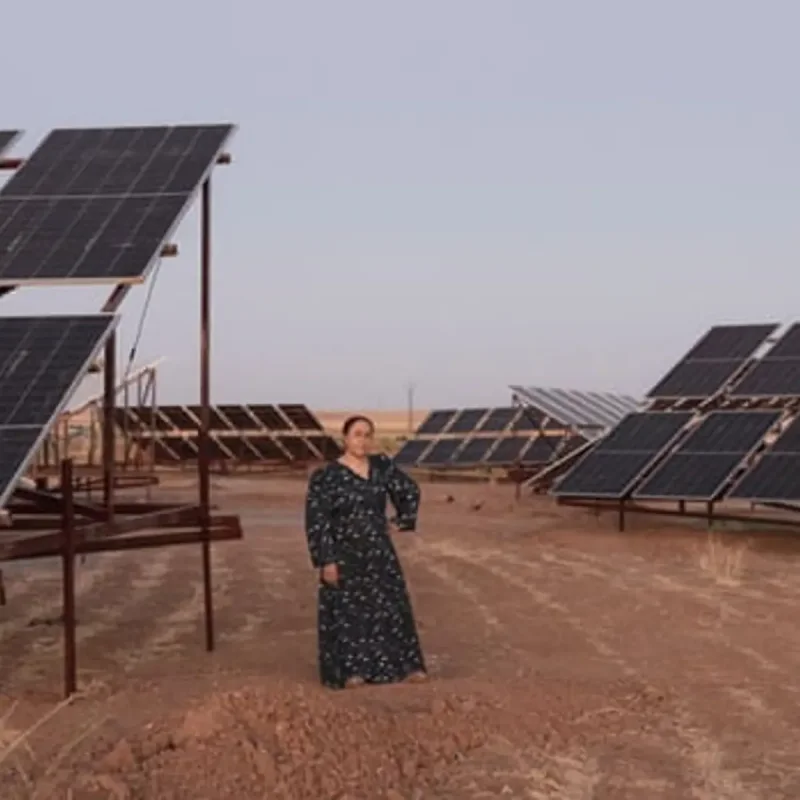
Rovend Ebdo, head of the ecology department in the Jazira region, works toward sustainable energy and water solutions.
“The regime attacked nature. They brought destruction and cut all the trees,” she says.
She views ecological initiatives as foundational for regional stability. “What do I dream of for the future?
I want peace for the whole world.”